


Ever so often we stumble on some minor medieval news, which do not merit a full article, but nevertheless, deserve a short notice.
Medieval Pilgrim Souvenirs
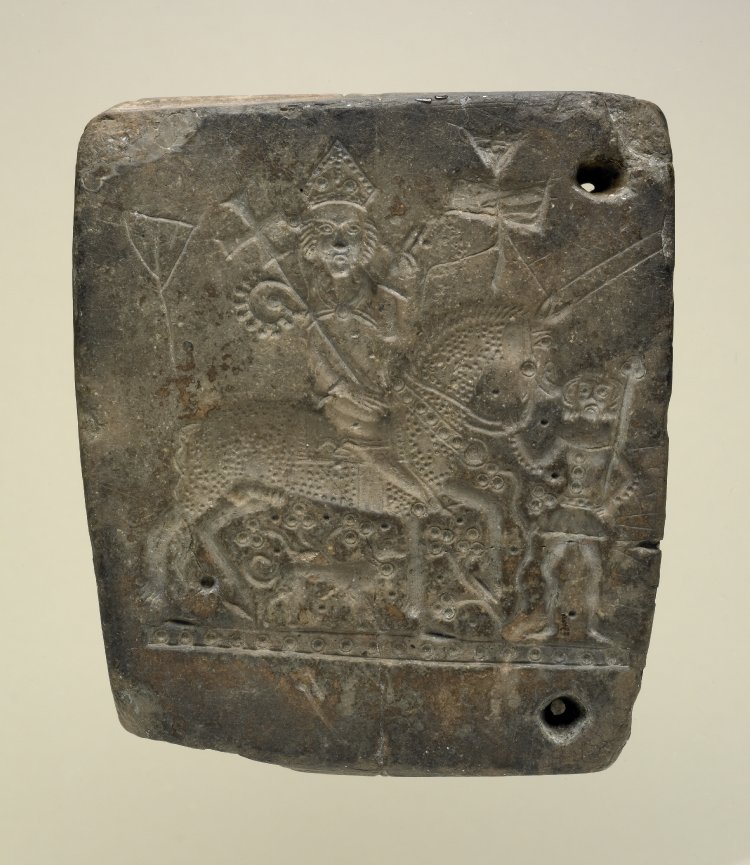
Sketchfab page.
Each of the models is accompanied by interactive annotations and they can be manipulated to view the badges from any angle. They are a fascinating way-in to medieval material cultures of pilgrimage and devotion and the BM collection at large (which can be viewed via Collection Online). Another option is to use the 3D collection to let students “print” their own badges as part of a pilgrimproject in school.
The Museum hopes that this resource will bring the medieval badge collection to scholarly attention and encourage further research about these small but fascinating objects. If you would like to learn more about the project, please see the attached article recently published by the Paul Mellon Centre
The First 100 Polonsky Pre-1200 Manuscripts Are Now Online
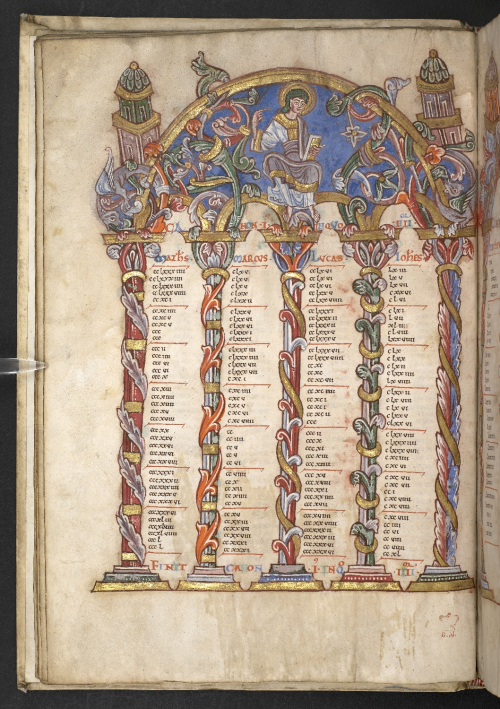
Insular Manuscripts AD 650-850: Networks of Knowledge
![Initial (detail, IN) from the 'Royal Prayerbook' [Royal 2 A XX, fol. 17r], Mercia, c. 900-925, held in the British Library](https://www.medieval.eu/wp-content/uploads/Royal-2-A-XX-fol.-17r.jpeg)
In the period between c. AD650 and c. AD850 manuscripts made in Ireland and Anglo-Saxon England, and in monasteries on the Continent founded by English or Irish missionaries, used ‘Insular’ styles of script, decoration, and methods of making that are distinctive and diagnostic.
There are about 500 extant Insular manuscripts, of which 75% are in libraries on the European continent (including 40% in Germany, 10% in France), a further 22% are in Ireland or the UK, and 3% are in Russia or the USA. Among those in European libraries are books that were written in England or Ireland and exported not long after they were made, as well as books that were copied on the Continent in Insular style.
Some individual books are very well known and have been studied in great detail, often as extraordinary treasures; but there is no synthetic or detailed analysis of what these books reveal en masse about networks of knowledge, movement of people, ideas and technology in the post-Roman West. As a group these manuscripts reveal the deep and extensive contribution of the islands of Britain and Ireland to medieval European culture.
This project enables a step-change in scholarship on cultural networks in medieval Europe by facilitating research with academics, curators, and digital specialists, exploring how new research tools (print and digital) can help us challenge assumptions, map our data, and change the way that investigate our material. It aims to develop a new research agenda by bringing together scholars of early medieval history and manuscript studies, with practitioners expert in network analysis and digital technologies, as well as collection curators. The project collaborates closely with a major forthcoming British Library exhibition on Anglo-Saxon England (2018).
FEATURED PHOTO:
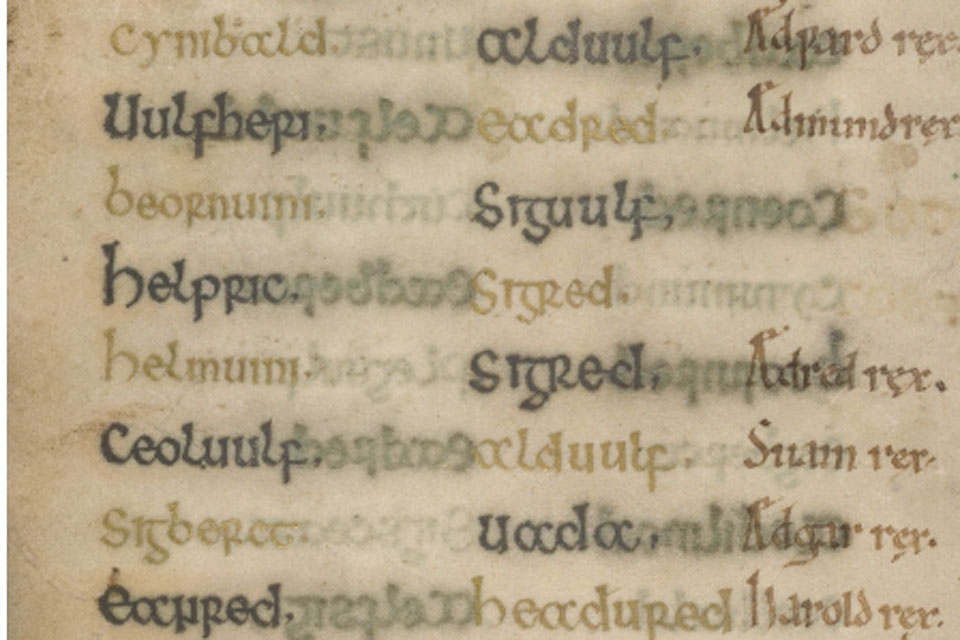
Durham Liber Vitae. From Northumbria. British Library Cotton MS Domitian A VII f. Source: British Library
Save
Save
Save
Save
Save
Save
Save
Save
Save
Save
Save
Save
Save
Save
Save
Save
Save
Save
Save
Save
Save
Save
Save
Save
Save
Save
Save
Save
Save
Save
Save


