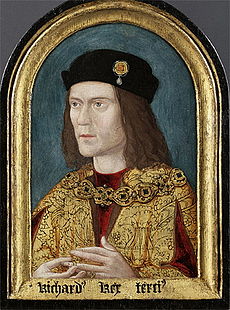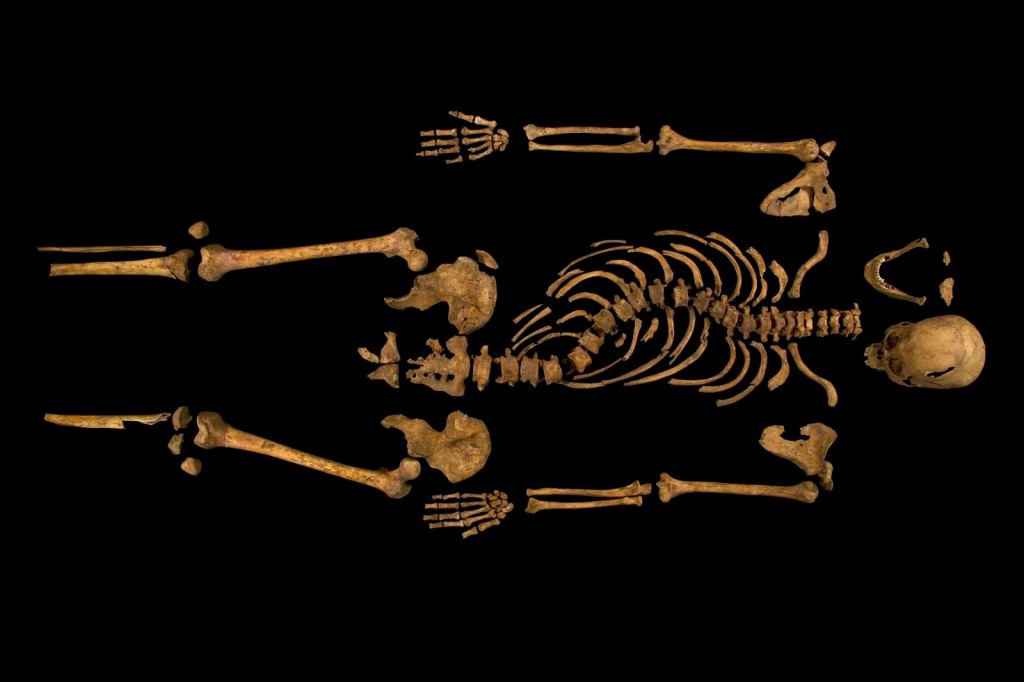
In a grave at the entrance to the choir in the floor of the former Greyfriars in Leicester, exactly where it was expected, archaeologist exhumed a body of a slender man of normal height with an articulated scoliosis.
During the autumn 2012 archaeologists, anthropologists and other bio-archaeologists carefully examined the skeleton. Later DNA analysis confirmed without doubt that the skeleton found at Greyfriars in August 2012 was indeed that of Richard III. Here follows a short overview of the scientific studies, which were undertaken and have so far been reported.
The skeleton carried ten wounds, some perimortem and some probably postmortem wounds. Although it is not possible to decide without doubt which of these wounds were the fatal ones, at least two, which had been inflicted to the skull must have been deadly. One was a heavy blow probably inflicted by a halberd or the like at the back of his neck and cutting off a significant slice, while another was from a blade stuck into the brain. Researchers have speculated that the trauma to the head must have been the result of the loss at some point of the helmet of the king. Several wounds were of a slighter character and done by daggers. The researchers have compared these to those found on individuals who were buried in a mass-grave at Towton in 1461. These individuals were found with skulls and skeletal remains, some of which were manhandled and injured post-mortem. It is generally believed this was done as part of a wilful defamation of the vanquished foe.
Man-handled Corpse
At the news conference in February 2013 the view was voiced that Richard III might have suffered the same treatment, since some of the wounds must have been inflicted after the body had been stripped of its armour. This corresponds very well with a contemporary text, which says that after King Richards body had been discovered among the dead “many other insults were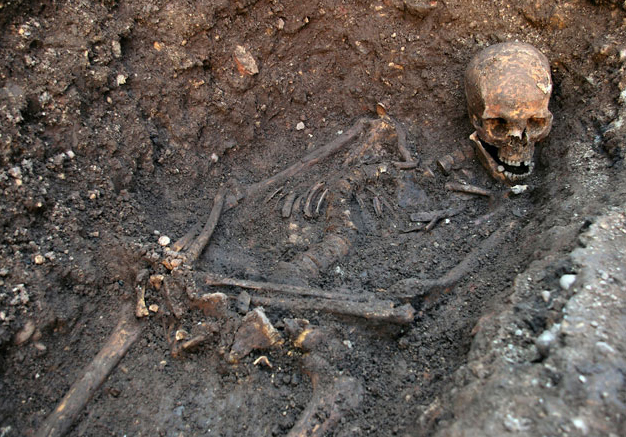
DNA analysis
DNA analysis conducted by the geneticist Dr. Turi King at Leicester University has without doubt confirmed that the skeleton found at Greyfriars in August 2012 is indeed that of Richard III. This identification has been based on the identical mitochondrial DNA of two independent descendants of Anne of York, the sister of Richard III and the DNA extracted from the skeletal remains from Greyfriars.
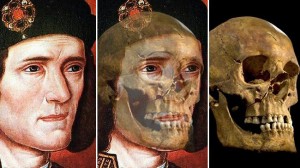
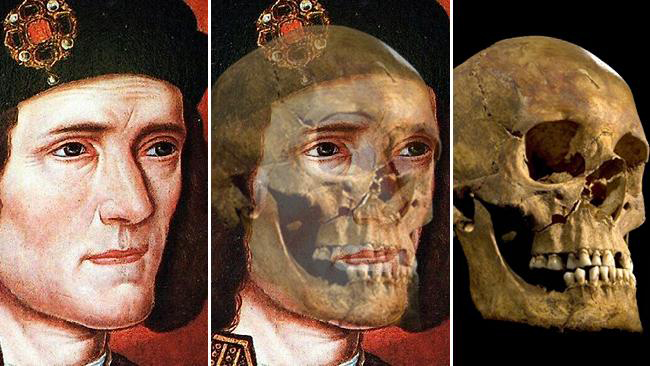
After the Greyfriars bones had been scanned, a 3D scan of the skull was sent to the University of Dundee where the muscles and skin were modelled by Caroline Wilkinson, Professor of Craniofacial Identification at the University of Dundee, using a computer process known as stereolithography. This facial reconstruction was produced by University of Dundee and funded by the Richard III Society.
Voice of a king
Research at the University of Leicester can even give us a clue as to what Richard sounded like. Dr. Philip Shaw, Lecturer in English Language and Old English in our School of English, has studied two letters written by Richard when he was Duke of Gloucester. In this podcast, you can hear Dr. Shaw read these letters using the approximate pronunciation and accent 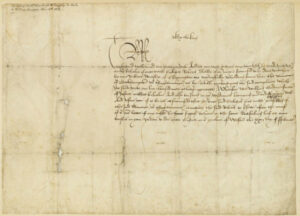

Psychology of a sovereign
After his death, the victorious new king, Henry VII and his entourage undoubtedly vilified Richard III. Later Shakespeare, who described him as a murderous villain, carried this defamation to its apogee. But what was his personality really like? As of now, we only have the tentative reflections of a couple of psychologists, from the In the University of Leicester’s School of Psychology, Professor Mark Lansdale and Dr Julian Boon. According to them he might have suffered from “intolerance to uncertainty”: a recognised condition occurring to varying degrees in many people.