


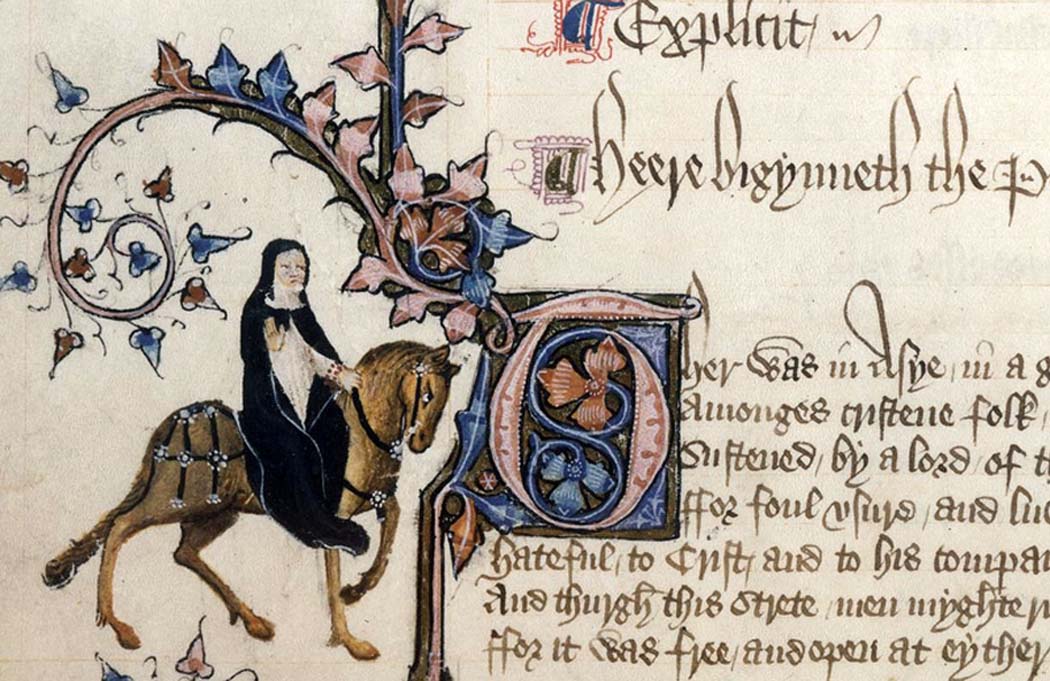
Who were Chaucer’s thirty-three pilgrims, and why were they heading to Canterbury? What do they and their tales tell us about medieval England as a place, and about the daily lives of its people? New book tells the story
Chaucer’s England.
by Nicholas Orme
Yale University Press 2026
ABSTRACT:
Geoffrey Chaucer’s Canterbury pilgrims have long offered readers an unusually varied assembly of late medieval English people: a knight, a miller, a merchant, a prioress, a wife from Bath and many others. They are literary creations, of course, but their occupations, manners, conflicts and expectations draw on a recognisable social world. In this new book, Nicholas Orme uses Chaucer’s works as a point of entry into that world, setting the poetry alongside what historians know about fourteenth-century England.
In this book, Nicholas Orme, one of our leading historians, brings literature and history together to answer these questiona, using the Canterbury Tales and the other great writings of Chaucer’s day as entry point. In ten chapters, he explains what people thought: about time and space, religion and the social system. He shows their wide degree of literacy and how they spent their leisure. He takes us through the politics of the day, the crusades, and the lifestyles of the nobility, clergy, townsfolk, and country dwellers, along with the landscapes they lived in.
This context matters. Chaucer lived through the aftermath of the Black Death, a period of shifting labour relations, expanding literacy, religious unease and political tension. His England was not simply a hierarchy of three orders but a society of towns, villages, courts, schools, households and roads. Orme’s account ranges across religion, leisure, politics, the crusades and the physical landscapes in which people moved.
The attraction of this approach is the movement between imaginative literature and historical reconstruction. Rather than treating the Canterbury Tales as transparent documentary evidence, it invites the question of what kinds of knowledge a medieval author could assume his audience shared – and what a modern reader needs to recover before the jokes, quarrels and ambitions make sense.
About the Author
Nicholas Orme is emeritus professor of history at Exeter University. He has written more than thirty books on the religious and social history of England, including Medieval Children, Tudor Children, The History of England’s Cathedrals, and Going to Church in Medieval England, which was shortlisted for the Wolfson History Prize.
FEATURED PHOTO
Chaucers’ Prioress from Ellesmere


