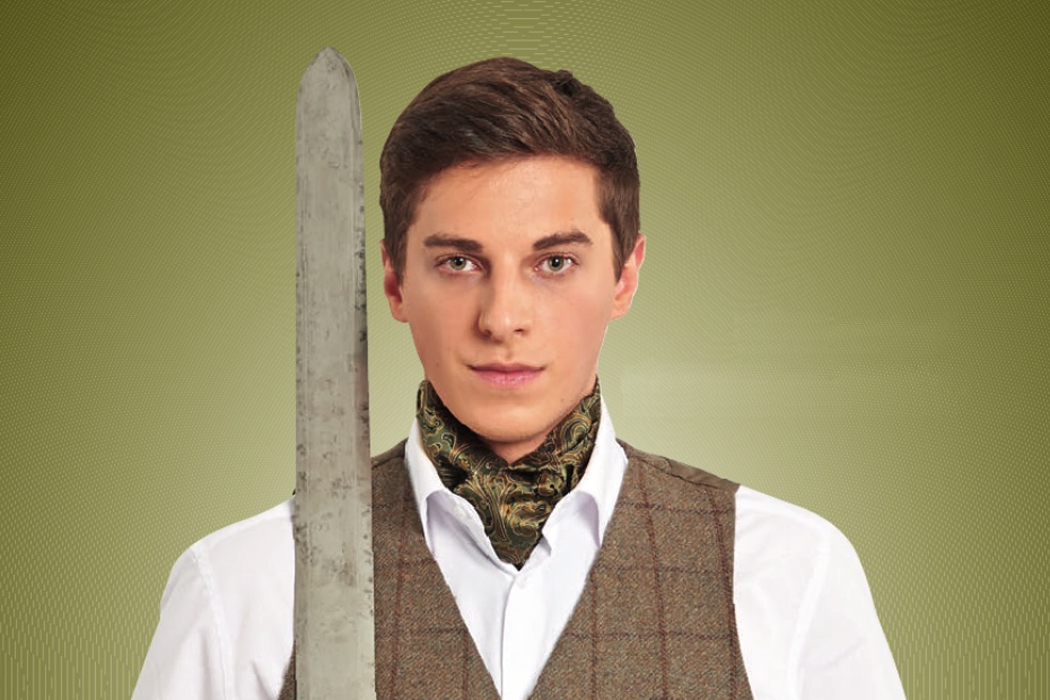
In AD 481 Clovis, son of Childeric was only sixteen years old, when his father died. He became the first king of the Franks. But how did he grab his throne? This question is asked in a wonderful new exhibition in Mainz
How do you gain the support to wield the power, which Clovis ended up parading in Reims sometime in the period 497 – 510, when he was baptised in the Cathedral in Reims together with 3000 of his warriors? Especially, how do you gain their support, when you are only sixteen and your father has just died?
In the case of Clovis, we do in fact know much more about this than one should think. One reason is that we possess the testament he mounted in form of the astounding burial of his father, Childeric. For some years curators and archaeologists in Mainz have been thinking hard about how to understand this remarkable “text”. Apart from a major publication, the result has been a fascinating new exhibit in the RGZM.
The Tomb of Childeric
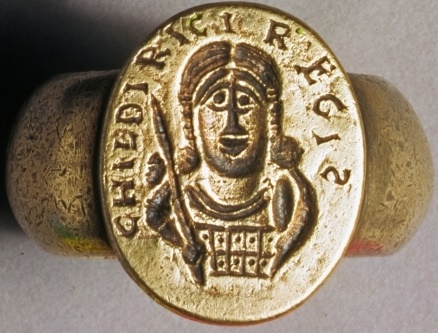
Early on RGZM had copies of these remnants made and today it is the only institution, which has as part of its exhibition a full set of replicas. Currently the RGZM is building a whole new museum and as part of this project experiments with new forms of exhibitions and installations are underway. First of these is the teaching-installation presenting the history of Clovis and the burial of his father, Childeric.
Obama, Merkel and Clovis
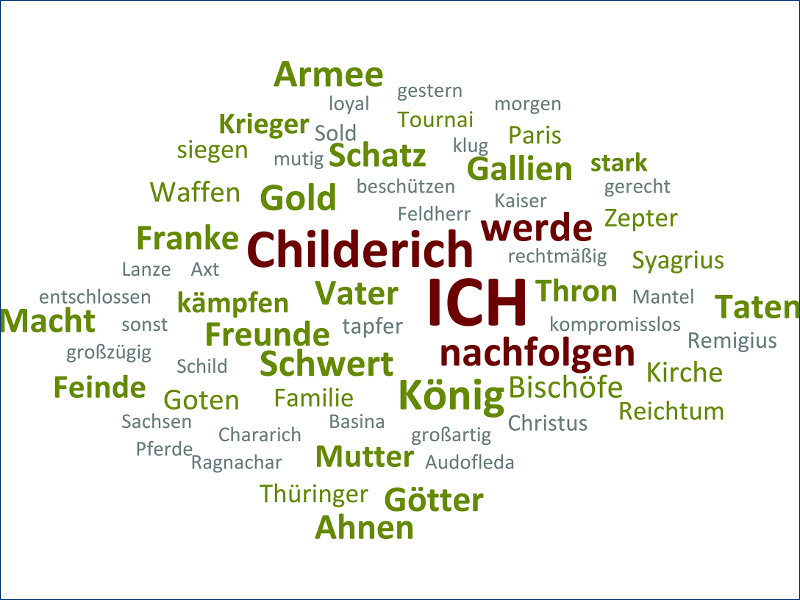
We don’t possess a verbatim rendering of his speech anymore, although he must have presented his case orally. But we possess the next-best thing, the staging of the drama of the burial of his father. Apart from a stupendous sacrifice of 21 horses, there must have been a procession, a eulogy and some dining and wining. From this we can get a sense of the different components of his audience, although perhaps not the exact sequence of the different acts in the drama.
Tumulus and the Sacrifice of the Horses
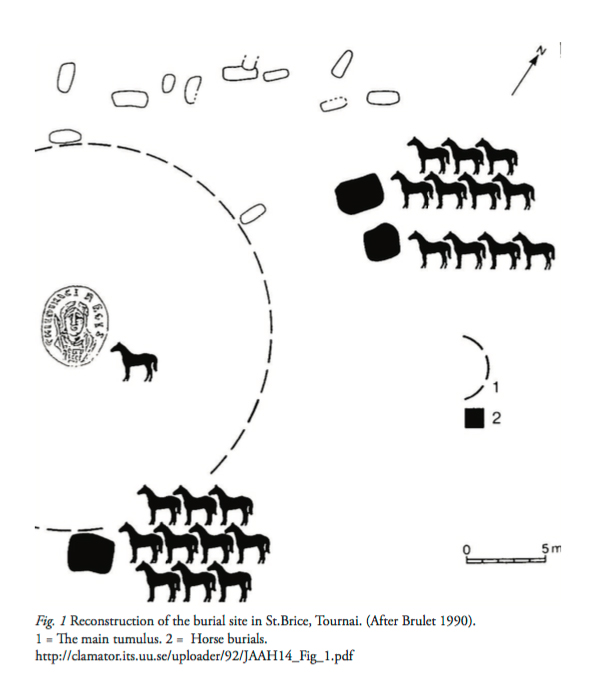
We know (perhaps) about the somewhat exact diameter of the tumulus from the fact that a massive – and we must presume – bloody and stress-full sacrifice of 21 horses took place. Three pits were found at excavations, which were carried out in the 1980s. All-in-all 13 geldings, 5 stallions and 3 foals were discovered. Compared to the number of horses found in other contemporary graves, this is a staggering number. It is generally believed that this part of the ritual was staged to calm and enlist the household troops, which might have accompanied Childeric back from an eight-year exile hew spent in Thuringia in the mid 5th century. Clovis’ mother (Basina) was according to Libri Historiarum by Gregory of Tours from the same region and might have called upon her family to back up her son.
The Roman-Barbaric Warrior
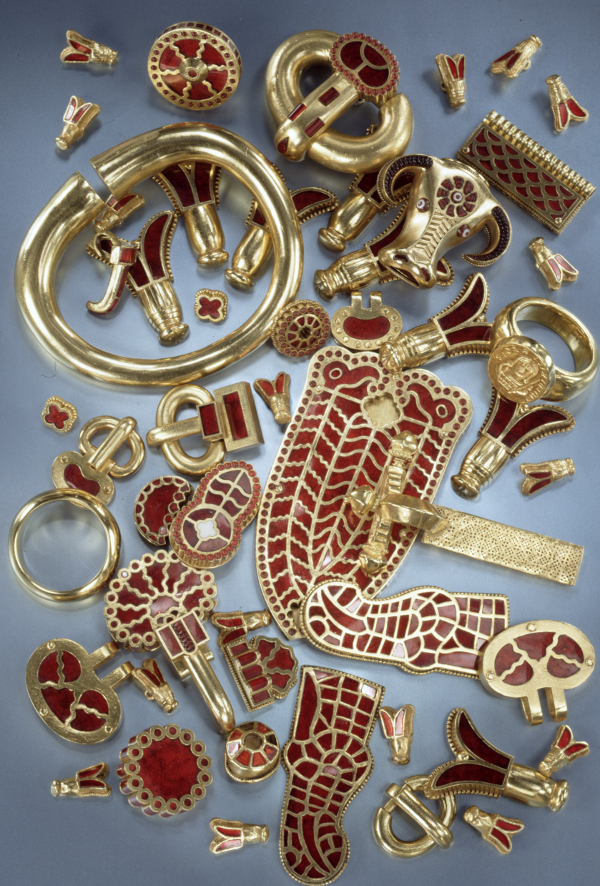
Presumably Childeric was fitted out this way in order to please and calm the “Roman” elite, which was invited to bear witness to the event, amongst whom have presumably been the local bishops of Soissons and Reims plus the warlord, Syagrius.
What more, who ever they were, illiterates they were not. Recent studies by Svante Fischer and Lennart Lind of the types of coins, which were found in the grave, have documented that the three hoards were composed in such a way that they would send a very specific signal to the literate part of the audience: the 100 gold coins were all heavy-weight issues by legitimate and powerful Roman emperors, like for instance Marcian, Leo I and Zeno, while issues from less powerful and worthy dignitaries had obviously not been included in the selection. In the same way both the denarius hoard (200 coins) and the siliqua hoard (1 coin) bore witness to “past Roman grandeur and connections to leading affinities in Barbaricum” (Fischer, p. 30).
The Treasure
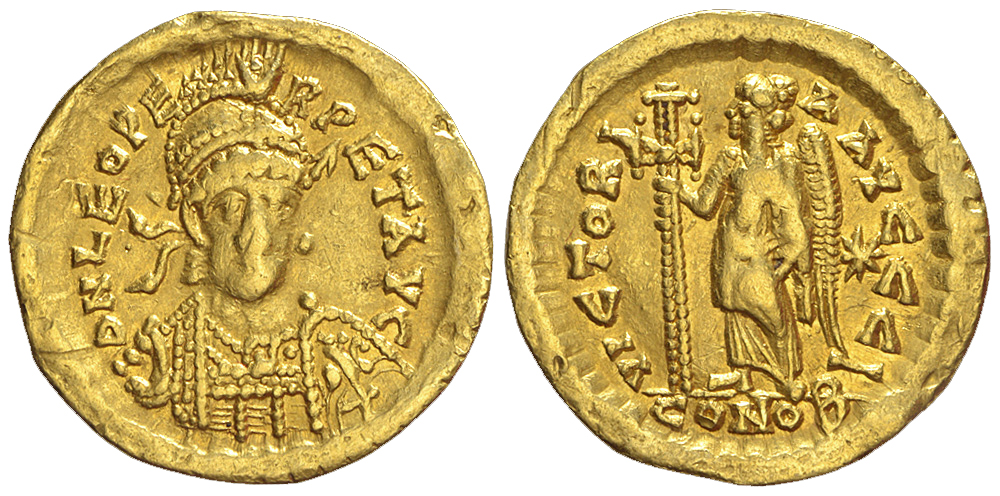
The deposition of the coins represents the single largest hoard of solidi ever found in a grave. Further the deposit of solidi was accompanied by a denarius hoard and a siliqua hoard, both “readable” by anyone, who was inspecting the treasure close up as signifying really important Roman-Barbaric alliances. By depositing the coins and letting his guests inspect them, Clovis was able to send an important message about the powerful network, he was an important node in. But, by depositing such a massive count of coins – and presumably placing them inside a purse decorated with cloissoné and garnets – he was able to demonstrate to the wider audience that he was in command of the treasury; the source of the future wealth of any armed men, who might follow him. Finally through the massive slaughter of the horses his household troops must have experienced the same atmosphere as that, which ruled a battle – oozing blood, horses screaming and trampling, sweat reeking from the hot carcasses, Gods whispering in the foggy steam.
In short: Childeric was laid to rest as a statement to the future proves of Clovis as a mighty Roman-Barbaric king and warrior on a grand scale able to provide wealth and treasure to his followers.
His was no (inclusive) statement like “Yes, we can” or “We shall make it”, but rather “I am in charge and I shall provide”.
The installation of Clovis and the staging of his father’s burial is a remarkable well thought through exhibition of a piece of history made profoundly relevant for people in the 21st century. It is accompanied by a state-of-the art presentation of the general idea behind the installation, which also works very well as an introduction. Well Done!
VISIT:
Codes der Macht. Mit 16 auf den Thron
RGZM | Römisch-Germanisches Zentralmuseum im Kurfürstlichen Schloss
Ernst-Ludwig-Platz 2
55116 Mainz
16.11.2015 and until further notice
SOURCE:
Codes der Macht – Über dass Project
READ MORE:
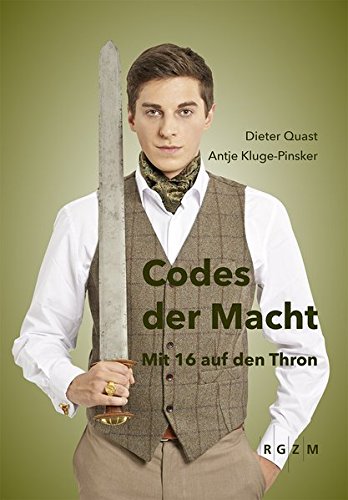
Schnell & Steiner 2015
ISBN-10: 3795430925
ISBN-13: 978-3795430924
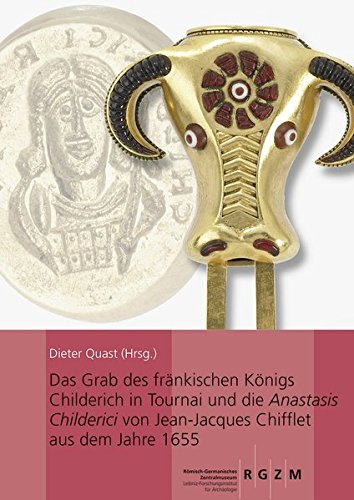
By Dieter Quast
Schnell & Steiner2015
ISBN-10: 3795430933
ISBN-13: 978-3795430931
The Coins in the Grave of King Childeric
By Svante Fischer and Lennart Lind
In: Journal of Archaeology and Ancient History 14 (2015), pp. 1-36
SEE MORE:

Appendix:
Word Clouds from Speeches of Obama and Angela Merkel arguing for power