


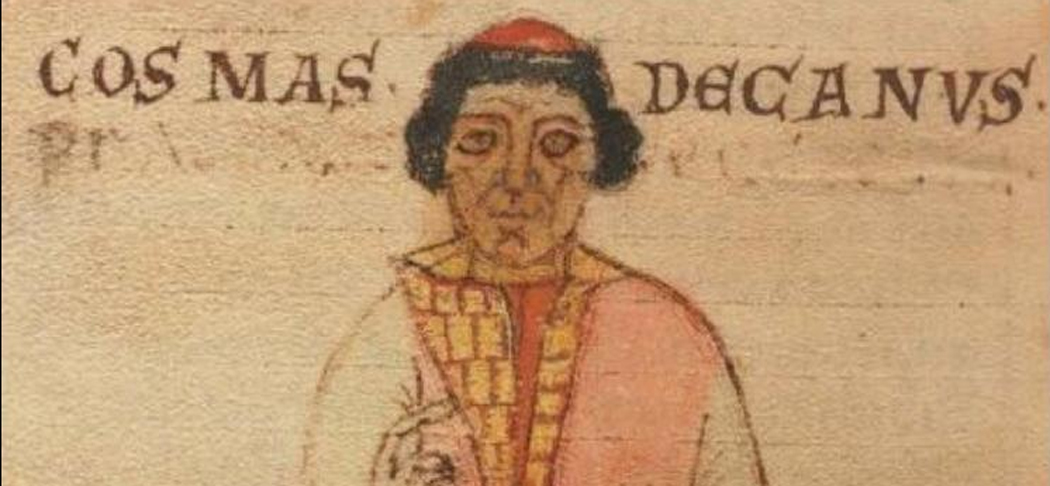
Cosmas of Prague: Narrative, Classicism, Politics’ explores new ways in which to study medieval historical writing. It analyzes the oldest history of a Slavic people written by a Slav.
Cosmas of Prague: Narrative, Classicism, Politics
by Lisa Wolverton
The Catholic University of America Press 2014
ISBN-10: 0813226910
ISBN-13: 978-0813226910
ABSTRACT:

‘Cosmas of Prague: Narrative, Classicism, Politics’ models new ways to study medieval historical writing. It analyzes this, the oldest history of a Slavic people written by a Slav.
Some scholars read Cosmas as a mere annalist, others as a fanciful narrator only partially reliable as a source of historical data, and still others as a panegyrist of the Premyslid dynasty and an exponent of Czech national identity. However, close reading of his text reveals Cosmas to be a fierce critic of the prevailing political order, indeed of all political orders per se. Rather than apologizing for or pandering to the dukes of Bohemia, Cosmas holds before them and their magnates a harsh mirror in which their deplorable deeds are exposed; yet by thisvery act he exhorts them to change, and thus to work for the broader benefit of the community instead of for petty, personal gain.
Recovering this vision of contemporary Czech society requires doing justice to Cosmas’s craftsmanship: it means holding his text up to a prism, rotating and continually re-reading his vibrant prose through a series of different faces – gender, narrative, mythmaking, classicism, territory, power. The result is the first work to treat Cosmas’s text on its own terms. It finds that the wisdom of the ancient past proved directly and immediately relevant to the politics of the medieval present.
ABOUT THE AUTHOR:
Lisa Wolverton is associate professor in the Department of History, University of Oregon.


