


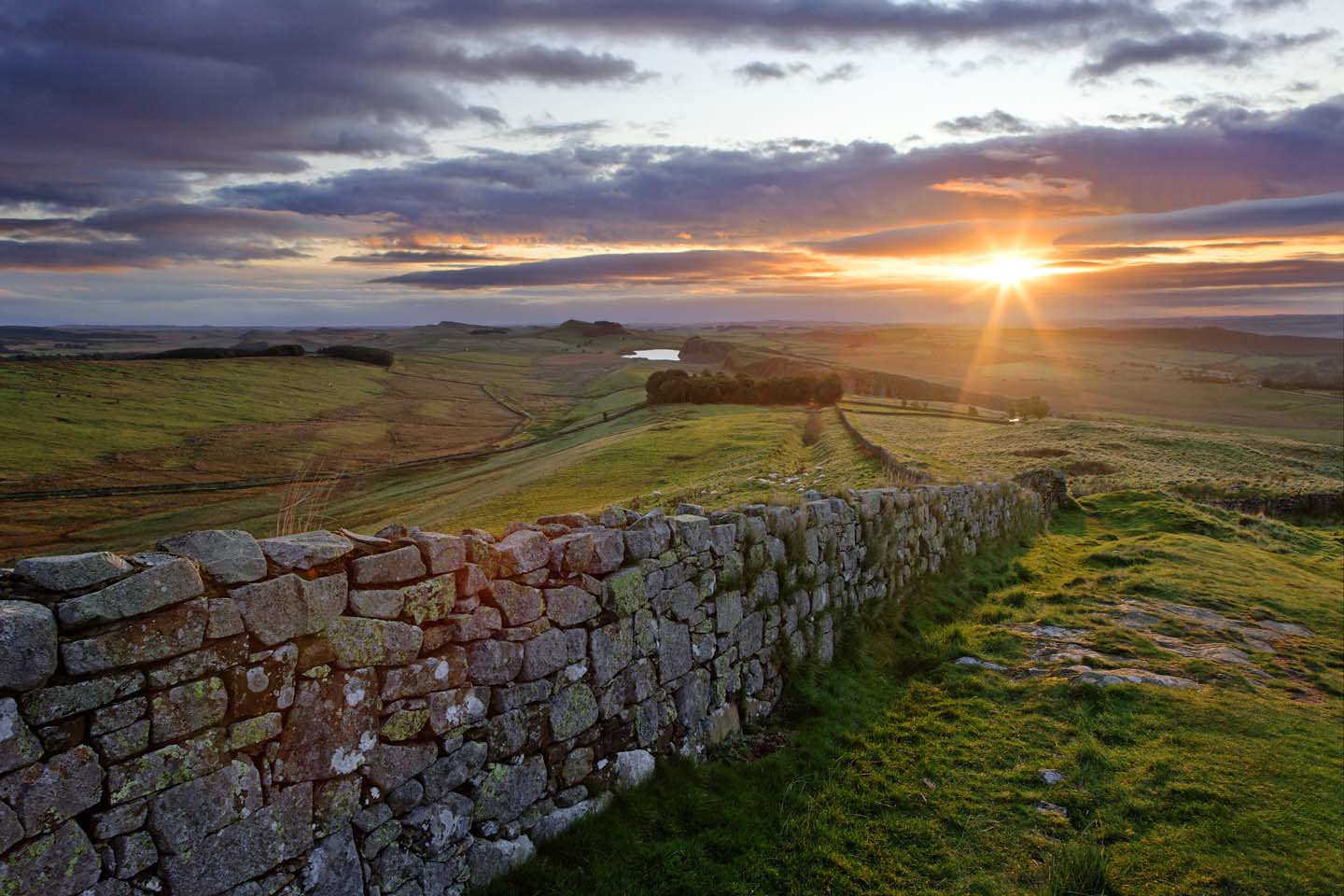
The ancient wall faces a very modern threat from government cuts
Until 2006 Hadrian’s Wall suffered from a year-on-year slow decline in the number of visitors. However, in 2006 an independent organization – what was later known as the Hadrian’s Wall Trust – was established to oversee both maintenance and management of the site. Since then, the Wall has seen an increase in visitor numbers of 60 %. As many as one million visit one or more of the 12 wall-museums, while 3.5 million visitors stay overnight in the vicinity of the wall contributing £880 million to the local economy. All-in-all local tourist-offices supply 1.2 million visitors with information.
This growth has without doubt been the result of a concerted effort to coordinate the management of the Wall and develop the collaboration between the more than 50 organisations and 700 owners, which either have a stake in this business or have to live with people wandering through their private gardens or fields.
The fulcrum in all this has without doubt been the “Hadrian’s Wall Trust”, which has spent the last 8 years inspiring and cajoling all these shareholders and stakeholders into envisioning a concerted effort to harvest this growth to their own benefit as well as that of their local communities.
Nevertheless the Trust had to close its doors last week. Originally it operated with a budget of £1.66 Million. However, last year the government abolished the Central Regional Development Agencies, which had contributed the major funding. The final blow came last March: the Trust expected £122,000 from English Heritage but was told it would get £20,000 a year for the next two years. Then Natural England cut its funding by 45 per cent.
The maintenance of the wall itself and its natural tendency to crumble under the weight of the people walking the walk will perhaps not suffer. English Heritage is scheduled to take over this part of the job-description from the ten employees at the Trust. However, many projects will perhaps lack a continuous inspirational impetus. Who, for instance, will oversee the continued development of the Hadrian’s Wall Country Locally Produced Scheme? Who will labour in order to secure funding for such fascinating projects as the major excavations at Roman Maryport intended to enhance our knowledge of this superb example of a Roman coastal fort and civilian settlement?
The answer is: English Heritage in collaboration with the Hadrian Wall’s Tourism Partnership, responsible for the website: Hadrian’s Wall Country. But is this enough? And further: If it ain’t broken, why fix it?
The cuts come in an austere climate where English Heritage and other organisations have had their budgets cut as well as been asked to slim their organizations. However, it does seem odd to destroy the nest of such a golden goose. It reveals there is a serious lack of respect for the organizational framework needed to manage the cultural tourism of the future.
READ MORE:
The history behind the development of Hadran’s Wall as a managed World Heritage Site has recently been told in a brand new book, published by Springer: Managing, Using, and Interpreting Hadrian’s Wall as World Heritage


