


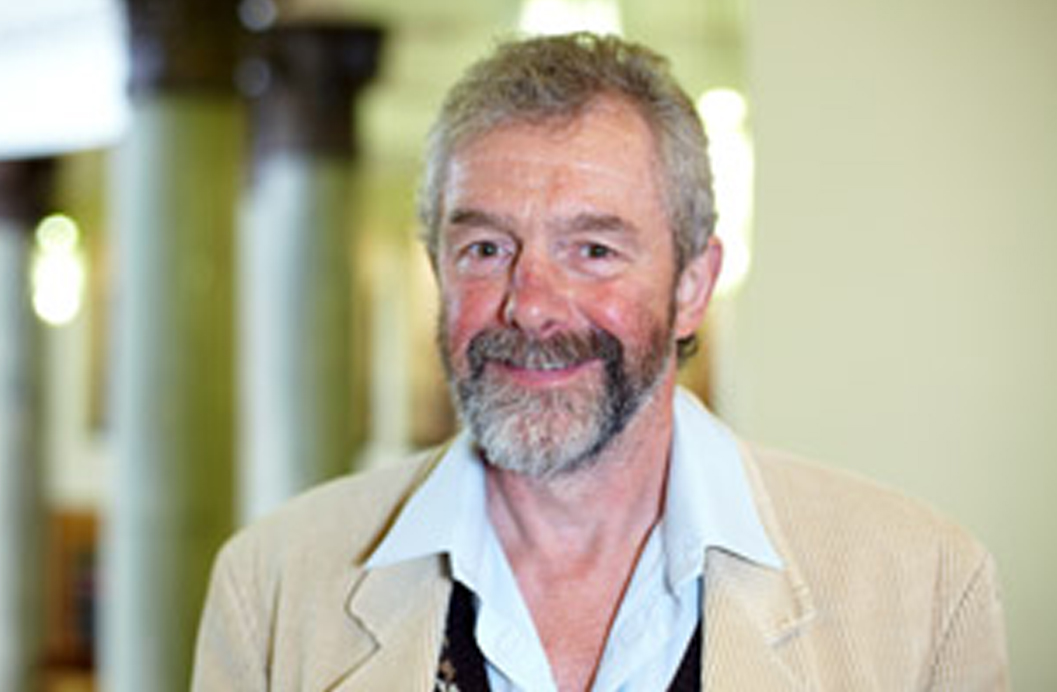
Ian wood at Leeds
Professor Ian Wood was educated at Corpus Christi College, Oxford, and held a research fellowship at the Institute of Historical Research there from 1974-6. His thesis was on Avitus of Vienne 470 -530. In 1976 he was appointed to a lectureship at the University of Leedswhere he has remained; first as as senior lecturer from 1989-95 and since 1995 as Professor of Early Medieval History.
He was a co-ordinator of the European Science Foundation’s scientific programme on the Transformation of the Roman World (1992-8), and have held guest professorships at the universities of Vienna (1994-5, 2000) and Århus (1997), and fellowships at the Netherlands Institute for Advanced Study (1995-6), the British School at Rome (2006) and the Collegium Budapest (2009). He has also held a British Academy Research Readership in 2005-6 as well as a grant from the AHRC (2009). He was also one of three investigators on a HERA-funded project Cultural memory and the resources of the past, 400-1000 AD, which has now concluded.
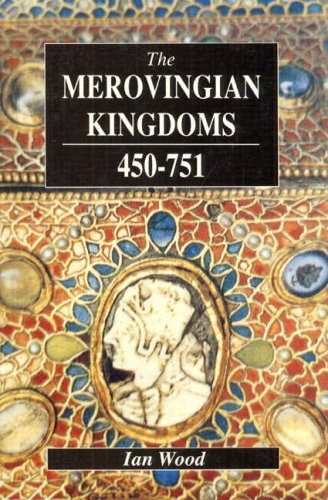
This first session in honour of Ian N. Wood takes its name from his first monograph, The Merovingian Kingdoms, 450-751 (Longman, 1994). Wood’s book has changed the modern assessments regarding the Merovingians and, after over two decades since its first publication, it still is considered a ground-breaking and influential work on early Frankish history. The three papers in this session will look at different aspects of the Merovingian period. Danuta Shanzer will discuss the aftermath of the first translation of Avitus of Vienne, taking the audience into new areas related to Avitus, including the transmission and reception of his works. Régine Le Jan will focus on the social interactions between kings and elite groups in the 7th century, and taking in account the advances in social sciences, the historical researches about emotions, networks, and competition, will ask how competitive logics combine with yearning for peace and salvation. Finally, Paul Fouracre will examine the development of the concept of wilderness through the descriptions of landscape and townscape in a range of Vitae of Merovingian bishops and will suggest that wilderness was largely conceptual rather than actual.
Anglo-Saxons: Sessions in Honour of Ian N. Wood, II [Session No: 1114]

Material Culture and Early Medieval History: Sessions in Honour of Ian N. Wood, III [Session No: 1214]
The Transformation of the Roman World: Sessions in Honour of Ian N. Wood, IV [Session No: 1314]
The Church and its history are crucial to understanding the early medieval world, and Ian N. Wood has been at the forefront of scholars who, in recent decades, have helped expand and consolidate our understanding of the early medieval Church and its relationship with the world around it. The history of the early medieval Church can be traced through an immense amount of sources from a variety of genres; indeed, the majority of early medieval sources arguably relate to the Church in one way or another.
The three papers in this fifth session in honour of Ian N. Wood will explore the place of the Church and churchmen in the early medieval world. Rosamond McKitterick will reflect on the manuscript transmission of the ecclesiastical history par excellence, that of Eusebius as translated by Rufinus at the beginning of the 5th century, in order to provide new ways of thinking about how the text was read and understood in the Carolingian world. Barbara H. Rosenwein will consider the hagiographical works of Gregory of Tours, specifically the way Gregory thought and wrote about the emotional lives of the saints who were the subjects of his works. Finally, Wendy Davies will address the 12th-century cartulary Becerro Galicano, which preserves non-standard charters deriving from the 9th and early 10th centuries, allowing us to see monastic networks and activities from this early period.
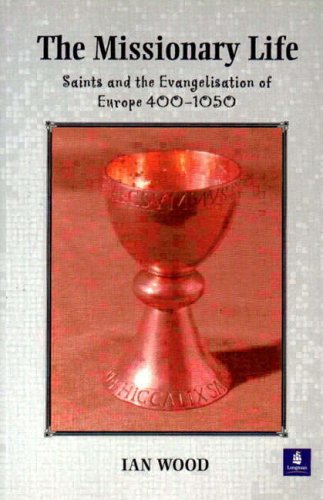
This sixth session in honour of Ian N. Wood takes its subject matter from his seminal monograph The Missionary Life: Saints and the Evangelisation of Europe, 400-1500 (Longman, 2001). With this book and numerous articles on the subject, Wood shed new light on the impact of saints’ lives and immensely contributed to the modern understanding of Christianisation of Europe especially in the frontier zones of the Frankish world. In this session, Anna Kuznetsova will focus on education of newly Christianised people in 9th-century Central Europe in light of both recent archaeological discoveries in Zalavar, Hungary and written sources. Rob Meens will investigate the activities of the Anglo-Saxon missionary Willibrord, the first archbishop of the Frisians, with particular attention to the framing of his life in the Vita Willibrordi by Alcuin. Finally, Maximilian Diesenberger will draw on Wood’s approach in adding new evidence from early medieval Bavaria.
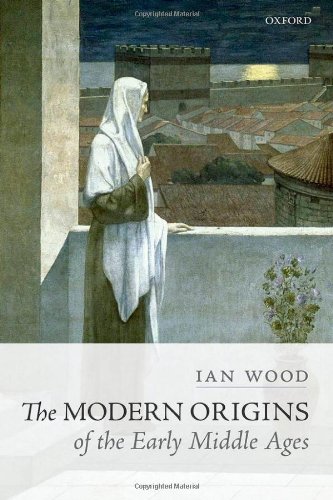
This seventh and final session in honour of Ian N. Wood takes its name from his most recent monograph, The Modern Origins of the Early Medieval Ages (Oxford UP, 2013). In his book, Wood explores how Western Europeans have looked back to the Middle Ages to discover their origins and the origins of their society. In light of Wood’s discussion on why early medieval history is important, the three papers in this session will contribute to the debate on the significance of medieval history in the modern world. Stefan Esders will present Montesquieu’s main lines of argument placing it both within contemporary and modern discussions on the legal history of Merovingian Gaul. Jinty Nelson will reflect on problems of hindsight with regard to the early Middle Ages, and finally, Walter Pohl will discuss present attitudes to the early Middle Ages and talk about the challenges they pose for scholars who want see what was behind the looking glass.


