


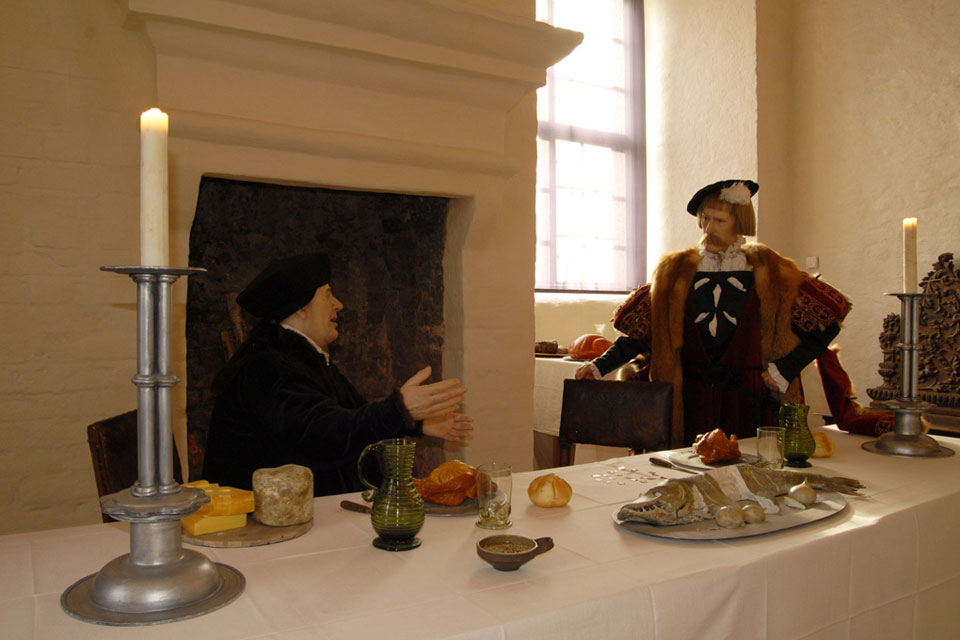
From Sweden comes an old bishop’s manual dating from c. 1520. It tells the story of how Christmas was celebrated in Linköping in Östergötland.
Hans Brask was a bishop in Linköping from 1513 – 1527 until he fled the country due to his continued revolt against Protestantism. During this period he hosted king Christian II with whom he celebrated Christmas in 1520. The particulars of the Christmas celebrations this year are not known. More generally, however, we are well informed about the usual Christmas celebrations at the court of the bishop, who left a detailed manual in his household book. Recently transcribed and edited – alas in Swedish – it offers us a detailed and fascinating description of how Christmas was organised and celebrated in the cold winter in Östergötland; not least, it also provides a splendid Christmas menu to inspire us.
The Christmas Celebrations
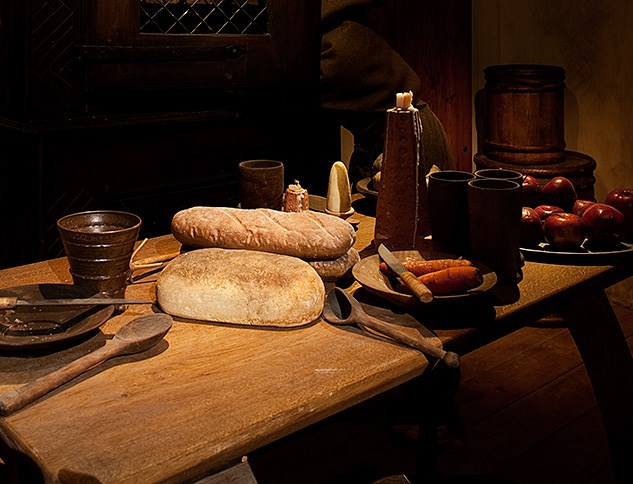
Not everything is detailed, which pertains to the Christmas celebrations. A lot of what was slaughtered, prepared, preserved, and stored during the late autumn was part of the more general preparation for surviving winter in the cold and harsh north. That much is certain, though, that November was the month for slaughter and we learn that on the 13th, pork should be smoked to avoid rancidity; probably, the pigs were slaughtered up to St. Martin and the steward was thus reminded not to let the carcasses rot.
However, on the 20th of December, planning gets more specific. We hear that the steward is obliged to acquire “game and fresh fish for Christmas” as well as be sure to have oblations ready to be provided for the servants in the household, which they might offer on Christmas day during mass to the church and the poor. Even the bell-ringer should receive an oblation and should be called to table “with the others”. This provision seems to have taken place in the late morning of the 24th and probably in the courtyard, where we learn that the household rules (gårdsretten) should be read aloud “and the “boys” should “loose their skin”.
Afterwards, Christmas Eve was celebrated with a large communal banquet at which three to five servings with eleven dishes served. On this occasion, it seems that everyone shared in all the delicacies; as opposed to normally, when some would be reserved for the lord’s table and probably served in his private dining hall.
The menu for the Christmas dinner is marked by a series of dishes carefully living up to the rules of fasting:
- Cured salmon. As it specifically says, this dish should be served at each “bread”, which obviously means that everybody shared in this – and presumably also the other – dishes. served on Christmas day. Such cured salmon would probably be fresh salmon cured in a mixture of salt, honey and mustard and tasting somewhat like modern, Swedish “gravlax”
- Fried herring and eel with mustard
- Dried and salted cod served with raisins and almond
- Herring from Scania and boiled small herrings.
- Fresh Fish served in its cooking water [perhaps jellied?]
- Common ling served in oil or fish from Bergen. Probably this would be a dish somewhat like “lutfisk”, literally lye-fish, which is still served today made of dried ling, which after having been soaked in cold water for five days (with water renewed every day), has to be soaked for two days in a solution made of water and lye. This gives it a jelly-like consistency. Today, it is generally served with potatoes, mashed peas, mashed kohlrabi and mustard. At the Christmas dinner in Linköping, the dish was served with oil as condiment; perhaps oil from mustard seeds. This was of course in strict adherence to the rules of fasting: vegetable oil was allowed, while butter was prohibited.
- Saltwater-fish
- Finnish pike or another dried fish [Dried pike imported from Finland was a special delicatessen].
- Fried fish
- Salmon from the Bothnian Sea
- Apples and nuts
Christmas Day
After this would follow the vigil and the three masses at midnight, sunbreak and morning followed by yet another communal banquet. The menu for this meal, the Christmas dinner proper, exists in two versions in the manuscript. Here, they have been merged.
- Roasted meat served all the way down the table
- Black-pudding or perhaps porridge served with black-pudding.
- The “main dish” with ham. This would – apart from the ham – include a piece of silverside, newly smoked mutton, pork sausages, fresh beef, salted beef, salted pork and sausages, udder and newly smoked fat pieces of meat.
- Patés or stew with beef
- Small steaks. Probably steaks from hares, game and young chickens as well as meat-loafs,Cheese pudding [äggost], cheese cake or creamed butter. Traditional Swedish Cheese pudding is still a delicatessen in Bohuslän in Sweden. It is made of sour milk whipped with egg and cream, which slowly cooks until at starts to set. Poured into a traditional form with holes in the bottom, it drains and forms into cake. Traditionally served with cured herring or sausages, it is more often served today sprinkled with sugar and berries. The cheesecake would probably have been made with the same mixture as the cheese pudding; in this instance, however, it would also be baked in the oven.
Meat in pastry, and small bits - Apples, Pears and old cheese. Old cheese would be cottage cheese, made without rennet; then drained and pressed into a form and left to dry for a period of time; the longer, the “older” and grainier.
In the evening the bishop would partake of a festive dinner, presumably together with his close entourage and perhaps friends. At this would be served a more refined menu consisting of:
- Steak cooked in an iron pot and served as a stew
- Game served in its sauce
- Fresh chicken or other small birds (pigeons) served fried
- Jelly of tongues served with raisins and almonds
- Fresh fish served in salt water
- Fried cabbage
- Small delicacies and old cheese
To all this would be served freshly baked yeast bread as opposed to the traditional hard bread baked of barley.
We have no inkling on what would be served for drinking at these meals. It is probable, however, that beer was served as well as perhaps a bottle or two of imported wine. Hans Brask had studied in Germany and lived in Italy for years before he became bishop. It is believed that he copied elements of the gastronomy he had experienced in the south of Europe and had it imported to Linköping.
Epiphany
On Christmas eve we learn that one of the jobs of the steward is to organise that Christmas greetings are sent to friends together with gifts. Unfortunately there are not mentioning of any celebrations around epiphany and we do not hear further of any giftgiving.
SOURCE:
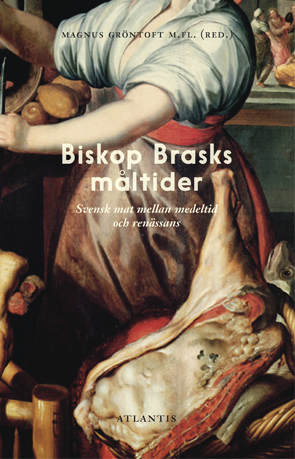
Ed. by Madeleine Bonow, Magnus Gröntoft, Sofia Gustafsson and Markus Lindberg
Stockholm, Atlantis 2016
FEATURED IMAGE:
Brask and Gustav Vasa celebrating Christmas in 1523. Diorama from Linköping Slotts- och Domkyrka Museum.
Save
Save
Save
Save
Save
Save


