


Medieval Vannes is a pleasant and picturesque old town, enclosed by ramparts and with many timber-framed houses in the old town
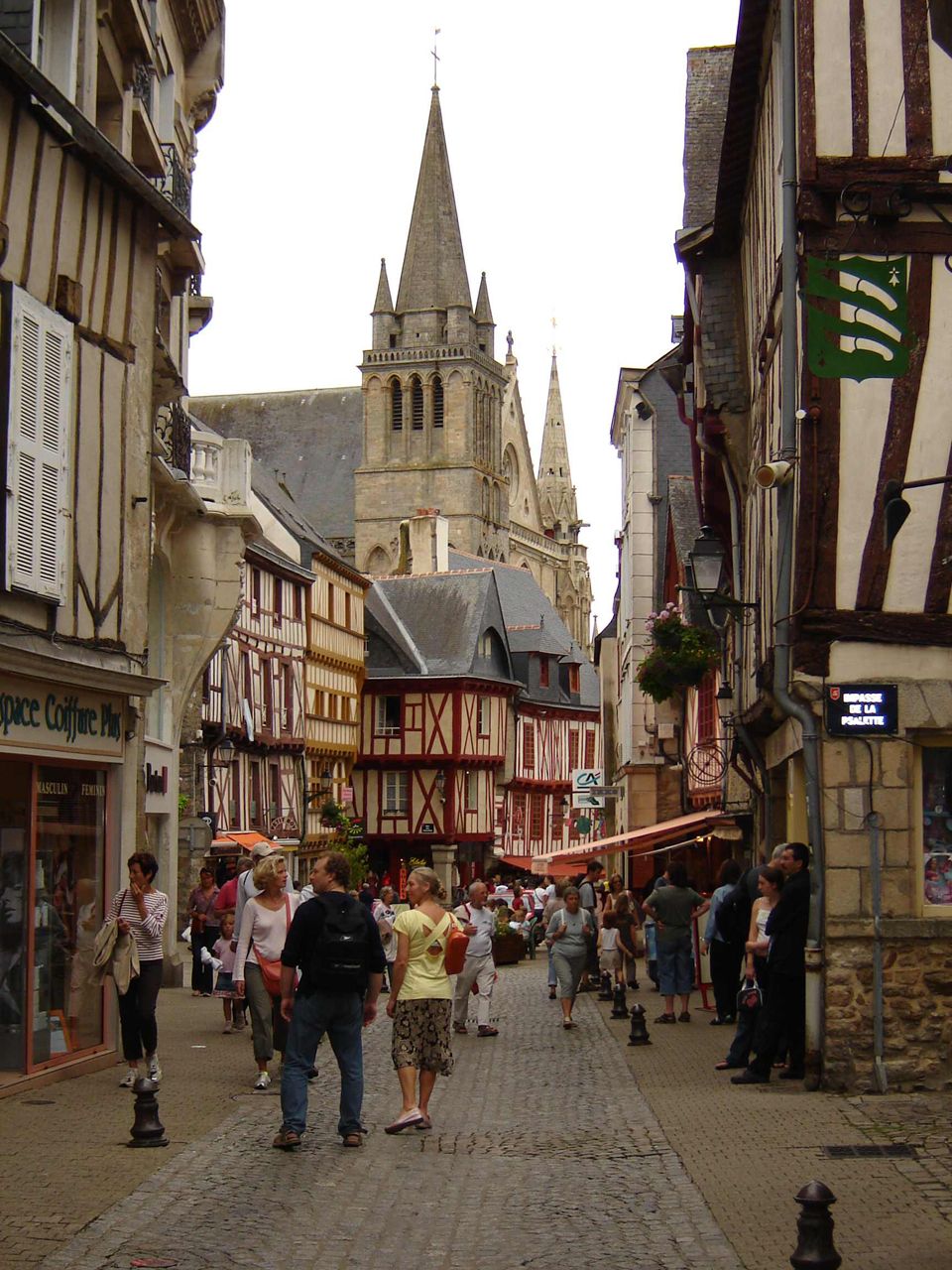
The name Vannes derives from the veneti, a seafaring Celtic people. Following the Saxon invasions of England in the 5th to the 6th centuries, the profile of the population shifted due to fleeing Bretons. Under the name of Gwened, the town became the centre of an independent principality sacked by Pepin III in 751 – 53. This resulted in the establishment of a march in the counties of Rennes, Nantes and Vannes.
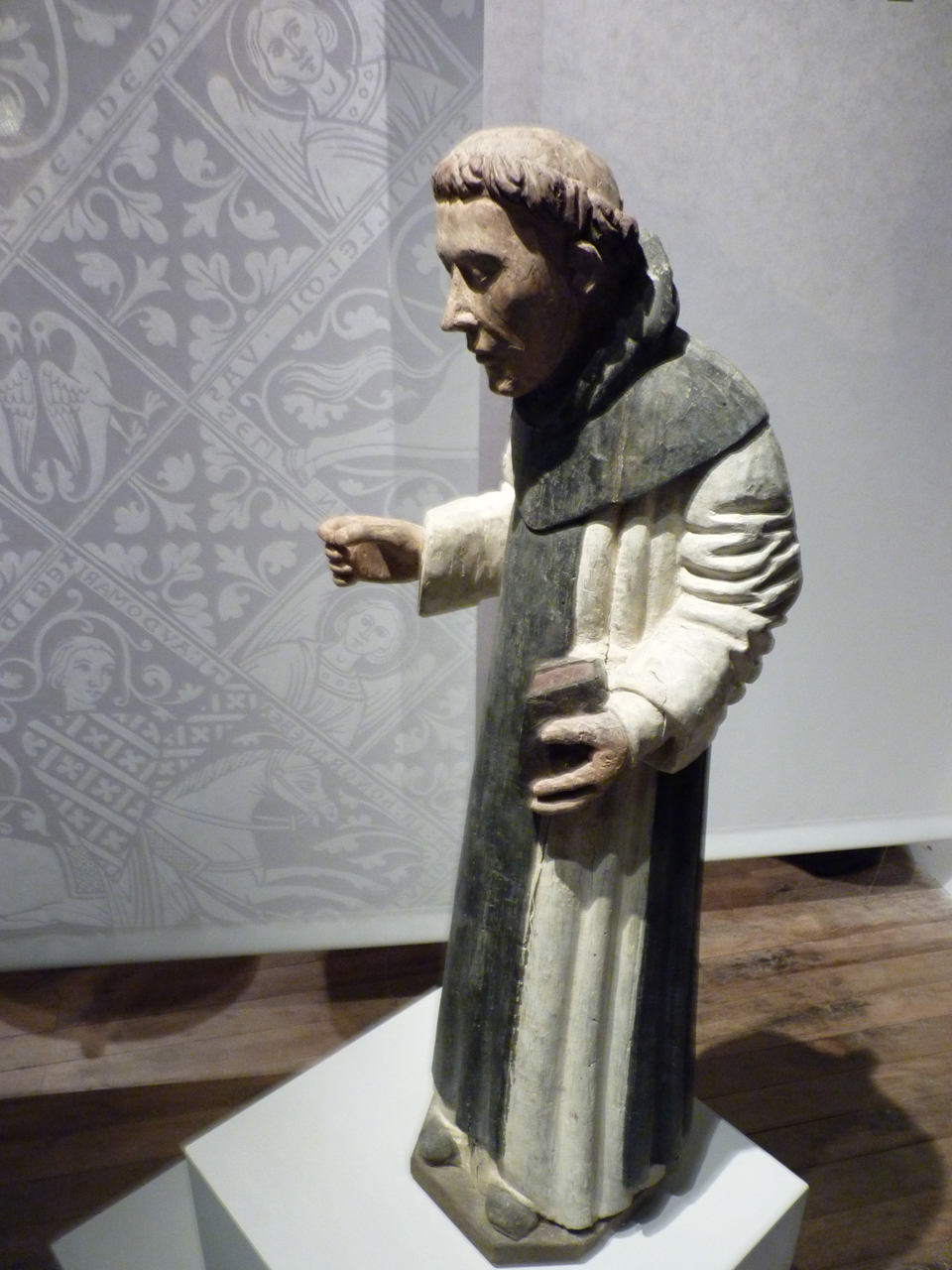
In the 9th century “prince” Niminoë (Nominoe, Nevenoe) was according to Carolingian sources called by Louis the Pious to rule Brittany. He was later referred to as the Breton pater patriae. He was a staunch supporter of Louis the Pious but fell out with his son, Charles the Bald. During his lifetime he is claimed to have succeeded in turning Brittany into a princely dominion with Vannes as its main seat. However, in the same period, the city was repeatedly sacked by Vikings and it was not until the later Middle Ages it regained is prominent position, when the Château de l’Hermine was built by the ducal family. The city gained further status in the 15th century, when Vincent Ferrier died there.
Vincent Ferrer was born in Valencia in 1350 as the fourth child of a local noble family. Obviously destined for a clerical career, he was named after Vincent the Marty, patron saint of the city. He was an accomplished scholar and earned doctorate in Theology at the University of Lleida. Vincent Ferrer was active in the political controversies surrounding the schism. However, he is particularly known as a vibrant and fanatic preacher who succeeded in converting a huge number of people to a penitent and austere life. He is also said to have converted numerous Jews though his gifts as a preacher. He died at Vannes in 1419 and was interred in the cathedral. The Duchess, wife of Jean V, was a particular fan of his rather high-strung spirituality and lobbied together with the ducal family for his subsequent canonization (1455).
Following sights in medieval Vannes are specifically noteworthy:
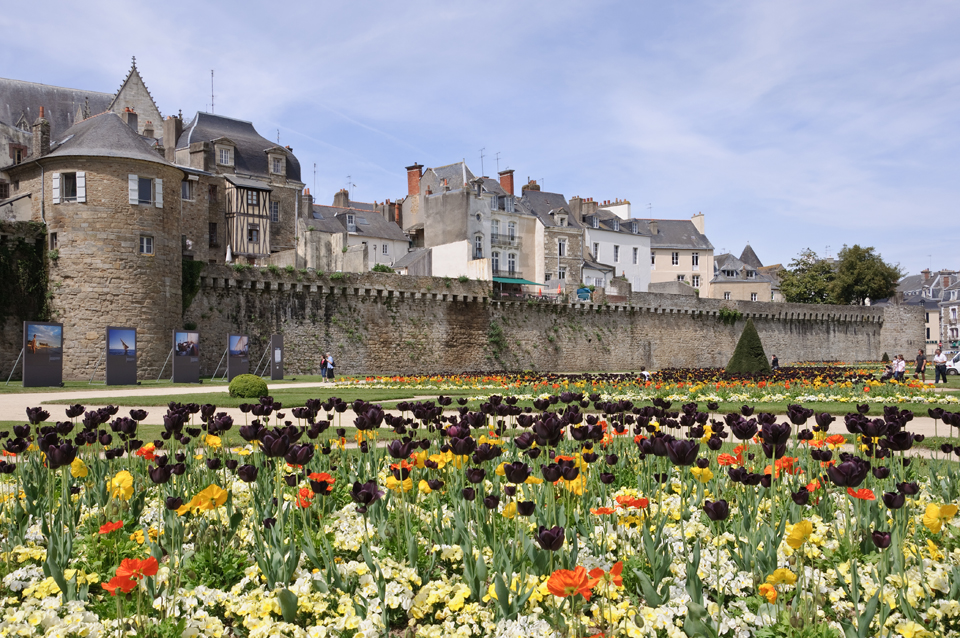
Ramparts
The Town
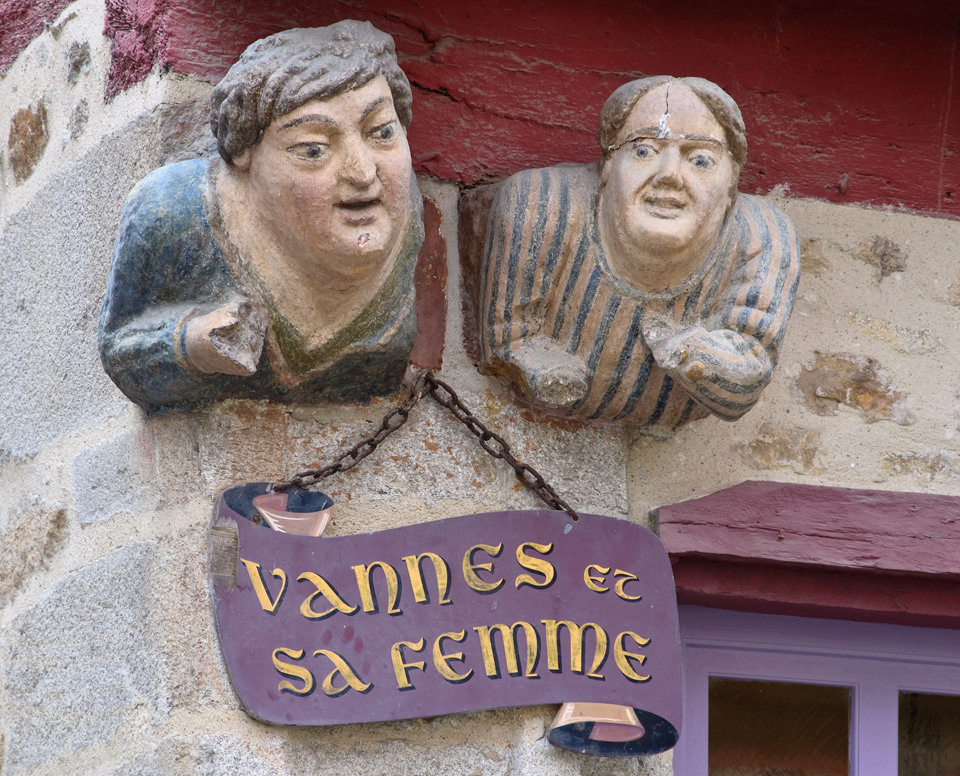
The city is entered through the Porte St. Vincent, named after the Dominican St. Vincent-Ferrier, who preached here in 1418. Moving along the Place des Lices, the large oblong square in the centre, which was once the home of jousting tournaments, the walk continues along the Rue des Halles, where the facades of a number of houses are worth looking at: The Maison de Saint-Vincent from the end of the 16th century and the Vannes et sa femme, famous for its emblem: a stone carving showing a man to the right and a woman to the left. Their hands, which have been cut off appears to have been carrying an unknown object (perhaps a sign of the craft, they and their shop traded in).
Château-Gaillard

The city’s museum is held in the Château-Gaillard, a prominent stone house from the 14th and 15th century. A so-called hotel particulier, it was commissioned by Jean de Malestroit, bishop to Saint_Brieuc and Nantes and Chancellor of Jean V. It was used as House of Parliament. Now it houses the museum for history and archaeology of which the medieval exhibition was recently (2016) reorganised.
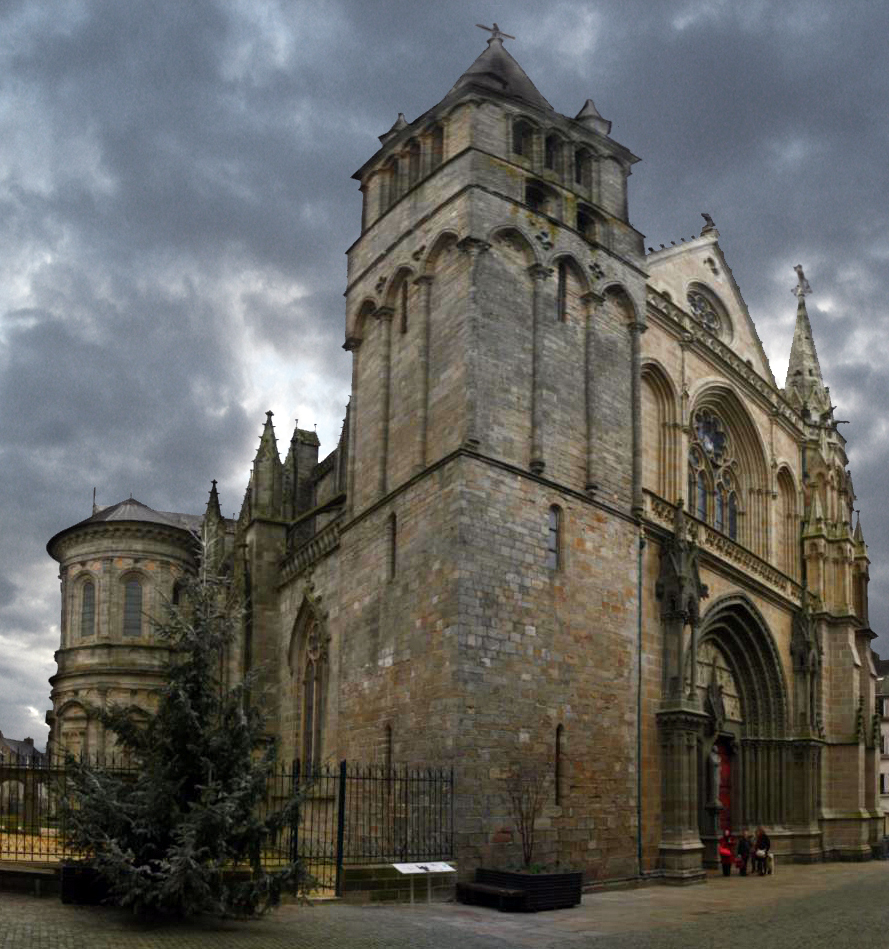
Cathedral of St. Pierre
VISIT:
Fëtes Historiques de Vannes: 13.07.2016 – 14.07.2016
Every year Vannes holds a historical festival celebrating its history (more Renaissance than Medieval)
SOURCE:
READ MORE:
Vannes au Moyen Age. Une histoire de 1000 ans.
Catalogue d’exposition
Coédition Locus Solus / Musée de Vannes / Société polymathique du Morbihan, 2016
Les remparts de Vannes, Découverte d’une ville fortifiée des origines à nos jours
Claudie Herbaut, Gérard Danet and Christophe le Pennec
Edition Animation du Patrimoine, Ville de Vannes, 2001 (2008)


