


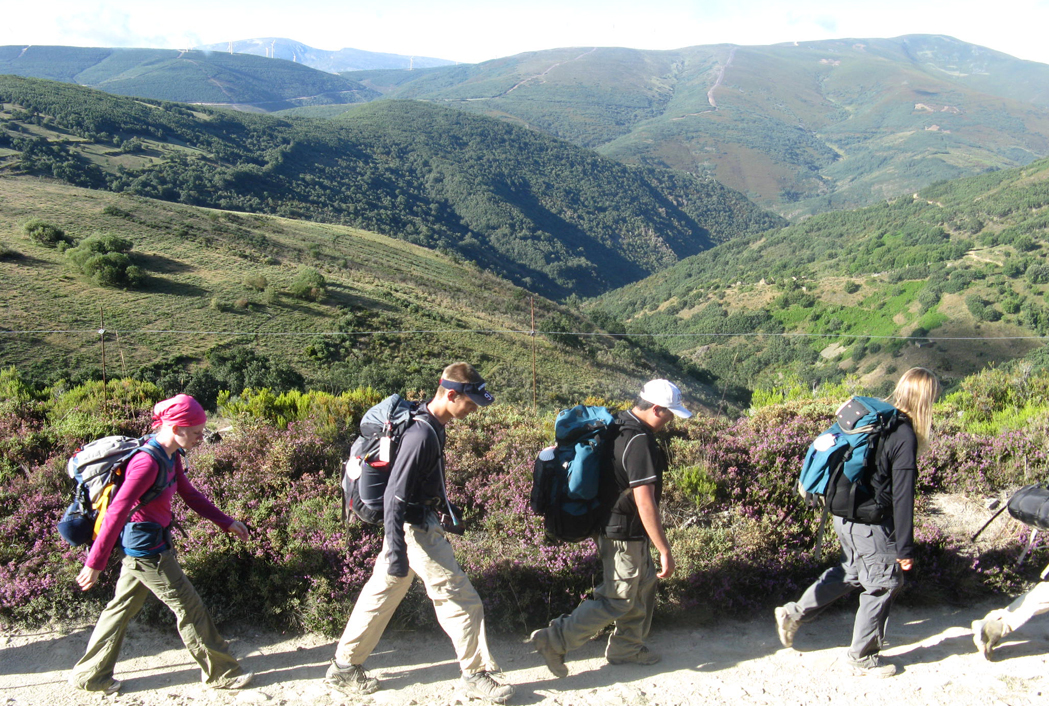
Pilgrimages took place in busy sacred landscapes all over the christian world. A series of five sessions explores the materiality of medieval pilgrimages and their ‘sacred’ contexts.
The sessions are sponsored by the University of Lancaster
Pilgrimage, I: Archaeology and Materiality [Session No: 236]
This panel proposes a fresh understanding of the Christian archaeology of the eastern Mediterranean while also rethinking the region’s wider material culture associated with pilgrimage. Daniel Reynolds shows that the Christian landscapes of Syria-Palestine, long assumed to be a direct result of their appeal as the places of Christ’s ministry and the revelations of the Old Testament, in fact existed atop a network of sites with no apparent connection to the biblical past. Such sites indicate the complex ways in which the sacred world was negotiated, and require us to reconceptualise our understanding of sacred topography. Two papers will then explore the sensory and economic consequences of the pilgrim artefact. As Deniz Sever shows, Turkish collections of objects such as ampullae and medallions suggest that the sensorial experience was indispensable in Byzantine pilgrimage. Such objects reveal how the pilgrim’s quest for the blessing was marked and remembered during and after the pilgrimage. Finally, Inbar Ktalav will explore the discovery in Israel of scallop shells associated with pilgrimage to Santiago de Compostela. These famous symbols of the Way of St James reveal, in this eastern context, an intriguing and complex struggle of fraud, monopolies, and tax evasion in the 13th century.
Pilgrimage, II: Sanctity and Hagiography [Session No: 336]
This panel investigates how pilgrimage and voluntary exile manifested as priorities in different saintly careers and associated biographical texts in the central Middle Ages. Adrian Cornell du Houx shows that the millennial period in France coincided with a renewed desire for exilic penance not only in written portraits of saints but also in the careers of their biographers, in particular Adso of Montier-en-Der and Ademar of Chabannes, and compares the ideal pilgrimage with the actual, along with the contrasting images of Jerusalem and Rome. Andrew Jotischky explores the revival of Greek Orthodox monasticism in Syria and Cyprus through the career of Neophytos the Recluse. Exemplified by the foundation of the Enkleistra in Cyprus (1157), it reveals the search for a particular kind of sanctity generated by Neophytos’s understanding of the monastic traditions of the Holy Land, and will be examined particularly through his hagiographical encomia of ‘heroes’ of the Judaean desert. Finally, Ella Kilgallon discusses the frequent but often overlooked pilgrimages of the mystic and Franciscan tertiary Angela da Foligno, whose journeys to Assisi shine light on the pilgrim experience of key sites and especially the public, open space of the road, which acted as an important platform for criticism and scrutiny.
Pilgrimage, III: England and Wales [Session No: 536]
This session explores pilgrimage routes and the changing popularity of shrines within England and Wales. Kathryn Hurlock investigates pilgrim roads through Wales, showing how devotional journeys across a busy sacred landscape left their trace in place-names, written works and physical remains, using a variety of sources to demonstrate how pilgrims travelled, the places they chose to visit, and the ways in which they were accommodated. Two papers then focus on the changing spheres of influence of shrines over a long period. Michael Schmoelz discusses the numerous ways in which East Anglian cults could gain popularity and a long-lasting foothold in the popular imagination, finding why some destinations proved much more successful than others. Ian Styler uses miracle stories among other sources to ask whether and in what ways they can supply evidence for a shrine’s shifting influence and longevity throughout the medieval period, raising critical questions about the power of oral transmission in the promotion of cults.
Pilgrimage, IV: The Holy Land [Session No: 636]
This session investigates the devotional activities of Holy Land pilgrims during the Middle Ages and the motivations behind these activities. Paul Hayward’s paper will discuss how dissemination of the millenarian beliefs that motivated the Great Pilgrimage of 1064 helped to shape its organisers’ thinking, drawing attention to hitherto unnoticed evidence of Christian von Stablo’s Commentary of the Book of Matthew, even though its author had been trying to deflate such beliefs. Philip Booth’s paper will focus on a prologus of a single Holy Land pilgrimage text of the early 13th-century, that of Thietmar, in order to discern what motivated the pilgrim to go on pilgrimage, but also what motivated him to preserve the memory of his pilgrimage textually. Beatrice Saletti’s paper will address the disguises of late medieval pilgrims. It will look at their reasons for visiting the Holy Land in disguise, and whether these reasons are political, economic, or due to fears regarding security.
Pilgrimage, V: Text, Liturgy, and the Body [Session No: 736]
This panel will investigate interactions between text, ritual, liturgy, and the body in the practice of pilgrimage. Tom O’Loughlin’s paper will look at the interaction between pilgrimage and exegesis as represented in the text Breviarius de Hiersolyma. John Romano will then look at the principles articulated in Augustine’s letters number 54 and 55 regarding liturgical diversity, and observe what bearing these principles had on medieval pilgrims’ responses to witnessing unfamiliar worship during their travels.


