


Medieval historians hesitate to talk about medieval nation-states. Instead, they prefer to talk about kingdoms and their corresponding royal communities or assemblies. New book reviews the questions regarding terminology.
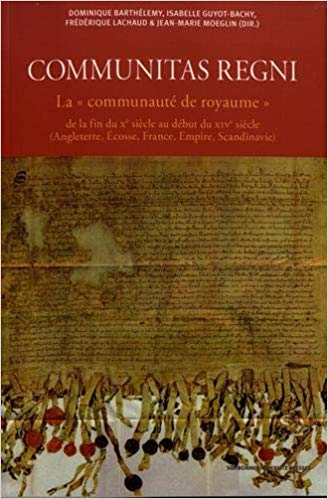
Communitas Regni. La “communauté de royaume” de la fin du Xe siècle au début du XIVe siècle (Angleterre, Écosse, France, Empire, Scandinavie)
Ed. by Dominique Barthélemy, Isabelle Guyot-Bachy, , Frédérique Lachaud, , and Jean-Marie Moeglin
Presses Sorbonne Université 2020
REVIEW:

In 1997 the English historian, Susan Reynolds, published her book on “Kingdoms and Communities in Western Europe 900 – 1300”. In the second edition from 1997, she wrote that her one great regret was the title, which she chose. Instead, it should have been titled: “Lay collective Activity in Western Europe, 900 – 1300”. Be as it may, this talk about titles involves an essential set of questions, namely how to conceptualise medieval ideas about kingdoms, nation-states, parliaments, regional things and assemblies, peoples and lands; and other issues concerning the political institutions of the period after 900 and their way of working.
Recently a series of books in French and German have taken up these questions. One of these is a collection of articles edited by a group of medieval historians from the Universities of Paris and Nancy, on the Communitas Regni, or La communauté de Royaume. Based on a conference held in 2014 – https://humanisme.hypotheses.org/231 – the collection of papers offers a careful exploration of what a “community” means in different languages. Covering such diverse regions or kingdoms as England, Germany, France, Flanders, Bretagne, Iceland, Sweden, Scotland and Czechia, each of the studies offers a welcome introduction to the diverse conceptual thinkings and practical organisations of the realms of the High Middle Ages. And more precisely: how should we talk about these institutions in a way, which favours a comparison?
Communitas Regni
The notion of communitas regni, or universitas regni, is familiar to historians of the great political movements in the 13th-century England, more precisely, the Magna Carta, the “Mad Parliament” and the baronial movement in 1258. The expression sometimes refers exclusively to the great lords of the kingdom, who are then the only ones to converse, consult with or advise the king. Occasionally, though it designates the “people”. Face-to-face with a king, these groups might profess to solidarity through mutual oaths and declarations at great councils or assemblies. These associations, which took the form of a communitas regni were not, however, a particular English type of institutions; in other European kingdoms, similar movements and associations were established during this period.
Beyond this narrow definition, however, the concept of communitas regni covers a more fundamental reality: the very fact that the expression can refer to the people suggests the identification of a population with a kingdom. Cultural factors, such as the feeling of common ancestry, the perception of the “land”, and the use of the same language could feed the feeling of a common identity. However, in the period from the 11th to the 13th centuries, shared political experience and allegiance to a king were perhaps equally essential factors in this process of identification, as the case of Scotland suggests. Although characterised by a distinct linguistic and cultural diversity, it was defined as a kingdom by a common political will such as was for instance expressed by the actions of “the Guardians of Scotland” after the accidental death of Alexander III in 1286. Or such as was enshrined in the name of the parliament in Denmark between 1250 and 1413, called the “Danehof”.
How did kings and their councillors stage and articulate these regal communities – be they councils, parliaments, or courts? Through meetings, oaths, declarations, coronation charters, and treaties? Though the calling for arms? Or the plying of the law? And what role did the writing of histories play? Or the construction of ancestries and traditions? And more specifically: what role did the formation of administrative institutions play in the development of these sets of ideas?
Albeit in bits and pieces, these questions are touched upon in this book, which does a remarkable job of transferring an anglicised debate into a wider European context.
Karen Schousboe
TABLE OF CONTENTS:
La Communitas Regni: Approches Terminologiques, juridiques et théoriques
- Michel Bur, À la recherche du mot communitas dans les sources narratives et diplomatiques des xie et xiie siècles
- Georg Jostkleigrewe, Terra – populus – rex. La communauté du royaume vue de l’extérieur
- Yves Sassier, Un aspect juridique de la « communauté du royaume » : la réflexion des romanistes du Moyen Âge sur la capacité, ou l’incapacité du peuple à contrôler le gouvernant
- Lydwine Scordia, Les fondements de la communitas regni dans les questions quodlibétiques de la faculté de théologie de Paris à la fin du xiiie siècle
- Karl Ubl, Aristotle and the Empire. Imperium, regnum, and communitas in Albert the Great and Engelbert of Admont
- Frédérique Lachaud, La « communauté du royaume » en Angleterre (fin du xiie-début du xive siècle)
Le roi et les Princes
- Rolf Große, Les princes comme capita rei publice. Le royaume de Germanie aux xie et xiie siècles
Jörg Peltzer, Officiers du roi ou officiers du royaume ? Les grands offices de cour en Angleterre au xiiie et au début du xive siècle - Dominique Barthélemy, Le baronnage français dans les récits de la bataille de Bouvines (1214-1274) et dans la liturgie su sacre royal
- Isabelle Guyot-Bachy, Les guerres de Flandre dans le processus de formation de la communitas regni au travers des récits des chroniqueurs français (1214-première moitié du xive siècle)
- Jean-Marie Moeglin, Communitas regni et « relations internationales » (xie-xiiie siècle)
La communauté Réalisée
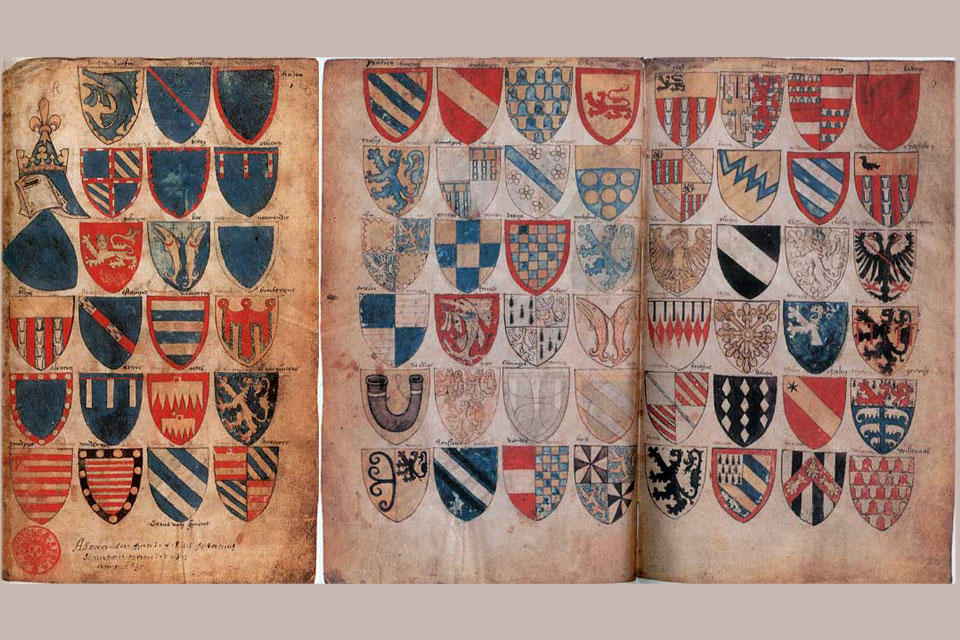
- Jean-Christophe Blanchard, L’armorial Wijnbergen est-il un reflet de la communauté du royaume de France ?
- Laurence Moal, La Bretagne et la communitas regni sous le règne de Pierre de Dreux (1213-1237)
Grégory Cattaneo, La communauté sans royaume dans l’Islande médiévale - Corinne Péneau, La création d’une communitas regni en Suède (xiiie-xive siècles)
- Alice Taylor, La communauté avant la communitas : les élites et le gouvernement royal en Écosse au xiiie siècle
- Éloïse Adde, « Communauté du royaume » et affirmation de la noblesse dans les pays tchèques (xiiie-xive siècles)
- Conclusions, par Bruno Lemesle
READ ALSO:


