


St. Michael’s in Lüneburg is a prime example of the red-brick hall churches of Northern Germany
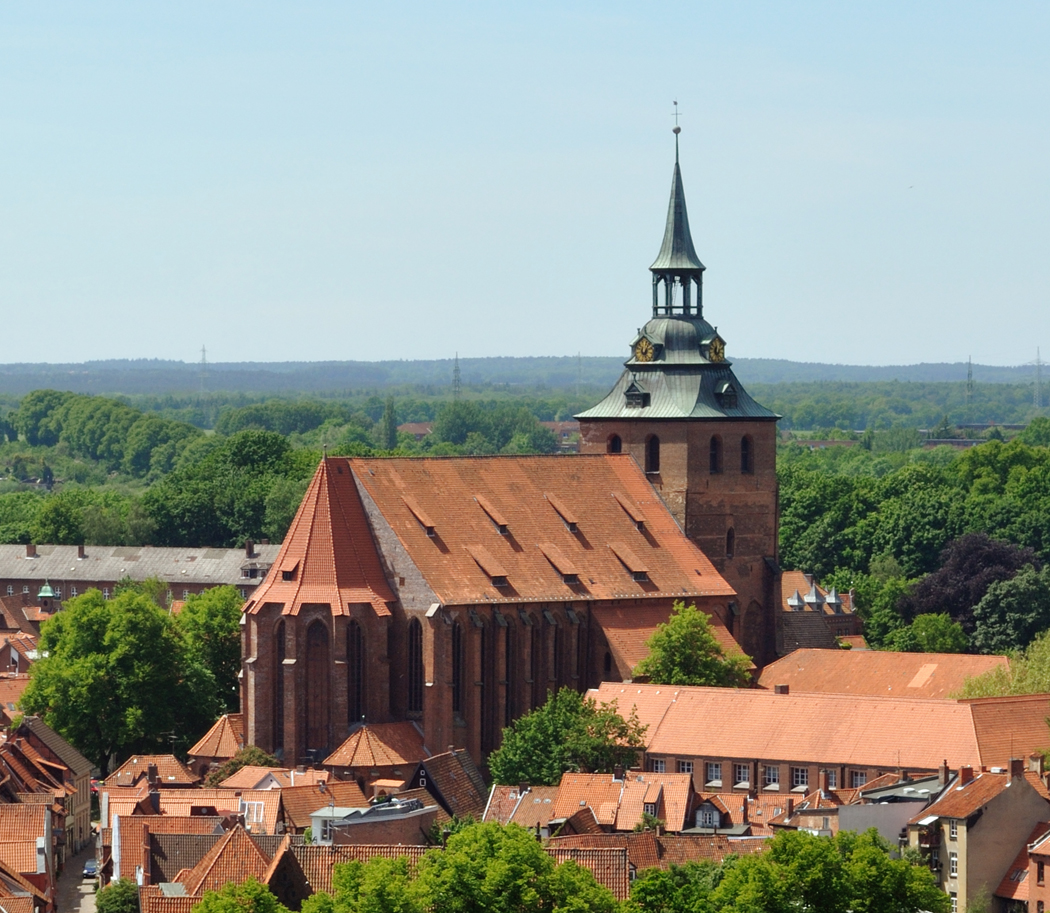
St. Michael’s is one of the main churches in Lüneburg. In AD 956 the Holy-Roman emperor, Otto I, presented the Benedictine Abbey (to which the church belonged) with the income from customs deriving from the extraction of the salt, which later made Lüneburg both famous and extremely wealthy.
St. Michael’s was at that time part of the castle of the Billunger (the reigning ducal family in Saxony), which was located on a hill in Lüneburg – the “Kalkberg”. This was the family Abbey and members of the Billungers were buried there. However, in 1371 the conflicts between the magnates and the city of Lüneburg over the income from the trade with salt turned into an open rebellion and the people from the city attacked the castle and tore it down. The Abbey was later relocated from the “Kalkberg” and rebuilt inside the town itself. This was part of the magnates effort to regain the power in the city. In connection with this the remains of the ducal families of the Billungs and the Welfs – who had taken over – were transferred to the new church
The building of the church was commenced in 1376 and finished in 1412. It measures 53 m long, 26 m wide and 20 m high. The tower raises 79 m high into the air. The church was built in red-brick and stands as one of the more prominent examples of this traditional form of construction in the area. It is a prime example of the so-called “Halle Kirchen” in Northern Germany and a prominent stop on the European Route of Brick Gothic.
As befitted an important church in one of the wealthy towns in the Hanseatic League, it was fitted with a number of exquisite pieces of art. One of these was the famous Golden Panel (Goldene Tafel), which served both as a retable and reliquary on the main altar.
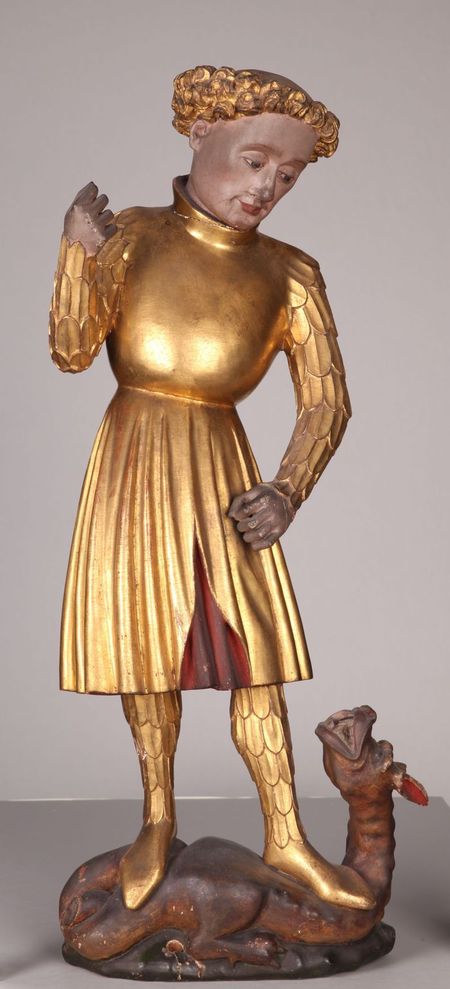
The Golden Panel was originally a Romanesque golden antepedium, which later became enclosed in a retable consisting of two sets of double wings, painted by the “Master of the Golden Panel in Lüneburg”(c. 1431 – 5). The central Romanesque antepedium was destroyed in 1698 by robbers, who melted it down, but the wings still exist and are housed in the Landesmuseum in Hannover. They measure 2.31 x 1.84 each. The closed wings showed the Crucifixion on one side and the Brazen Serpent on the other. The insides of the outer wings and the insides of the inner wings depicted 36 scenes from the Life of the Virgin and the Passion of Christ. On the inside of the inner wings were carved and guided figures of saints and prophets. Around the inserted Romanesque antepedium golden reliquaries were placed in niches; hence the name.
READ ALSO:
CfP for a Conference on the Golden Panel From Lüneburg
READ MORE:
Die Backsteinstadt Lüneburg: Ursprünge – Entwicklungslinien – Technikgeschichte
von Martin Pries and Antje Seidel
Books on Demand 2014
ISBN-10: 373573961X
ISBN-13: 978-3735739612
FEATURED PHOTO:
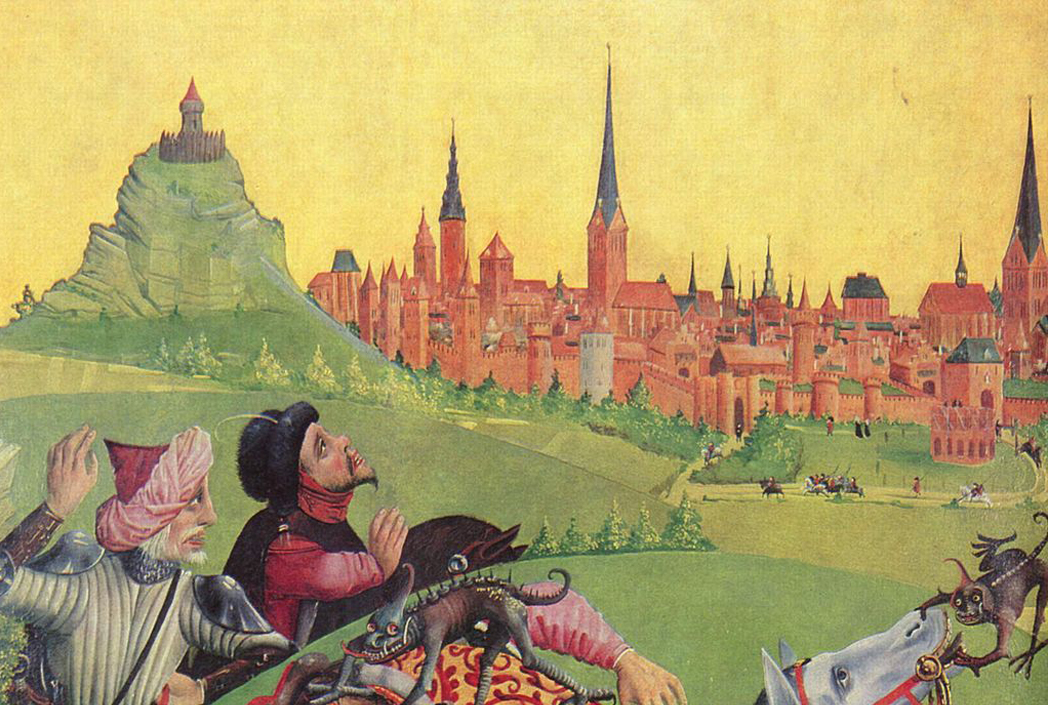
In St. Nicholaus’ in Lüneburg is a famous retable painted by Hans Bornemann, which shows the earliest rendering of Lüneburg. To the left is the Kalkberg and just below is the profile of St. Michael’s.


