


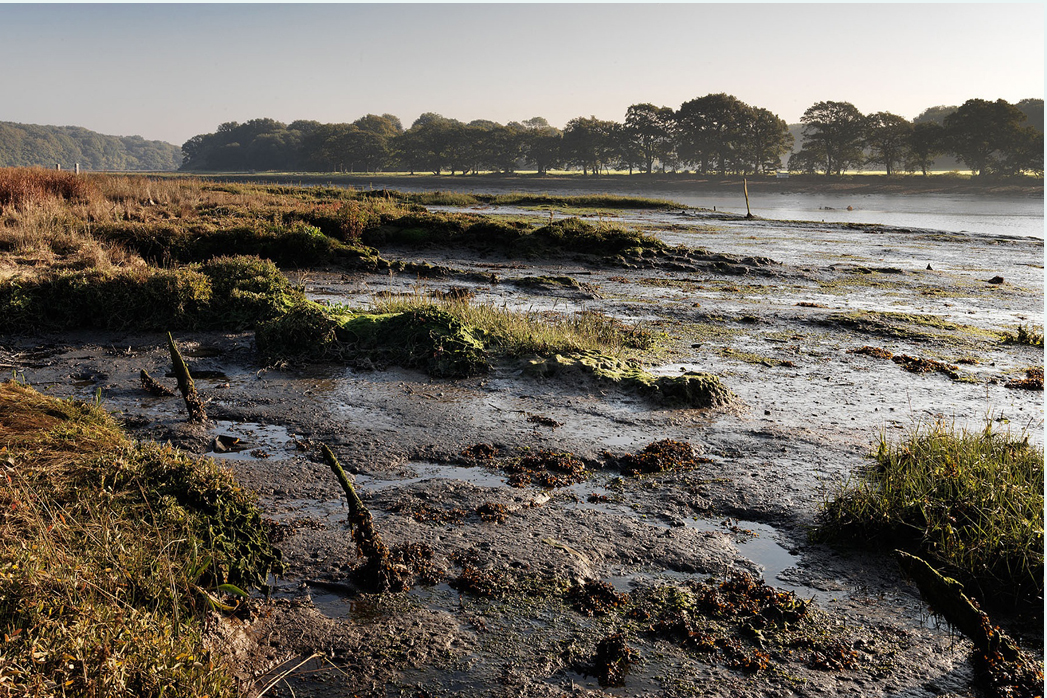
600-year-old warship, which helped Henry V wage war on France is believed to have been found buried in the river Hamble
In 1933 archaeologists identified the flag ship of Henry V, the Grace Dieu, lying in the shallow river of Hamble near Bursleden. The remains of this ship was partly excavated by Time Team in 2004. Now a historian, Ian Friel, believes he has identified the wreck of yet another of Henry V’s four great ships, the Holigost (Holy Ghost).
Dr Ian Friel, historian and an expert adviser to Historic England made the find while he worked for the former Archaeological Research Centre. He was re-visiting documentary evidence for his new book, Henry V’s Navy and brought his findings to Historic England.
Friel said: “I am utterly delighted that Historic England is assessing the site for protection and undertaking further study. In my opinion, further research leading to the rediscovery of the Holigost would be even more important than the identification of the Grace Dieu in the 1930s. The Holigost fought in two of the most significant naval battles of the Hundred Years War, battles that opened the way for the English conquest of northern France.”
Duncan Wilson, Chief Executive of Historic England (formerly known as English Heritage), which is now beginning further research and assessing the boat for protection said: “The Battle of Agincourt is one of those historic events that has acquired huge national significance.
“To investigate a ship from this period close to the six hundredth anniversary is immensely exciting. It holds the possibility of fascinating revelations in the months and years to come. Historic England is committed to realising the full potential of the find.”
The Holigost and Life onboard
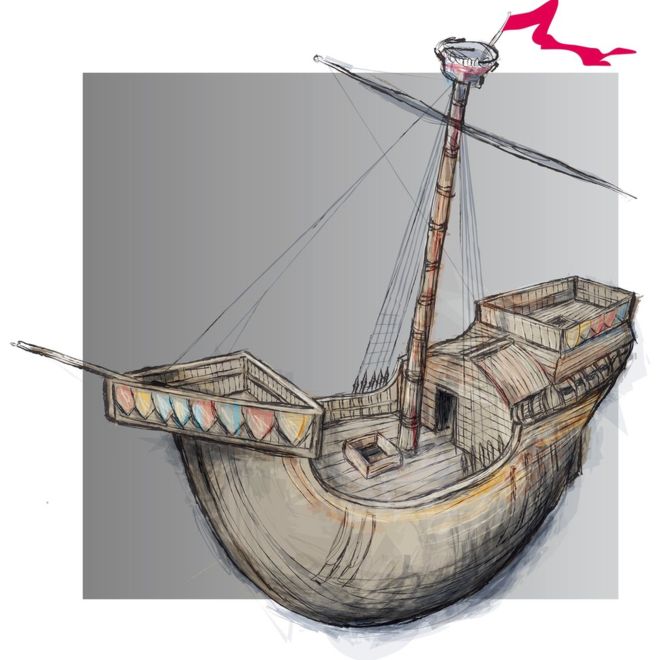
The Holigost was a major part of Henry V’s war machine, playing a key role in the two battles that broke French naval power and enabled Henry to conquer France in the early 15th century. But the Holigost was not part of the great fleet, which set sail for France on the 11th of August 1415 with probably 650 ships. It has previously been believed that this fleet numbered 1500 ships. New research by the historian, Craig Lambert, have, however, extrapolated the size of the fleet from the accounts.
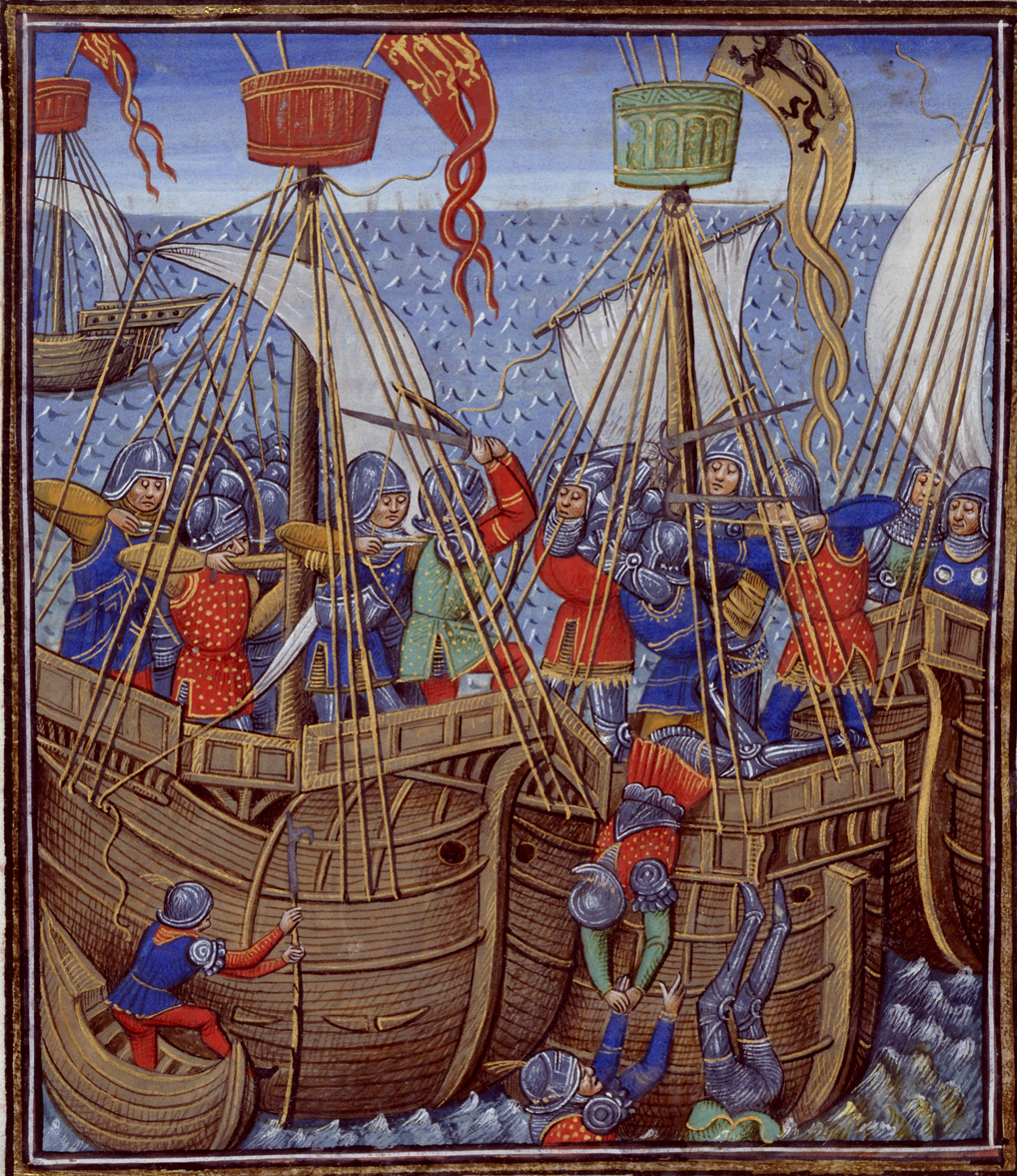
The Holigost joined the royal fleet on 17 November 1415 and took part in operations between 1416 and 1420, including two of the most significant naval battles of the Hundred Years War. It participated in Earl of Dorset’s expedition to the Seine (1416) and served as the flagship of the Duke of Bedford at the battle of Harfleur in 1416, suffering serious damage. In 1417 it was once more in the thick of the fighting off the Chef de Caux in 1417.
In 1420 the ship sailed in the Earl of Devon’s sea-keeping voyage of 1420. Varying tonnage figures due to the addition of upperworks have been given for specific expeditions.
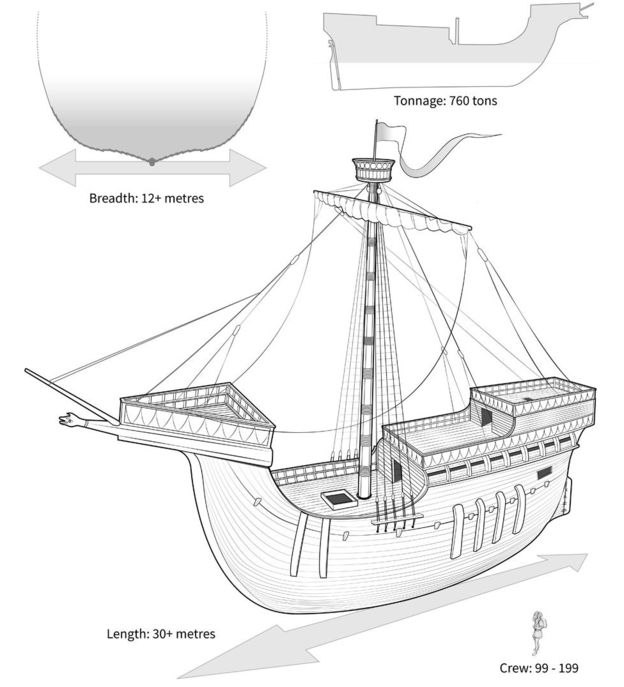
It was rebuilt from a large Spanish ship called the Santa Clara that was captured in late 1413 or early 1414 and then acquired by the English Crown. The name of the ship was derived from Henry V’s personal devotion to the Holy Trinity. After Agincourt and the victory of Henry V, the navy became superfluous and the four large ships were laid up in the docks near Burselden. The ship was last mentioned in records 1447-52.
The ship had a crew of 200 sailors in 1416, but also carried large numbers of soldiers to war, as many as 240 in one patrol. Conditions aboard must have been crowded and unpleasant, and that was before they got into battle.
The ship carried seven cannons, but also bows and arrows, poleaxes and spears, along with 102 ‘gads’ – fearsome iron spears thrown from the top-castle. These could easily penetrate the body armour of the period.
If verified, the Holigost would be a tangible link with the life and times of Henry V. Like all the great ships, it was built to further Henry’s war aims, but its decoration and flags also reflected his personal religious devotion and his political ideas. Unusually, this included a French motto Une sanz pluis, ‘One and no more’, which meant that the king alone should be master.
The ship was a clinker-built vessel (using overlapping planks of timber) of around 740-760 tons. Despite huge expenditure on maintenance work, the Holigost began to succumb to leaks and timber decay.
Underwater repair work carried out on Holigost by a ‘Dyver’ named Davy Owen in 1423 may be the first-recorded instance of a diver used in ship repair in England
Future research
Historic England is taking steps to protect and investigate a shipwreck in Hampshire that is believed to be the second of four ‘great ships’ built for Henry V’s royal fleet.
Future scientific research on the ship could reveal much about late medieval ship design and construction, both in England and Spain. The wreck might also improve current understanding of life aboard ship, ship-handling and naval warfare in the 15th century.
Given the care with which the ship was laid up, the site itself might also preserve information about contemporary dock-building and docking practices. Historic England experts use a range of research methods, including sonar, remote sensing including aerial imaging using drones, and dendrochronology.
SOURCE:
Historic Wreck Identified – Believed To Be Henry V’s 600-Year-Old Great Ship
Henry V’s Navy: A Multinational Fleet
READ MORE:
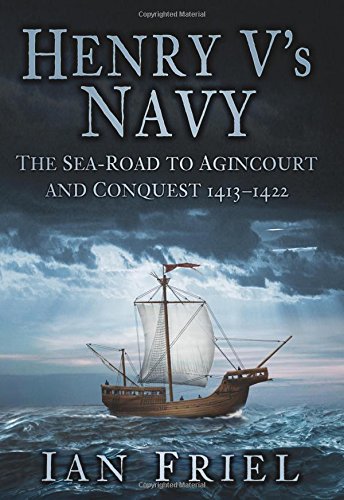
By Ian Friel
The History Press 2015
ISBN: 9780750966580
ISBN: 9780750963923


