


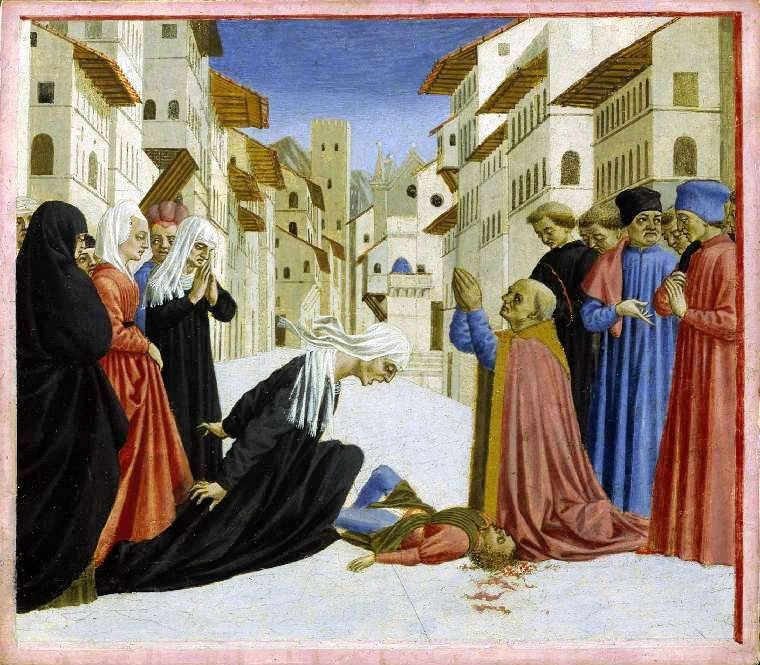
This summer Urbino hosts an exhibition on the ideal city and invites visitors to compare two enigmatic pictures usual hung far apart
The ducal palace in Urbino represents one of the most beautiful renaissance buildings one might imagine. From the cool interior of the colonnade and courtyard to the famous office with intarsia panels it represents a near perfect renaissance dream.
However, this summer the palace hosts an exhibition not so much on the ideal palace, as on the ideal city.
Starting point for the exhibition are two out of three enigmatic panels on the ideal renaissance city dated around 1480 – 1500. One belongs to the ducal collection, another usually hangs in the Walters Gallery in Baltimore and a third is found in Berlin. Unfortunately the last one is so fragile, that a loan was declined. But two out of three gives a good impression of these weird architectural and mathematical – utopian – dreams; (all three may be seen here).
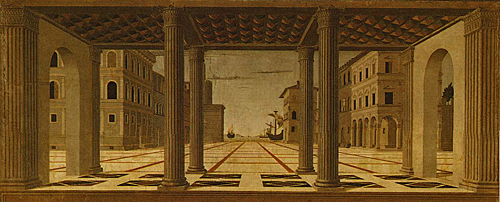
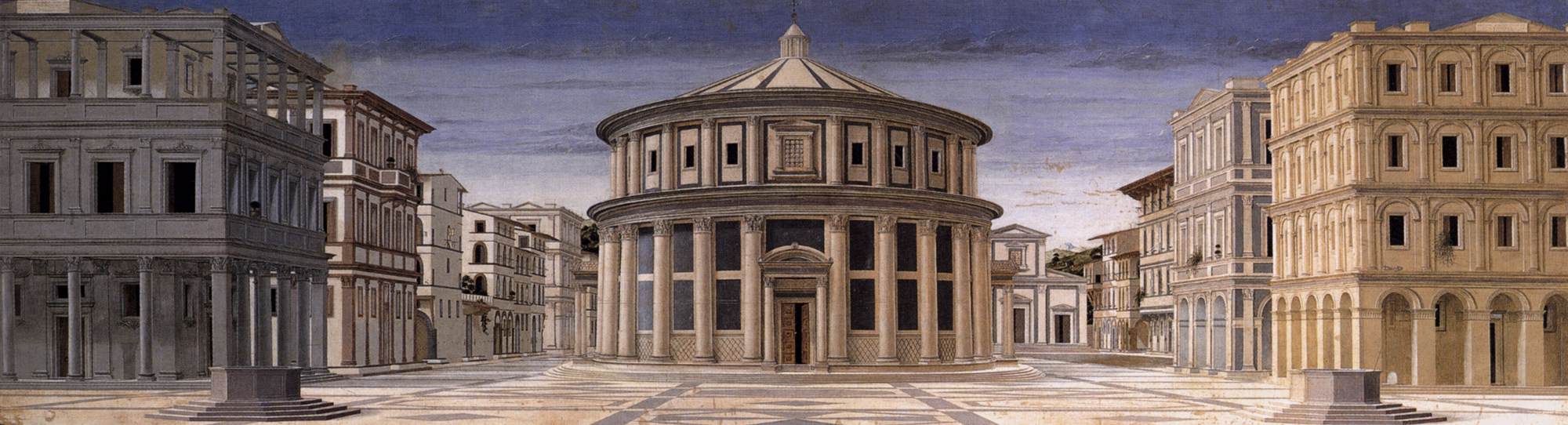
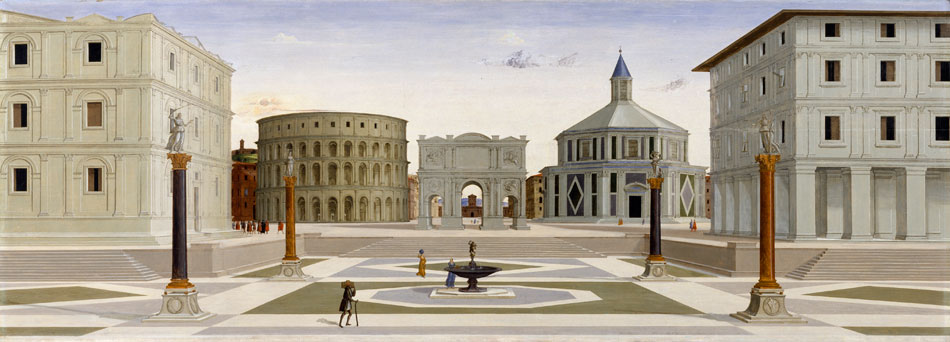
All in all the exhibition presents us with a unique opportunity to delve into what an ideal living space was thought to be at a time in history, when people believed they might build it themselves. No longer did they have to wait for the descent of the Heavenly Jerusalem. They might actually draw it with charcoal and design it in the minutest details.
After having visited the exhibition, one might even top up the experience and make a detour to the less well-known city of Cagli, which was rebuilt after a fire by Arnolfo di Cambio around 1300 as what appears to have been an “ideal city”. Some even believe that the mountain figuring in the background of the Baltimore-painting may be found in the vista behind Cagli. In order to see an “ideal renaissance city” one should however make a digression to Pienza in Toscania.
According to Il Reppublica a full presentation of an ongoing scientific study of the panels will be presented in June in Urbino.
La Città ideale. L’utopia del Rinascimento a Urbino tra Piero della Francesca e Raffaello
06.04.2012–08.07.2012
Urbino, Palazzo Ducale
Read about the exhibition at Art Wireless and get links to the official presentations in Italian
See the video about the exhibition at YouTube
Read more:


