


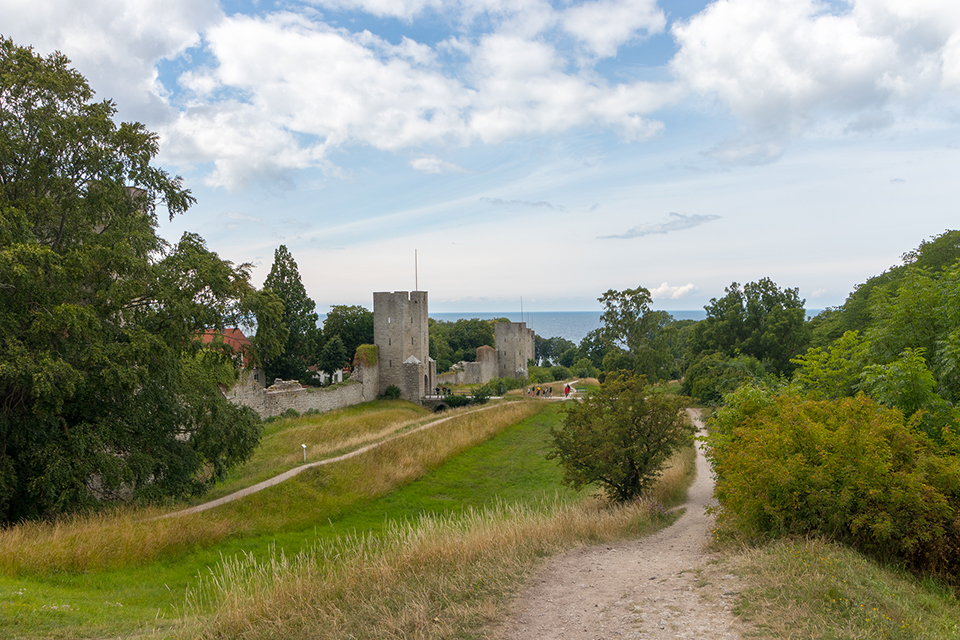
By focusing on the “heritagescape” – composed of the intwined nature and culture of a historical landscapes – tourist managers might find a way to disperse the cruise tourists plodding down congested inner cities.

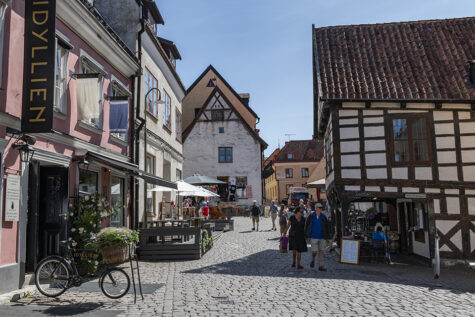
Photo 154597288 / Visby © Andorapro | Dreamstime.com
Visby is one of the great medieval cities worth visiting in Europe. Declared UNESCO World Heritage in 1995, it offers a unique medieval experience in the centre. With its huge walls, manifold medieval houses and splendid museum, the town provides a magnet for the Baltic cruise industry. Acknowledging the importance of this kind of traffic, a new cruise pier was built in 2018, resulting in a marked increase in international cruise passengers. From 2019-22, the number grew by 50% to 150.000 cruising from Stockholm to St. Petersburg. This number, however, should be compared to the nearly one million travellers who visit the island in July and August (of which the Swedes constitute the majority).
Unfortunately, this traffic is accompanied by its many and well-known vices: pollution, crowds, congestion, and short-term visits; also, it has to some extent, proved uninteresting in economic terms.
For instance, a study based on GPS trackers fitted with a “like-button” has documented that the significant rise in visitors after 2019 has led to more than 5,000 people per day entering the Cathedral in Visby, leading to interior climate changes and widespread mildew and fungus attacks on the precious interior as well as the collapse of the sewage system and the toilets. Also, the utilisation of the church for contemplative and spiritual reasons has been severely hampered.
Another analysis based on the same survey demonstrates how the main attraction, however, are the picturesque streets and historical environments in the medieval city centre with the walk on and along the wall and the vistas of the sea and the wider “heritage scape” as the second choice. Strong competitors were nevertheless the shopping and eating facilities, neatly dividing the tourists into two distinct segments.
How to create a less crowded inner city
The question has been raised, how to create product diversification as well as a more sustainable tourism input? In a recent article, the authors explore these possibilities by involving local communities and stakeholders in providing:
- Information
- Transportation
- Routes
A qualitative debate was organised using OSM (Open Space Methodology) in a workshop involving local entrepreneurs, representatives of organisations, students, and international researchers visiting Campus Gotland (Uppsala University).
During the workshop, the following topics were debated:
- Bring the countryside to Visby
- Collaboration in sales and marketing
- What are the unique selling points for Gotland
- Communication with tourists
- Time restrictions of the cruise tourists
- Digital platform challenges
- Transportation
- The forest as an attraction
- Better dialogue between entrepreneurs and regional authorities
The strategies suggested were
- Building a mini-fair of rural products at the ferry terminal,
- Development of story-lines for the products
- Utilising Trip Advisor better
- Organising helicopter tours to the Bergman’s film museum on an island up north, the Roma Whisky distillery or the ruins of the medieval Roma Convent
- Presenting the countryside as part of the USP, f. inst. medieval houses and churches, the wall and the ramparts, the Villa Villekulla in the suburbs of Visby,
- Involving students in the construction of communication strategies and digital platforms, tour guides etc.,
- Offering a wider variety of information in different languages
- Development of new bus lines and transport services
The workshop was one of the final events held on Gotland as part of a research project carried out by Uppsala University – 2018 – 2020, which aimed to examine (the attitudes of cruise tourists towards Gotland as a tourist destination and the development of sustainable visits.
Nature and Heritage

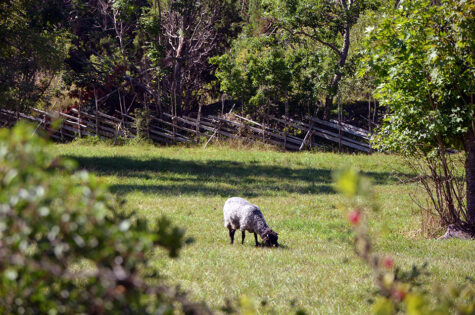
One of the more curious workshop results was listing the topic: the forest as an attraction. Arguably, Gotland’s nature is one of the significant reasons to visit the island. Nevertheless, ideas were never formulated on how to entice the cruise tourists into the wider – and very fascinating – landscape of Gotland (which may indeed offer a better route for renovating the tourism industry in Gotland).
In a recent thesis by Mareike Kerstin Schaub, this idea of merging nature and culture into a united “heritage product” in Gotland has been studied. Apart from a rich medieval heritage in the form of preserved buildings as well as landscapes and animals (the Gotland Russ and the Gotlandic Sheep), the social landscape also offers a multitude of medieval churches, numerous prehistorical monuments, and 60-70 small privately owned museums or collections operated by local heritage associations (Hembygdsföreningar) complementing the collections exhibited at the Open-Air Museum at Bungemuseet and the main museum in Visby. Further, Gotland offers ample opportunities to experience a diverse and enticing natural landscape with a rich biodiversity. Mindful walking or hiking through this landscape is an enticing opportunity. Together, these elements are perceived to constitute a distinct “heritagescape”.
As part of this study, two distinct locales are investigated: Norrby’s Rural Museum and Torsburgen.
Norrby is a museum farm operated by Gotlands Museum and demonstrates farming as it was organised in the 1930s to 1950s. One of the charming features is the natural environment reminiscent of the farming landscape – the silviculture – of bygone days. Mustering different ecosystems – forests, meadows, mill ponds – the farming landscape offers a significant imprint of the natural history. Further out, the Norrby farm borders on Bäck’s nature reserve categorised as IUCN Ia, and thus strictly preserved. For centuries, the forest has been used for grazing and the occasional harvest of trees for building materials. At the centre is an old fortification from the Iron Age.
As opposed to Norrby – where the movement meanders from the farm through the infields and into the forest, Torsburgen is foremost a nature reservation which covers 160 ha of a distinct rocky geological formation covered with fascinating vegetation and scorched grounds, the result of a devastating fire in 1992. The result has been a new and intriguing vegetational cover marked by a distinct biodiversity. Unfortunately, the many exciting herbs and plants are not pointed out, nor compared to those Linné wrote about when he visited the place in 1741. This, it seems, is an opportunity missed. On the other hand, ample information is provided about the large inland cliff, which was once used as a hill fort. With a two km long rampart and base 10 to 25 meters wide, it rises seven meters above ground in some places. A distinct feature is the possibility to climb the rampart and experience the landscape as both nature and heritage from above, writes Schaub.
Reflection

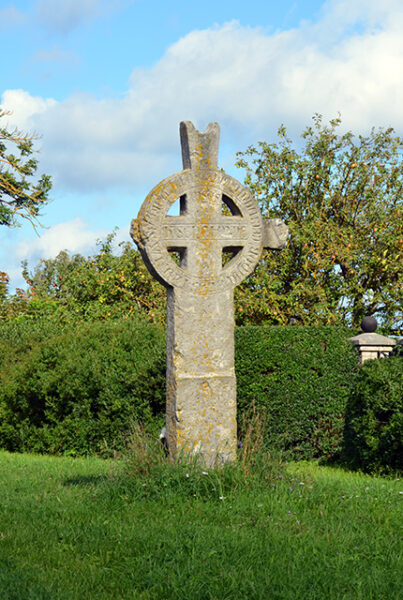
© Schousboe 2011
Thus, a common denominator of both sites is their dependency on their entwined cultural and natural heritage.
One wonders whether it might be a better strategy to rethink the “marketing” of Visby towards the cruise tourists as a place foremost to walk around while imbibing the wall and the nature and landscape on the ramparts? As was one of the ideas floated at the workshop. Better, perhaps, than thinking of the town as a place to walk through. The people opting for the shopping experience would still find their way inside.
At the same time, the heritage tourists might perhaps enjoy themselves more, looking at the most prominent part of the surroundings, the battleground from 1361 and the events, which followed.
Afterwards, a trip to the Museum in town might provide further information about this particular “heritagescape” of Gotland.
SOURCES:
Sustainability in conflict: A study of cruise tourism to Gotland
Ulrika Persson-Fischier
Uppsala University 2019
Open spaces for co-creation: a community-based approach to tourism product diversification
João Romão, Klas Palm and Ulrika Persson-Fischier
Scandinavian Journal of Hospitality and Tourism
Volume 23, 2023 – Issue 1, pp 94-113. online: 13 Feb 2023
What You See is Where You Go: Cruise Tourists’ Spatial Consumption of Destination Amenities
By Marina Toger,, John Östh and Sabine Gebert Persson
Economic Themes (2023), Vol 61, No 1, pp 63-84
Natural and Cultural Heritage in Tourism on Gotland. Heritage Tourism Characteristics and the Relation of Natural and Cultural Heritage
Thesis by Mareike Kerstin Schaub
Uppsala University 2020
READ MORE:
Research and Collaboration on sustainability challenges
The cultural heritage in Visby is a tourist attraction that draws visitors from around the world. In the summer of 2018, 680 000 people visited Gotland. A new harbour for cruise ships was completed in April of 2018 in order to support the development of tourism. How can these developments grow in a sustainable way?


