


If you are a trendy medievalist, the hottest subjects to study right now are the cultural and social aspects of monasticism and religious life as they pertain to canon law; and roughly placed in Late Antiquity or the Early Medieval period. A certain historiographical and art-historical slant would heighten the voguish character. At least, this is what statistics tells us….
A conference like IMC in Leeds is a place to do some serious trend-spotting. This is where you might get a good feeling for new books, which are in the crucible; or which new networks, scholars are trying to drum up support for.
However, the bonanza of sessions on offer is also a somewhat solid indicator of what trendy medievalists have offered to the organisers, who has put the final programme together.
Granted: IMC is very careful to secure a balanced palette by working with a strand structure and a network of so-called strand-coordinators. Which means that in general coordinators are asked to work towards a balance.
However, it is possible to discern certain shifts by calculating the ups and down of the different strands through the last four years from 2012 – 2015 and in percentage of the total number of strands on offer. In this period the strand structure has been consistent. Thus it is possible to see what has drawn the crowds through time.
To be precise:
- From 2012 to 2015 the strand: “Late Antiquity and Early Medieval Studies” grew with 2%. This was also the case with “Culture and Society”, Church History and Canon Law” as well as “Historiography (Medieval and Modern)”.
- On the other hand “Language and Literature (Germanic)” – never very popular anyway – has taken the largest hit (-3%). In fact, it appears language and literature is not very hot except if it is in a comparative perspective; a fate it shares with the least appealing strands like “Music and Liturgy”, “Jewish Studies” and “Drama”.
This year the nominal frontrunners are
- Late Antiquity and Early Medieval Studies – 76 sessions
- Monasticism and Religious Life – 71 sessions
- Culture and Society – 57 sessions
- Church History and Canon Law – 57 sessions
- Art and Architecture – 55 sessions
- Historiography (medieval and Modern) – 54 sessions
- Social and Economic History – 52 sessions
- Government and institutions – 51 sessions
Information, however, on which sessions can boast of a large audiences is sorely lacking. Perhaps people may be found by the marquee drinking beer with their chums.
FEATURED PHOTO
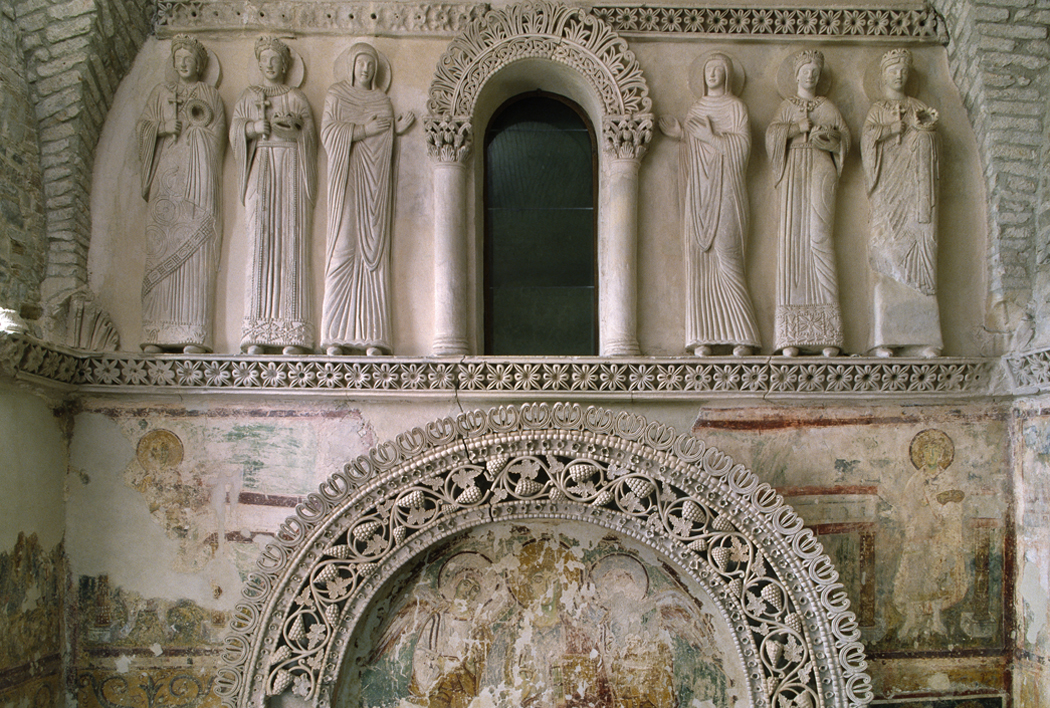
Tempietto Longobardo in Cividale del Friuli Source: Wikipedia


