


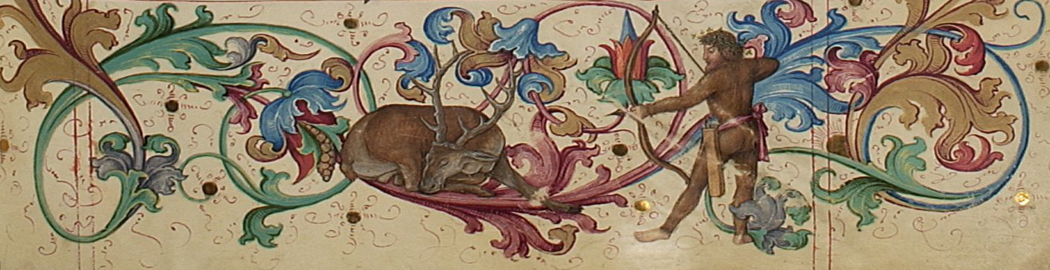
Animals were everywhere in premodern times. From mighty horses to humble sparrows princes as well as paupers were obliged to live with and interact with animals of all sorts. A new book explores these intimate interrelations between persons and animals.
Animals and Early Modern Identity
By Pia F. Cuneo (Ed.)
Ashgate 2014
ISBN: 978-1-4094-5743-5
ISBN Short: 9781409457435
ABSTRACT:

The nexus between animal-human relationships and early modern identity is illuminated in this volume by the latest research of international scholars working on the history of art, literature, and of sixteenth- and seventeenth-century Germany, France, England, Spain, and South Africa. Collectively, these essays investigate how animals – horses, dogs, pigs, hogs, fish, cattle, sheep, birds, rhinoceroses, even sea-monsters and other creatures – served people in Europe, England, the Americas, and Africa to defend, contest or transcend the boundaries of early modern identities.
Developments in the methodologies employed by scholars to interrogate the past have opened up an intellectual and discursive space for – and a concomitant recognition of – the study of animals as a topic that significantly elucidates past and present histories. Relevant to a considerable array of disciplines, the study of animals also provides a means to surmount traditional disciplinary boundaries through processes of dynamic interchange and cross-fertilization.
CONTENTS:
- Introduction, Pia F. Cuneo.
- Man’s best friend? Dogs and pigs in early modern Germany, Alison G. Stewart
- Every living beast: collecting animals and art in early modern Munich, Susan Maxwell
- Where the sun don’t shine: animals and animality in Louis XIV’s royal labyrinth of Versailles (1668-74), Peter Sahlins
- ‘For amusement, merry-making and good company’: horse racing at a German princely court, Miriam Hall Kirch
- Breeding nobility: raising horses at early modern German courts, Magdalena Bayreuther
- Horses and elite identity in early modern England: the case of Sir Richard Newdigate II of Arbury Hall, Warwickshire (1644-1710), Peter Edwards.
- Horses as love-objects: shaping social and moral identities in Hans Baldung Griens’ Bewitched Groom (circa 1544) and in 16th-century hippology, Pia F. Cuneo
- On the bit: Prince Maurits, Simon Stevin, and the Spanish warhorse, Ingrid Cartwright
- The tusked hog: Richard III’s boarish identity, Karen Raber; Who are the animals in the Geese Book?, Corine Schleif
- Settler stock: animals and power in the mid-17th-century contact at the Cape, circa 1652-62, Sandra Swart.
- Individuality and the understanding of animals in the early modern Spanish empire, Abel A. Alves
- World of wonders: exotic animals in European imagery, 1515-1650, Larry Silver
- French early modern sea-monsters and modern identities, via Bruno Latour, Louisa Mackenzie
- Ways of being, ways of knowing: fish, fishing, and forms of identity in 17th-century English culture, Elspeth Graham
- Pedagogy and the art of dressage in the Italian Renaissance, Juliana Schiesari
- Index.
ABOUT THE AUTHOR:
Pia F. Cuneo is Professor of Art History at the University of Arizona, USA. Her current work focuses on sixteenth- and seventeenth-century hippology, and she competes locally in dressage.


