


Apocalyptic thinking was a common topic in Late Antiquity, reaching into the early Reformation. The following lists recent books outlining the history behind the topic and its different forms of artistic renditions
General Introductions
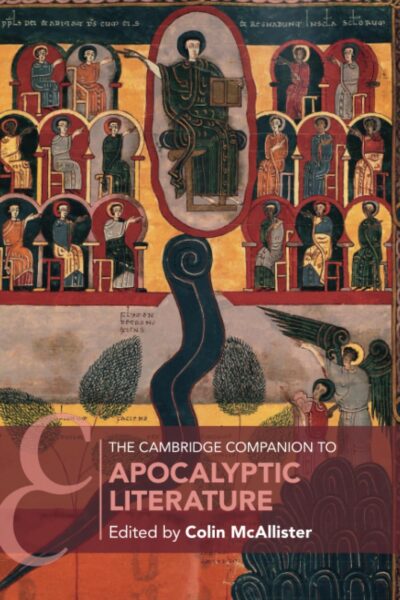
The Cambridge Companion to Apocalyptic Literature
By Collin McAllister
Cambridge University Press 2020

The Oxford Handbook of Apocalyptic Literature (Oxford Handbooks)
Ed. by John J. Collins
Oxford University Press 2014
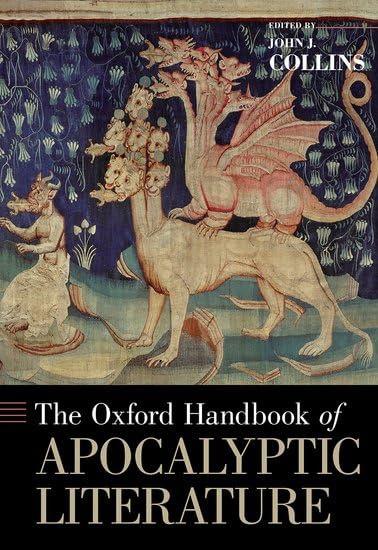

The Oxford Handbook of Apocalyptic Literature is a thematic and phenomenological exploration of apocalypticism in the Judaic and Christian traditions. Most of the volume is devoted to the apocalyptic literature of antiquity. Essays explore the relationship between apocalypticism and prophecy, wisdom and mysticism; the social function of apocalypticism and its role as resistance literature; apocalyptic rhetoric from both historical and postmodern perspectives; and apocalyptic theology, focusing on phenomena of determinism and dualism and exploring apocalyptic theology’s role in ancient Judaism, early Christianity, and Gnosticism.
The final chapters of the volume are devoted to the appropriation of apocalypticism in the modern world, reviewing the role of apocalypticism in contemporary Judaism and Christianity, and more broadly in popular culture, addressing the increasingly studied relation between apocalypticism and violence, and discussing the relationship between apocalypticism and trauma, which speaks to the underlying causes of the popularity of apocalyptic beliefs. This volume will further the understanding of a vital religious phenomenon too often dismissed as alien and irrational by secular western society.
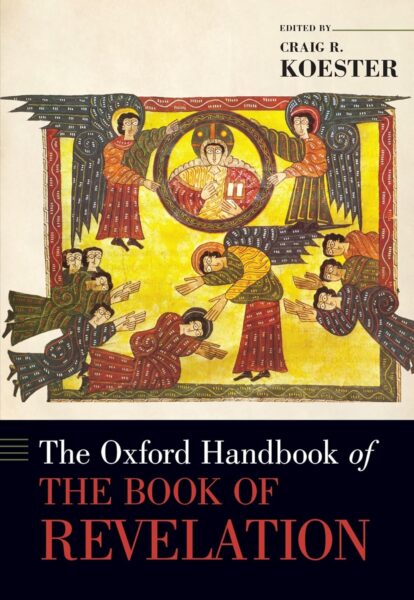
The Oxford Handbook of the Book of Revelation
Ed. By Craig Koester ·
Oxford University Press 2020

Expecting the End of the World in Medieval Europe: An Interdisciplinary Study
By Israel Sanmartín and Francisco Peña
Series: Apocalypse and the Global Middle Ages
Routledge 2024
The book is organized in eleven chapters which reflect and explore the following arguments: the study of specific eschatological episodes in medieval Europe and their interpretations; the analysis of apocalyptic visionaries, apocalyptic authors, and their individual contributions; the social and political implications of eschatology in medieval society; the study of medieval apocalyptic literature from a rhetorical, narratological, and historiographical perspective; the history of the transmission of apocalyptic literature and its transformation over time; and a comparative examination of apocalypticism between the Middle Ages and the Early Modern era.
This study provides a lens through which academics, specialists, and interested researchers can observe and reflect on this entire eschatological universe, dwelling both on well-known texts, authors, and events, and on others which are much less popular. In gathering different paradigms, tools, and theoretical frameworks, the book exposes readers to the complex reality of medieval anxiety regarding the end of the world.
Peoples of the Apocalypse: Eschatological Beliefs and Political Scenarios
Ed. by by Wolfram Brandes et al
Series: Millennium-Studien / Millennium Studies Book 63
De Gruyter 2016

Retour vers le futur: l’apocalypse au Moyen Âge
By Jean-Claude Schmitt
Nanterre (2024)

Early Middle Ages
The Apocalypse in the Early Middle Ages Illustrated Edition
by James Palmer (Author)
Cambridge University Press; Illustrated edition
Cambridge University Press 2014
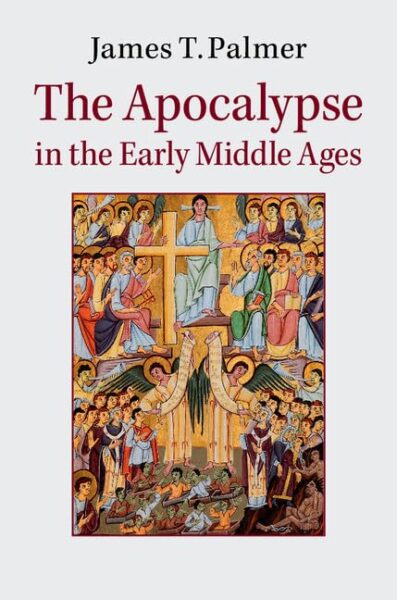

James Palmer undertook a Leverhulme Early Career Fellowship at the University of Nottingham in 2006–7 (on Time and Power in the Early Medieval West). In 2007 he was appointed Lecturer in Medieval History at the University of St Andrews, where he has taught widely on the Middle Ages, including a course on Medieval Apocalyptic Traditions. His well-reviewed first book on Carolingian hagiography, Anglo-Saxons in a Frankish World, 690–900, was published in 2009. He was elected a Fellow of the Royal Historical Society the following year. In 2011–12 James held a much-sought-after ARHC Fellowship, which allowed him to complete his research for The Apocalypse in the Early Middle Ages. He was a founding editor of The Medieval Journal, an international forum for interdisciplinary medieval studies. He is also a member of the Medieval Academy of America and the International Society of Anglo-Saxonists.
Between Prophecy and Apocalypse: The Burden of Sacred Time and the Making of History in Early Medieval Europe
By Matthew Gabriele
Oxford University Press 2024

Seeking to complicate this mischaracterisation, which is primarily the invention of nineteenth and early twentieth century historiography, this book maps the movement between two intellectual stances: a shift from prophetic to apocalyptic thinking. Although the roots of this change lay in Late Antiquity, the fulcrum of this transition lies in the tenth and eleventh centuries. Biblical commentators in the fourth and fifth centuries enforced a particular understanding of sacred time that held until the ninth century, when exegetes of the ninth century found in their commentaries a different plan for God’s new chosen people. This came into stark relief as the new kingdom of Israel (the Frankish empire under the Carolingians) had splintered in the 840s. God was manifesting his displeasure with the chosen people by fire and sword.
What was perhaps unforeseen was that these commentaries that were written in the specific context of the Carolingian Civil War would be heavily copied and read for the next 200 years. Ideas that formed in a world that actively lamented the loss of empire had to be translated to a world that could only dream of that empire. As they spread across Europe, these ideas became the basis for monastic educational practices, and bled into other types of textual production, such as supposedly “secular” histories.
Between Prophecy and Apocalypse charts an intellectual transformation triggered when the prescriptions laid out towards the end of the Carolingian empire began to be “realized” in subsequent centuries. Nostalgia entwined with an attentiveness to possible futures and spun together so tightly as to become a double helix. Ultimately, this book will offer a way to understand the central Middle Ages, a period of dynamic intellectual ferment when ideas could inspire action and (seemingly banal) conceptions of time and history could inspire moments of dramatic transformation and horrific violence.
Matthew Gabriele is a professor of medieval studies at Virginia Tech. He has also been a visiting fellow at Westfälische Wilhelms Üniversität-Münster as well as at the University of St. Andrews, UK. He has published widely (for both academic and wider audiences) on religion, violence, nostalgia, and apocalypse, whether manifested in the European Middle Ages or modern world. Most recently, he co-authored with David M. Perry, The Bright Ages: A New History of Medieval Europe and is working with Perry on Oathbreakers: The Carolingian Civil War and the Collapse of an Empire in the Middle Ages.
Prophesy and Politics in the Early Carolingian World
By Andrew H. Sorber
Routledge 2024

Prophecy and Politics in the Early Carolingian World argues that claims of divine revelation, resistant to any attempts to monopolize them, provided a powerful means of speaking with authority for all participants in Frankish political discourse. This authority proved instrumental in the articulation and dismantling of effective Carolingian royal authority from 768 to 840. The volume introduces and reinterprets early Carolingian political discourse and intellectual activity, as well as the centrality of apocalypticism in the Carolingian period, by emphasizing prophecy, or revelation and authority, rather than prediction and calamity.
Early Carolingian political discourse was a dialogue that took place across royal proclamations, legal statements, historical texts, visions, scriptural commentaries, and manifestations of the natural world, and in this dialogue, the ability to interpret God’s will was as powerful as it was problematic.
Andrew Sorber is an assistant professor of Humanities and History at Southern Virginia University and the program coordinator for History. His research and teaching explore the religious, political, and intellectual history of the early medieval Mediterranean world, with topics including apocalypticism, polemics, interreligious understanding, debate, and conflict. His publications focus on issues of authority in Islamic al-Andalus and the Frankish kingdoms ruled by the Carolingians. He completed a bachelor’s degree in history at Brigham Young University, a master’s degree at Magdalene College, Cambridge, and a doctorate in medieval history at the University of Virginia.
Apocalyptic Thinking at the Turn of the Millenium
Art History
Apocalypse Illuminated: The Visual Exegesis of Revelation in Medieval Illustrated Manuscripts
By Richard K. Emmerson
Penn State University Press 2018
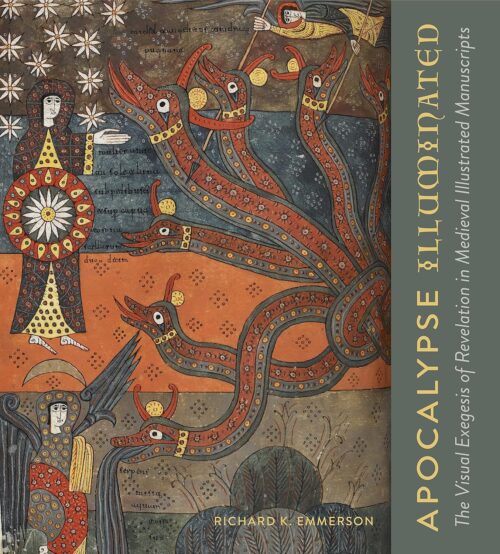

Focusing on twenty-five of the most renowned illustrated Apocalypse manuscripts, from the earliest extant Carolingian ones produced in the ninth century to the deluxe Apocalypse made for the dukes of Savoy and completed in 1490, Emmerson examines not only how they illustrate the biblical text, but also how they interpret it for specific and increasingly diverse audiences. He discusses what this imagery shows us about expectations for the Apocalypse as the year 1000 approached, its relationship to Spanish monasticism on the Christian-Muslim frontier and to thirteenth-century Joachimist prophetic beliefs, and the polemical reinterpretations of Revelation that arose at the end of the Middle Ages. The resulting study includes historical and stylistic comparisons, highlights innovative features, and traces iconographic continuities over time, including the recurring apocalyptic patterns, events, figures, and motifs that characterize Apocalypse illustrations throughout the Middle Ages.
Gorgeously illustrated and written in lively and accessible prose, this is a masterful analysis of over seven hundred years of Apocalypse manuscripts by one of the most preeminent scholars of medieval apocalypticism.
Late Middle Ages
A Companion to Popular Apocalypticism in the High and Late Middle Ages
Ed. by by Sally Mayall Brasher
Series: Brill’s Companions to the Christian Tradition
Brill August 2025

A Companion to the Premodern Apocalypse
Ed. by Michael A Ryan
Series: Brill’s Companions to the Christian Tradition, 64
Brill 2016

Contributors are: Roland Betancourt, Robert Boenig, Richard K. Emmerson, Ernst Hintz, László Hubbes, Hiram Kümper, Natalie Latteri, Thomas Long, Katherine Olson, Kevin Poole, Matthias Riedl, Michael A. Ryan
Environmental Apocalyptic Thinking
A Philosophy of Climate Apocalypticism. In and Against the World
By Jakub Kowalewski
Routledge 2025
This book offers a long-overdue analysis of the ubiquity of eco-apocalypticism in current discourses on the climate crisis.
Drawing on a wide range of sources and theoretical traditions from ecological works and radical pamphlets, through political theology and continental philosophy to ancient and medieval apocalypses, the book sheds a comprehensive light on the concepts, processes, and experiences which circulate around the figure of the environmental end of the world. Importantly, this book argues that apocalypticism can provide a productive philosophical framework for addressing the climate catastrophe, enabling us to propose a distinctive answer to the fundamental question which haunts progressive ecological projects: how can we defend the world we find indefensible?
Appealing to students, academics, and researchers in philosophy, political theology, and environmental humanities, this book is a timely intervention which hopes to demonstrate that, when all else fails, it is the end of the world which may save the planet.
The Environmental Apocalypse
Interdisciplinary Reflections on the Climate Crisis
Ed. by Jakub Kowalewski
Routledge 2022
This volume brings together scholars working in diverse traditions of the humanities in order to offer a comprehensive analysis of the environmental catastrophe as the modern-day apocalypse. Drawing on philosophy, theology, history, literature, art history, psychoanalysis, as well as queer and decolonial theories, the authors included in this book expound the meaning of the climate apocalypse, reveal its presence in our everyday experiences, and examine its impact on our intellectual, imaginative, and moral practices.
Importantly, the chapters show that eco-apocalypticism can inform progressively transformative discourses about climate change. In so doing, they demonstrate the fruitfulness of understanding the environmental catastrophe from within an apocalyptic framework, carving a much-needed path between two unsatisfactory approaches to the climate disaster: first, the conservative impulse to preserve the status quo responsible for today’s crisis, and second, the reckless acceptance of the destructive effects of climate change.
This book will be an invaluable resource for students and scholars interested in the contributions of both apocalypticism and the humanities to contemporary ecological debates.
FEATURED PHOTO:
Bamberger Apocalypse Folio 43, Bamberg, Staatsbibliothek, MS A. II. 42 detail/ source; wikipedia


