


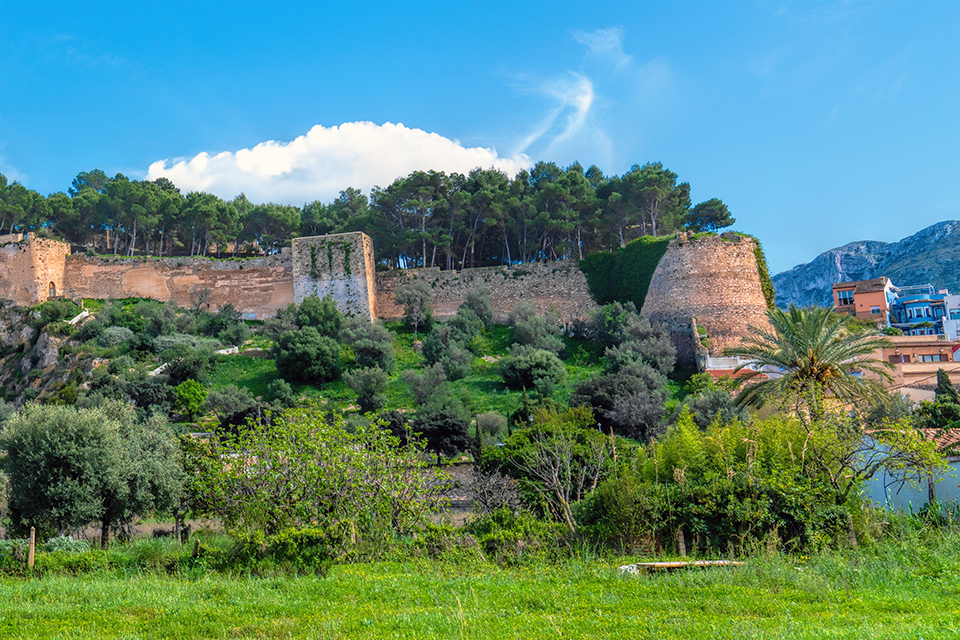
How did a small Islamic principality on the eastern coast of Spain – the Taifa Denia – become a major maritime power in the eleventh-century Mediterranean? A new study explores how warfare, commerce, slavery and cultural connections helped forge a medieval state
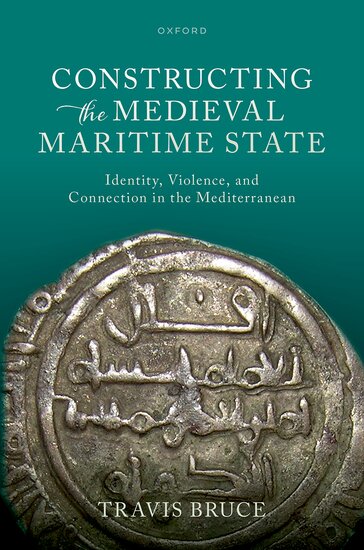
Constructing the Medieval Maritime State. Identity, Violence, and Connection in the Mediterranean
Travis Bruce
Oxford Studies in the New Medieval History
Oxford University Press 2026

One of the most remarkable of these new states was the taifa of Denia, situated on the Mediterranean coast of present-day Spain. Founded by Mujāhid al-ʿĀmirī in the early eleventh century, Denia developed into an ambitious maritime power whose influence extended far beyond the Iberian Peninsula. Its rulers controlled shipping routes, organised naval expeditions, participated in Mediterranean commerce and established connections with Muslim and Christian communities across the sea. Indeed, Mujāhid even attempted to conquer Sardinia in 1015–16, demonstrating the considerable naval ambitions of this relatively small principality. Yet how could such a state emerge from the political wreckage of the Cordoban Caliphate? And how did its rulers establish and maintain their authority in a Mediterranean world characterised by competing religions, shifting allegiances and extensive networks of trade and warfare?
These are the central questions explored by Travis Bruce Constructing the Medieval Maritime State: Identity, Violence, and Connection in the Mediterranean.
Rather than treating Denia as a peripheral episode in the history of medieval Spain, Bruce places the principality at the centre of a much larger story about the creation of political authority in the medieval Mediterranean. Thus, his investigation is organised around three interconnected themes: identity, violence and connections.
- First, he explores how Denia’s rulers established their legitimacy in a society shaped by the collapse of established political institutions. In this context, questions of political identity were particularly complex. The ruling elite emerged from the heterogeneous social and political environment of the former caliphate, where enslavement, military service, cultural affiliations and personal loyalties could shape access to power. Consequently, the emergence of Denia cannot simply be understood through conventional categories of ethnicity, religion or dynastic succession.
- Next, Bruce examines the role of violence in constructing the maritime state. Naval warfare, raiding, captivity and the taking of booty were not merely expressions of military ambition. They were also mechanisms through which rulers accumulated wealth, rewarded followers and asserted their authority. Moreover, maritime jihād provided an ideological framework for expeditions that simultaneously served political and economic purposes.
- Finally, the book investigates the networks connecting Denia to the wider Mediterranean. Merchants, diplomats, scholars, captives and sailors crossed religious and political boundaries, linking the principality with North Africa, other parts of al-Andalus and the Christian Mediterranean. These exchanges were essential to Denia’s prosperity and political survival. However, they also reveal how warfare and commerce were often closely intertwined: the same maritime routes could carry goods, knowledge, prisoners and armed expeditions.
The resulting picture challenges any straightforward division of the medieval Mediterranean into hostile Christian and Muslim worlds. Instead, Bruce presents a region characterised by interdependence, negotiation and overlapping forms of political and economic power.
More broadly, however, the history of Denia aæso raises a fundamental question about medieval state formation: to what extent did political authority depend upon territorial control, and to what extent was it constructed through the ability to command networks of people, resources and maritime connections?
By examining a relatively short-lived Islamic principality through this perspective, Bruce offers a different understanding of the political geography of the eleventh-century Mediterranean. Rather than viewing the sea primarily as a frontier separating competing civilisations, he presents it as a dynamic environment in which rulers could create power by controlling movement, organising violence and cultivating connections across political and religious boundaries. The book thus contributes to a growing reassessment of medieval Mediterranean history, in which Islamic maritime powers emerge not merely as opponents of the expanding Latin West but as important political innovators in their own right.
FEATURED PHOTO:
ABOUT THE AUTHOR
Travis Bruce is a specialist of medieval intercultural relations. His research focuses on communications networks in the Western Mediterranean from the 11th to the 14th century. His first book, La taifa de Denia et la Méditerranée au XIe siècle, examined relations between the 11th-century Hispano-Muslim kingdom of Denia and the Christian and Muslim ports of the Mediterranean. The project drew on written sources in Latin, Arabic, and Judeo-Arabic, and material sources such as ceramics and archaeological data. His new project examines relations between the ports of Pisa and Tunis during the 13th-14th centuries. This study specifically looks at relations between Italian and North African merchants, and will lead to a larger project on the role of translators as cultural facilitators between various Mediterranean communities. Before coming to McGill, Travis was an assistant professor of history at Wichita State University, and completed doctoral degrees at the Université de Toulouse and Western Michigan University.


