


Creating a Danish legal language: legal terminology in the medieval Law of Scania
Ditlev Tamm and Helle Vogt
In: Historical Research, Volume 86, Issue 233, pages 394–407, August 2013
DOI: 10.1111/1468-2281.12007
University of Copenhagen
ABSTRACT:
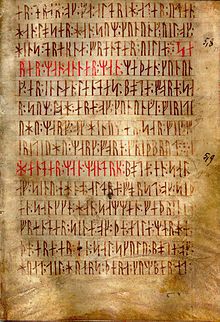
In the decades after 1200 the kingdom of Denmark developed a corpus of provincial laws written in Danish for the three major legal provinces. With the legislation for the eastern province of Scania as a starting point, this article shows how the writing down of the law led not only to the creation of a legal language but to a written vernacular language in general. Nonetheless, it was generally not until the fifteenth century that written Danish was found outside of these texts; charters and narrative until that point were written in Latin. The article tells the story of how the Law of Scania came about. According to the authors “it was probably written by a collective of secular magnates, who had the provincial assembly in Lund as a legal arena, and clerics from the cathedral chapter with training in canon and Roman Law and Latin – all under the benign supervision of the archbishop.” (p. 509). The law was written in the vernacular and with an indigenous vocabulary (only 3% of the words can be described as foreign). Many of these words came to designate specific legal concepts, which a little later gave the Archbishop, Anders Sunesen, a challenge when had a Latin translation or rather paraphrase done. He simply had to keep a significant part of the vernacular terms.
The article is part of a collection of papers presented at a conference in Copenhagen in 2011 organised in collaboration between three digitisation projects: “Early English Law“, “Nordic Medieval Laws” and “Relmin”.
READ MORE:
Read also about the context of the article in “Medieval Law”


