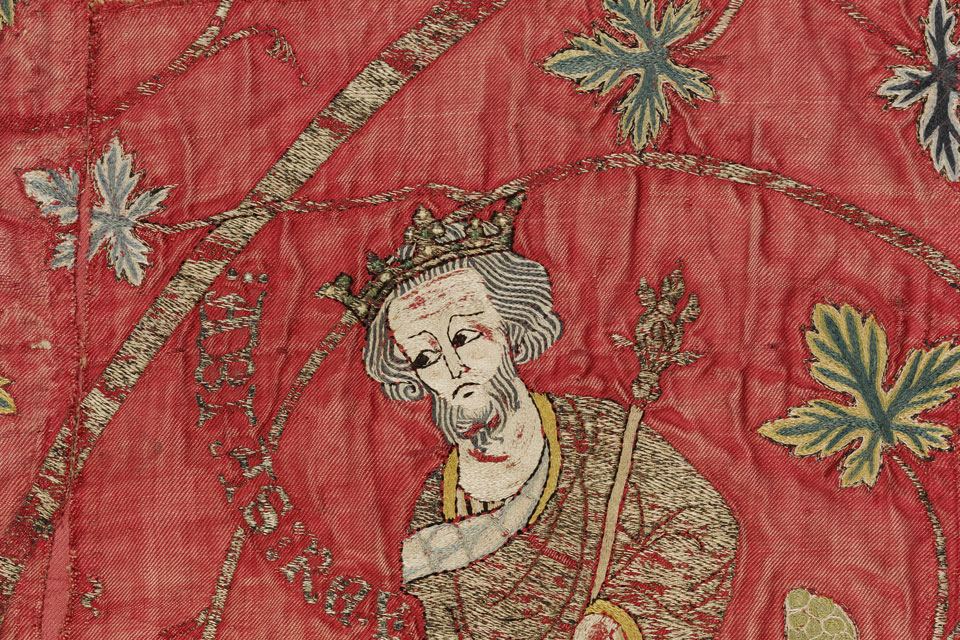
From 1250 – 1350 English embroidery – Opus Anglicanum – was known to make queens, kings, popes and cardinals avaricious and envious. Sumptuous with gold, silk, and silver thread and worked with pearls and jewels this work offered the chance to wear the skin of your heroes – weather godly, saintly or just noble on your body. Read the catalogue and see the exhibition.
In medieval Europe, embroidered textiles were indispensable symbols of wealth and power. Owing to their quality, complexity, and magnificence, English embroideries enjoyed international demand and can be traced in Continental sources as opus anglicanum (English work). This sumptuously illustrated book draws on new research and detailed photography to offer an introduction to their design, production, and use. Essays by leading experts explore the embroideries’ artistic and social context, while catalogue entries examine individual masterpieces. Medieval embroiderers lived in a tightly knit community in London, and many were women who can be identified by name today. Comparisons between their work and contemporary painting challenge modern assumptions about the hierarchy of artistic media. Contributors consider an outstanding range of surviving examples, highlighting their exquisite craftsmanship and exploring the world in which they were created.
Clare Browne is a curator of textiles, and Glyn Davies is a curator of medieval art at the Victoria and Albert Museum, London. M. A. Michael is professorial fellow, School of Culture and Creative Arts, University of Glasgow.