


Giotto played a revolutionary role in European Art History. Most of his art consists of frescoes and cannot be “moved” around. A new website tries to guide the tourist to the places in Italy where his frescoes and art can be enjoyed.
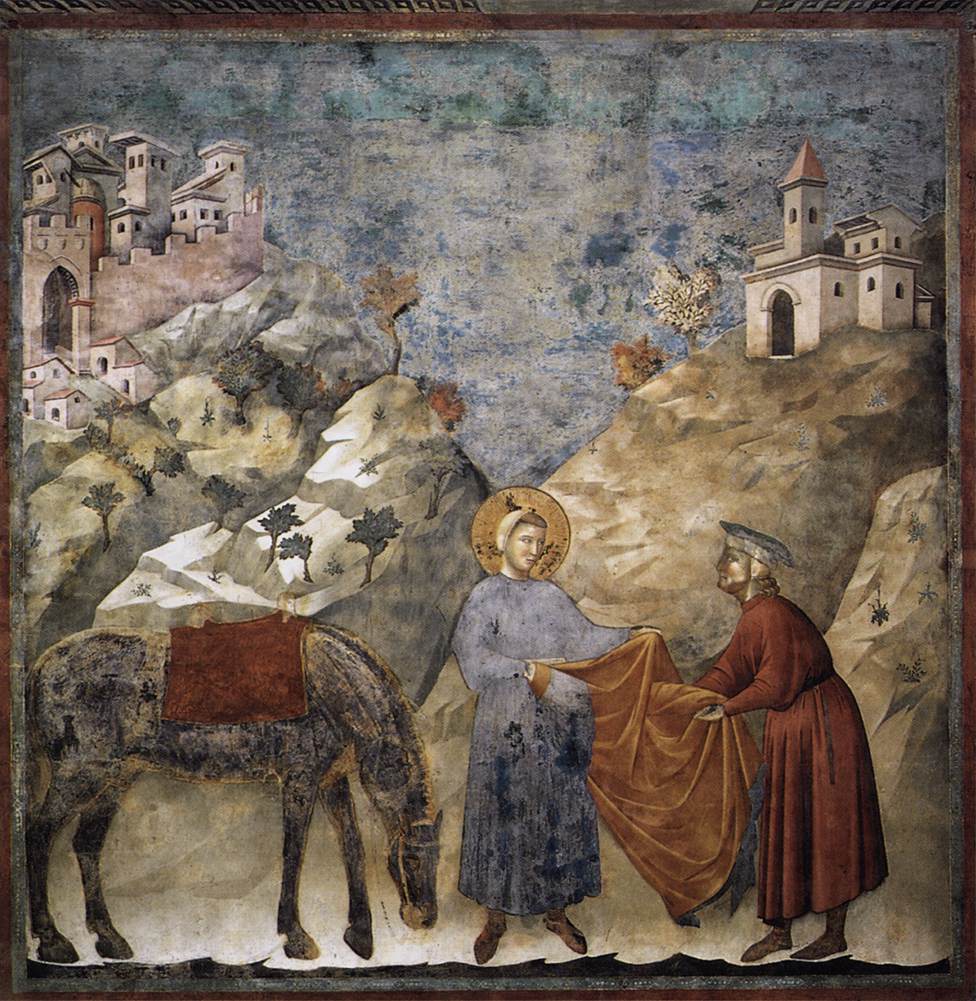
Renowned for his groundbreaking new way of depicting scenes, gestures, faces, emotions and nature, Giotto must without doubt be considered one of the greatest master of world art.
He was born around 1270 perhaps in Vespignano near Vicchio, northeast of Florence, where he died in 1337. Already in his lifetime he was renowned throughout Italy due to the fame, he merited as an artist as well as the mentioning, he achieved in the works of various poets and authors. For instance, Dante claimed in the Purgatory (XI) that he had surpassed Cimabue. He was also mentioned by Petrarch, who owned one of his works and Boccacio who was one of his particular friends. His most famous works include the Arena Chapel in Padua (Capella degli Scrovegni) and the fresco cycle in San Francesco at Assisi, where restorers recently found a personal signature of the artist. Much is attributed to Giotto, but a lot has also been identified as stemming from his workshop. However, vestiges of his work record his presence in Padova, Assisi, Florence, Rome, Naples and Milan. In 1447 the first catalogue of his oeuvre was published by Ghiberti (I commentarii). It lists 40 works, many of which have been lost or are only extant in small fragments.
Recently a website and an app was created in order to guide tourists and art historians to places where works of Giotto may be seen in vivo. The site presents ten cities or towns within which a number of locations have been listed. On location the project has provided the art with bar codes and an app should thus secure access via smartphone to audio presentations of the pieces of art. Unfortunately the locations are miserly listed on the website without the photos of the relevant art, which means that anyone trying to orientate themselves visually have to search for the relevant photos on Google before deciding whether the actual spot is in fact worth a visit. This is how the site presents itself in spite of the fact that credits and copyrights to the ‘missing’ photos are listed under the post ‘Credits’. There is ample information about who is behind the website, but no contact information. The app itself is slow and does not work intuitively. It can only be accessed from the website and not from the app-shop (The site has been tested on Safari, Firefox and Chrome. The app on an iPad/iPhone).
It seems as if good old common greed and the need for miserly control of the world heritage of Giotto has overcome the welcome intentions of the project. What a missed opportunity; and a shame…
Website and App:
Gazetteer
- Milano
Chiesa di San Gottardo in corte
Abbazia Cistercense di Chiaravalle
San Giuliano Milanese
Abbazia Umiliata di Viboldone - Padova
Cappella degli Scrovegni
Musei Civici agli Eremitani
Palazzo della Ragione
Basilica di Sant’Antonio
Oratorio di San Giorgio
Chiesa dei Santi Filippo e Giacomo (Eremitani) Battistero della Cattedrale
Reggia Carrarese
Oratorio di San Michele - Bologna
Pinacoteca Nazionale - Rimini
Tempio Malatestiano Museo della città - Assisi
Basilica Superiore di San Francesco
Basilica Inferiore di San Francesco - Perugia
Galleria Nazionale dell’Umbria - Firenze
Chiesa di Santa Maria Novella
Galleria degli Uffizi
Basilica di Santa Croce
Museo dell’Opera di Santa Croce
Museo della Fondazione Horne
Campanile di Santa Maria del Fiore
Chiesa di Ognissanti
Chiesa di San Felice in piazza
Chiesa di Santa Maria a Ricorboli
Museo Nazionale del Bargello - Settignano
Villa “I Tatti” - Napoli
Basilica di Santa Chiara
Castel Nuovo, Cappella Palatina
Chiesa di San Domenico Maggiore
Chiesa di Santa Maria Donnaregina
Vecchia Chiesa di San Lorenzo Maggiore
Chiesa dell’Incoronata - Teano
Cattedrale
VISIT MORE:
The website has been developed in connection with a major exhibition in Milan 2015
FEATURED PHOTO:
Frescoes by Giotto in the Capella Bardi in Basilia di Santa Croce in Firenze. All Photos: Wikipedia


