


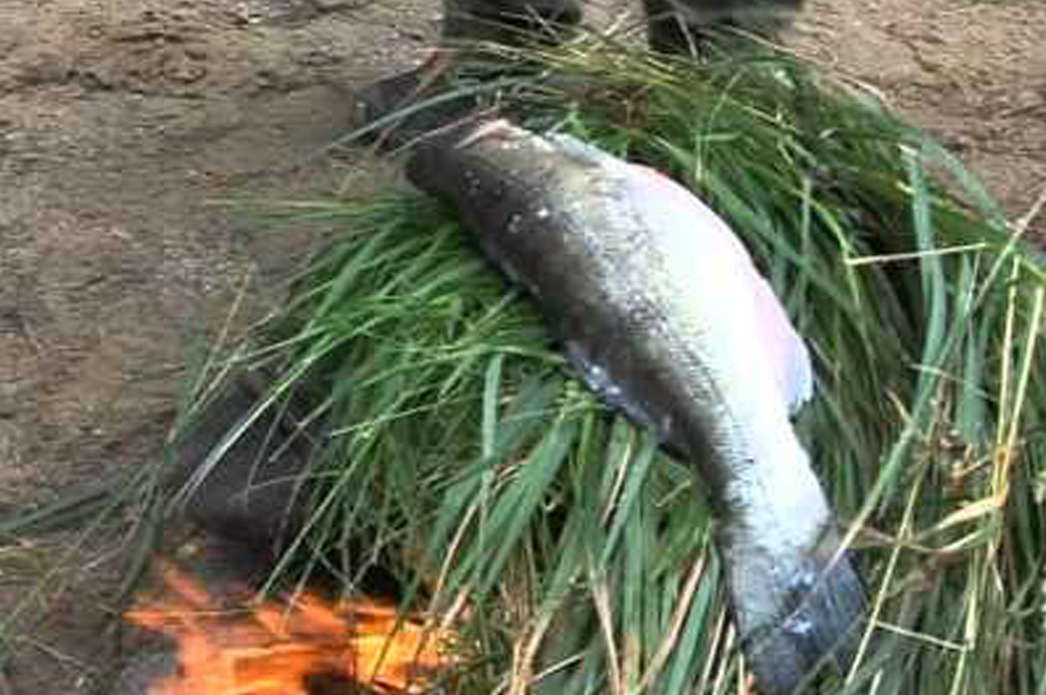
Fish filled with nettles and grilled over a blazing fire was on the menu in medieval Caravate near Lago Maggiore, shows a study of medieval dental plaque. We are lucky the good people forgot to floss!
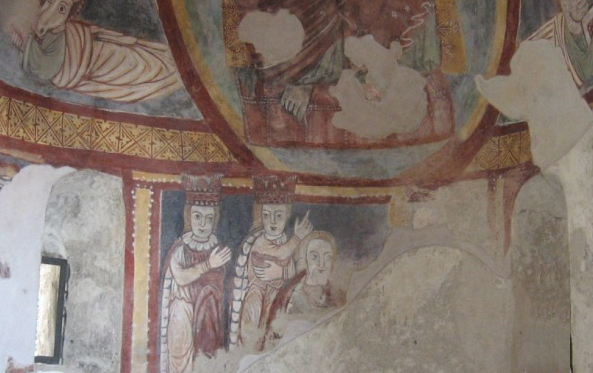
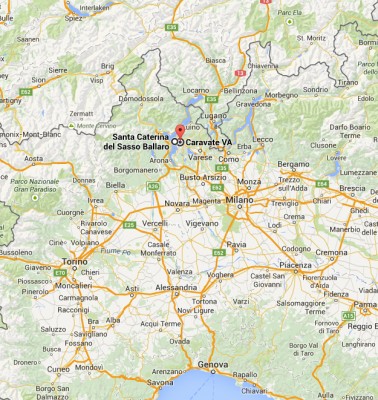
Caravate is a small village near Lago Maggiore in Northern Italy. Some time after AD 800 a small chapel was built, 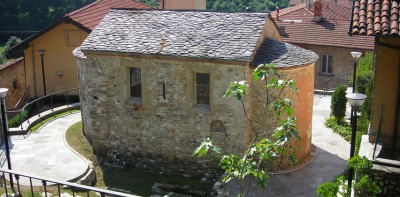

In connection with these anthropological studies, the teeth of three individuals were placed under the microscope and carefully scraped. The reason was that the archaeologists had the opportunity to study the teeth before a cleaning of the skulls had taken place. One result was that it was possible to do a detailed chemical analysis of the plaque or calculus.

Imagine, just by studying the dirt between the teeth of medieval Italians we get a glimpse of a culinary treat: fish filled with freshly harvested nettles, wrapped in a protective cover of fresh green grasses and grilled on a stone slab, placed in an open fire. Afterwards the fish might have been sprinkled with roasted pine nuts and served with a rough pancake or bread, which had been baked in the open fire or in a clay oven. All prepared near the local stream, where the fish had probably been caught. Or perhaps on the beach of nearby Lago Maggiore.
It shall of course be duly noted that the scientists have used the proper Latin names for the different substances traced in the calculus. The “recipe” is cooked up from this!
Source
The Diet of Three Medieval Individuals from Caravate (Varese, Italy). Combined Results of ICP-MS Analysis of Trace Elements and Phytolith Analysis Conducted on their Dental Calculus
By Agnese Maria Barbara Lazzati, Luca Levrini, Laura Rampazzi , Carlo Dossi , Lanfredo Castelletti , Marta Licata andCristina Corti
In: International Journal of Osteoarchaeology 2015. Accepted manuscript online: 22 APR 2015 – DOI:10.1002/oa.2458


