


Careful sifting of a wealth of written documents related to the waging of war in the 14th century has yielded new insight into the practicalities. New book examines in detail Henry of Lancaster’s Expedition to Aquitaine, 1345-1346
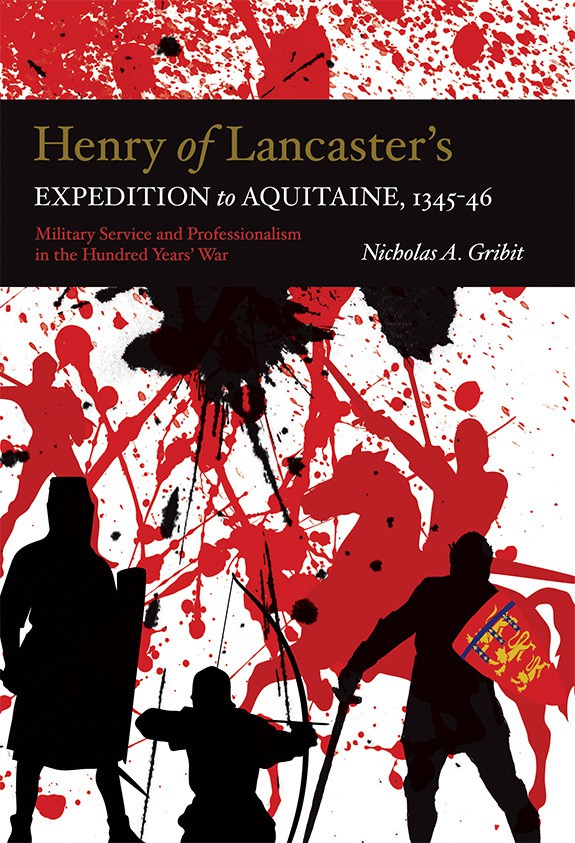
Henry of Lancaster’s Expedition to Aquitaine, 1345-1346. Military Service and Professionalism in the Hundred Years War
By Nicholas A. Gribit
Boydell and Brewer, June 2016
ISBN: 9781783271177
ABSTRACT:
Henry of Lancaster was universally admired as a noble and courteous knight, skilled in jousting and other martial arts as well as hunting and dancing. He was later praised by chroniclers as one of the best warriors of his day; a man both wise and brave. Foremost, though, he was a very able and gifted military commander, who led his expeditionary force to a number of significant victories in the heart of Aquitaine, east of Bordeaux in 1345 – 47, beginning with Bergerac, moving on to that at Auberoche in October 1345 and followed up by a sweeping operation to La Réole.
These were the first decisive victories for either side, and swung the course of the Hundred Years’ War dramatically in England’s favour. The remarkable success of the expedition, however, has been overshadowed in history by Edward III’s more celebrated victory at Crécy the following year.
This book offers a reassessment of this neglected campaign, which had such profound impact on the further events in the 14th century. However, its main quality is that it draws on a wealth of original source material in order to furnish an examination of the campaign “in the round”; recruitment, preparations and financial administration, as well as its events and achievements, are examined closely. A detailed biographical study of the individuals who took up arms under Lancaster’s command forms a main part of this work: the portrayal of hundreds of careers in arms allows us to glean a sense of what life was like for soldiers in this army and in the later Middle Ages in general. An investigation of the men’s martial experience, motivations for service and personal military networks provides an understanding of how and, indeed, why the army was so effective in the field of war. It also reveals much about the emergence of professionalism in English medieval armies and offers a reassessment of Lancaster’s importance as a captain, administrator and diplomat, and above all, as a successful military commander.
ABOUT THE AUTHOR:
Nicholas A. Gribit gained his PhD from the University of Leeds: Henry of Lancaster in Aquitaine: Military Service in the Hundred Year’s War.


