


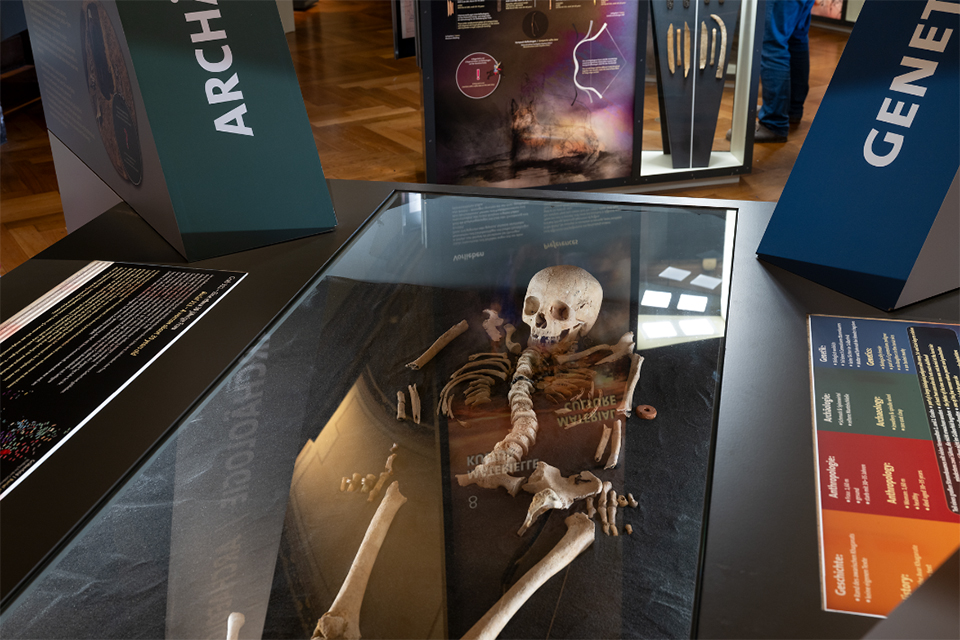
New Exhibition in Vienna presents the results of a huge research project uncovering the secrets of the Migrant Period

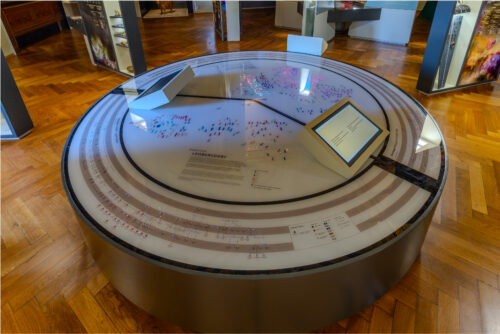
When HistoGenes was established in 2020, the aim was to explore the “real” population history of eastern Central Europe from c. 400 to 900 CE. The ambition was to uncover the reality behind numerous historical narratives, both ancient and modern. Among the questions looming large were: where did the Lombards “really come from”? And were twentieth-century historians correct in claiming that ancestry played no role in the processes of ethnogenesis through which peoples on the move – such as the Goths, the Huns, the Avars and others – were formed? Ethnogenesis had, after all, long been a subject of heated historical debate.
After six years, the project is drawing to a close. Seldom, however, has a research project yielded so much new and astonishing knowledge, or provided so much food for thought. Along the way, it even appears to have resolved some questions that had hitherto remained unanswered. For instance, evidence uncovered from burial sites suggests that new elites – although few in number – could indeed transform the material culture and outlook of conquered populations, who were either obliged to adopt, or found it attractive to embrace, lifestyles previously associated with their conquerors. Another conclusion is that some of these peoples possessed remarkably sophisticated understandings of kinship and ancestry, involving memories stretching back as many as nine generations.
In particular, the genetic analysis of individuals buried in so-called Avar cemeteries in and around the Carpathian Basin has produced some truly remarkable results.
For several years, the results have been published in prestigious journals, while scientists and historians have debated their implications for our understanding of the cultural processes involved in the formation of the earliest successor states in fifth- and sixth-century Europe.
Now, however, the results are being presented to a wider audience through a dedicated exhibition called GENEchangers, a play on the word “game-changers”, suggesting that the study of genes is indeed transforming our understanding of what happened.
Ancestry and Dynastic Thinking

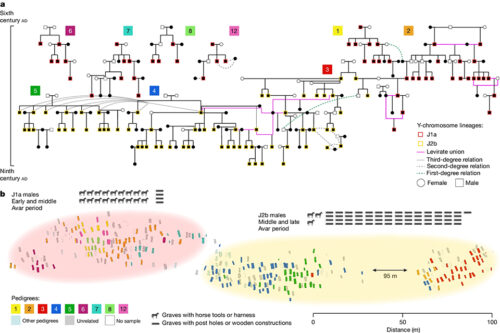
One of the most significant achievements has been the ability to map family relationships between people who lived more than 1,200 years ago, thereby uncovering the interpersonal connections that provided stability during a time of great upheaval. What was previously impossible has now become possible thanks to the integration of genetics into the diverse fields of research on the early Middle Ages. And what was previously invisible has become visible: the lives of ordinary people.
Based on two early medieval burial grounds in the villages of Leobersdorf and Mödling near Vienna, the special exhibition offers insights into the lives of ordinary people: how they settled and lived, and how their communities and cultures were organised. Who was related to whom? Who had children together? Who was buried next to whom? At the same time, we learn more about their diets, childhoods, health and mobility. From here, our view broadens to encompass connections and differences between other communities in Central Europe – not necessarily migrating populations, but also people who remained settled in one place for extended periods.
As explained above, the findings presented in this exhibition originate from HistoGenes, so far the largest archaeogenetic research project worldwide. Coordinated in Austria and involving twelve renowned European and US research institutions, the project has brought together more than 40 researchers from the fields of anthropology, archaeology, history and genetics to develop shared methods and seek new answers. Visitors can follow their detailed search for clues in bones, genes, artefacts and documents through interactive displays and numerous examples.
The special exhibition at the Natural History Museum Vienna (NHM) explores not only the results of this genetic research but also the new interdisciplinary methods being developed in archaeology, anthropology and history.
Accompanying the exhibition is a new book by Patrick J. Geary, explaining what this interdisciplinary endeavour has already achieved and what further discoveries may be in the pipeline.
VISIT:
GENEchangers – Decoding secrets of early medieval burial sites
Special exhibition from 14 October 2026 to 26 July 2027, in Hall 21 on the 2nd floor
The special exhibition will be on display in Room 21 on level 2 of Natural Historical Museum in Vienna.
READ MORE:


