





Meanwhile the official celebrations of the 800-year anniversary of St. Frances may be over, but scholars and historians gather in Assisi to continue to explore the myth and the man. The 54th International Conference of Franciscan Studies, titled Franciscus gloriosus: making the memory of Francis is this year organised in Assisi. Its unusually coherent programme concentrates on 1226–1232: the contested memory of Francis, his canonisation, the earliest choir legends and liturgy, images of his death, the papacy and the Order, the 1230 translation to the shrine and Gregory IX’s Quo elongati. The conference is streamed by the Società internazionale di Studi francescani.

Wednesday marks it is 960 years since the Battle of Hastings took place on the 14 October 1066. English Heritage has built a dedicated 1066 programme around the anniversary, including new short films and podcasts, while the Bayeux Tapestry is currently displayed at the British Museum in England for the first time since it was made. Though the principal re-enactment at Battle Abbey took place on 10–11 October, there is still much to enjoy. The Battlefield in itself is perfect for an enjoyable walk through the autumn countryside.
NEW BOOKS THIS WEEK:
Chaucer’s England. By Nicholas Orme. Yale University Press 2026.
The book offers a rounded presentation of the world through which the pilgrims passed.
Building the Parish Church in Late Medieval England: Architecture, Art, and the Collaborative Gothic Monument. By Zachary Stewart. Cambridge University Press 2026.
The book explores the magnificent Late medieval Parish churches constituting the backbone of communal life in England in the 14th and 15th centuries.
Naming Multiple-text Manuscripts: Practices of Titling Texts and Labeling Books. Edited by Antonella Brita and Janina Karolewski. De Gruyter, 2026
What were the titles chosen for medieval manuscripts holding collections of multiple texts?
Prostitution, Repentance and Social Welfare in Renaissance Florence: The Monastery of Sant’Elisabetta delle Convertite. By Gillian Jack · University of London Press 2026
The book explores the many ways in which this Fiorentine monastery became a centre of the welfare support offered by the city,
La Bretagne d’Arthur: Bretons et Saxons des siècles obscurs. By Patrick Galliou. Lemme Edit 2026
The book offers an introduction to the network of trade and politics characterising the world of Arthur in the 5th and 6th centuries.
NEW ISSUES OF JOURNALS:
Anglo-Norman Studies XLVIII: Proceedings of the Battle Conference 2025, ed. Mark Hagger (Boydell & Brewer, October 2026)
The latest volume of Anglo-Norman Studies brings together nine studies exploring kingship, ecclesiastical power, political communication, transport, and cultural encounters in England and its neighbouring regions between the tenth and twelfth centuries. Several contributions reconsider familiar historical sources and objects, demonstrating how charters, episcopal insignia, literary works, and even packhorses may offer new perspectives on the exercise of power and the organisation of medieval society.
- The volume opens with Stephen D. Church’s reassessment of the historian J. E. A. Jolliffe (1891–1964) and the intellectual circumstances surrounding his influential Angevin Kingship.
- Julia Barrow subsequently explores the opportunities available to ambitious clerics in royal service between approximately 1050 and 1200
- Dauvit Broun examines the kingship of David I and the political geography of the region we now call Scotland.
- Charles Insley approaches tenth-century English kingship from another direction, investigating how charters and diplomas participated in the making – and potentially unmaking – of royal authority.
- Sophie Kelly considers the development and ceremonial significance of episcopal croziers around the Norman Conquest, with particular attention to the Beverley Crozier.
- Chelsea Shields-Más turns to a much humbler subject: the summarius, or packhorse, recorded in Domesday Book. Her contribution brings into focus an animal essential to medieval transportation, provisioning, and the movement of goods, yet frequently overlooked in accounts of the medieval economy.
- Rebecca Tyson explores how the abbey of Fécamp helped preserve and communicate memories of Norman maritime activities and conquest. Finally, two literary studies broaden the geographical and intellectual horizons of the volume.
- Lucas Villegas-Aristizábal considers the De expugnatione Lyxbonensi, the account of the Christian conquest of Lisbon in 1147, in relation to contemporary Christian engagement with Islamic thought.
- Emily A. Winkler examines madness in Geoffrey of Monmouth’s Vita Merlini.
Francia: Forschungen zur westeuropäischen Geschichte, Volume 52 (2025) Published by the German Historical Institute Paris, 2025
The latest volume of Francia offers a series of studies concerned with the construction, communication, and representation of political authority in medieval Western Europe. From Carolingian historiography and papal documents to crusading strategies and royal funerary monuments, the medieval contributions illuminate how texts, ceremonial objects, and historical narratives were employed to establish legitimacy and preserve political memory.
- Patrick S. Marschner and Matthias M. Tischler examine a newly identified witness to the so-called Chronicon Moissiacense from Narbonne. Their study raises important questions about the transmission and use of Carolingian historical writing, particularly the ways in which medieval chronicles circulated, were adapted, and acquired significance in different regional settings.
- Laurent Morelle turns to an extraordinary surviving document: the papal bull issued on papyrus by Pope John XV on 26 May 995 in favour of William of Volpiano. By revisiting this document and proposing new readings, the study explores the difficulties involved in reconstructing the history of medieval diplomatic records and the political and ecclesiastical relationships they document.
- Rowan Watson continues an investigation of bishops, canons, counts, and historical writing in Angoulême, concentrating on the years 1130–1159. This period witnessed the Anacletian Schism and the emergence of Plantagenet authority in Aquitaine. The contribution examines historical writing in a region where ecclesiastical institutions and competing political interests were closely intertwined.
- Moving into the fourteenth century, Gion Wallmeyer investigates the political advisers and strategic calculations behind the Hospitallers’ conquest of Rhodes between 1306 and 1310. Rather than treating the conquest solely as a military enterprise, the study considers the planning and political thought involved in establishing the order’s position in the eastern Mediterranean.
- Two contributions explore political communication through symbols and emotions. Monja Katja Schünemann investigates the transnational iconography of the funerary effigy of Henry V of England (d. 1422), including the royal sceptre and orb, and the relationship between continuity and change in representations of kingship. Felix Schulz examines the tears of Isabeau of Bavaria (d. 1435) as a narrative element in late medieval historiography, asking how representations of royal emotion contributed to the construction of historical meaning.
- The volume also includes an early modern contribution by Édouard Decauchy on the reception of Jean Bodin’s theories of sovereignty in the writings of Henning Arnisaeus and Johannes Limnaeus. This final study extends the discussion of political authority into the intellectual history of the Holy Roman Empire.
Speculum, Volume 101, Number 4 (October 2026). Medieval Academy of America / University of Chicago Press, October 2026
The October 2026 issue of Speculum brings together five studies exploring the relationships between human experience, cultural memory, the natural world, and political identity. Moving from medieval France and Norman England to Byzantium, the Eurasian steppe, and Lombard Italy, the contributions examine how people interpreted their surroundings, responded to historical transformations, and adapted inherited cultural traditions.
- Peggy McCracken opens the issue with an investigation of Echo, the mythological figure whose story medieval French authors inherited from Ovid’s Metamorphoses. Rather than simply interpreting medieval adaptations as moralised versions of classical mythology, McCracken examines how the transformation of Echo into a disembodied voice offered opportunities to reconsider the boundaries between humans and their environments. The article situates literary imagination within an ecology of relationships encompassing bodies, voices, natural objects, and non-human beings.
- Matthew Aiello explores the Orrmulum, the remarkable twelfth-century English biblical commentary composed by the Augustinian canon Orrm around 1170. Famous for its unusual orthography and insistence on representing English pronunciation precisely, the manuscript is reconsidered as a response to the linguistic consequences of the Norman Conquest. Aiello argues that Orrm’s painstaking repetitions and revisions may be understood not merely as linguistic experimentation but as an attempt to restore and sustain an English-speaking community in the aftermath of prolonged cultural domination.
- John Kee turns to the natural world in Byzantine art and literature, examining the significance of snakes in shaping human perceptions of danger and the environment. Drawing on sources ranging from early Christian writers to the illustrated Paris Nicander manuscript of around AD 1000, Kee investigates the relationship between human responses to animals and the culturally specific ways in which those responses were transformed into artistic and literary expressions. The study offers an approach to medieval ecological aesthetics grounded in sensory experience and human interaction with the environment.
- Chris Halsted investigates tenth-century Latin ethnographical descriptions of the Hungarians following their arrival in the Carpathian Basin. Faced with a new political power on their eastern frontiers, Western European authors frequently described the Hungarians through literary traditions inherited from antiquity, drawing upon representations of the Huns, Avars, and Scythians. Halsted examines how these inherited descriptions were adapted, particularly through images of bodily violence and transgressive gender roles, to articulate contemporary anxieties about political order and the body politic.
- Finally, Samuel James Barber examines the church of Santa Sofia in Benevento, constructed under the Lombard duke Arechis II in the eighth century. Traditionally associated with Hagia Sophia in Constantinople, Santa Sofia is reconsidered as an architectural statement expressing Benevento’s position within the competing political and cultural worlds of the early medieval Mediterranean. Barber argues that the building’s distinctive design creatively reinterpreted aspects of Constantinopolitan architecture, making the church an instrument of political representation as well as religious devotion.
Deutsches Archiv für Erforschung des Mittelalters, Volume 82, Issue 1 (2026)
Edited by Enno Bünz, Martina Hartmann, Claudia Märtl and Stefan Petersen (Monumenta Germaniae Historica / Harrassowitz Verlag, October 2026)
- The latest issue of Deutsches Archiv für Erforschung des Mittelalters, published on behalf of the Monumenta Germaniae Historica, focuses on the transmission, interpretation, and scholarly reconstruction of medieval historical sources. Its contributions range from an apparently newly identified account of a ninth-century monastic dispute to the manuscript traditions of the great chroniclers of northern Germany. A further article examines the intellectual history of German medieval scholarship during the twentieth century.
- Roman Deutinger investigates a new text concerning the conflict between the monks of Fulda and their abbot Ratgar, who governed the monastery between 802 and 817. Ratgar’s abbacy was marked by an ambitious programme of construction and institutional development, culminating in tensions with the monastic community and his eventual deposition. The identification of another source relating to this dispute offers an opportunity to reconsider how the conflict was described and remembered. More broadly, the subject illuminates the tensions between abbatial authority, monastic communities, and Carolingian royal power during a period of significant ecclesiastical reform.
- Maurice Parussel examines the manuscript transmission of the historical works of three major chroniclers of northern Germany: Adam of Bremen, Helmold of Bosau, and Arnold of Lübeck. His study concentrates on the significance of excerpts and abbreviated versions of their chronicles. Such shortened texts were not necessarily imperfect copies of larger works. They could also represent deliberate selections responding to particular intellectual, institutional, or historical interests. The investigation therefore raises fundamental questions about how medieval historical knowledge was transmitted, reorganised, and made available to successive generations of readers.
- The issue also includes Simon Groth’s study of Fritz Rörig (1882–1952), the influential German historian whose work on the Hanseatic world and medieval urban history occupied a prominent position in twentieth-century historiography. By examining Rörig’s intellectual career and his understanding of historical methodology against the background of changing political circumstances, Groth contributes to the history of medieval scholarship itself, including the relationship between historical research and the political environments in which historians worked.
- In addition, Martina Hartmann presents the annual report of the Monumenta Germaniae Historica for 2025–2026, documenting the institution’s continuing activities in the critical editing and study of medieval sources.
NEW THESIS:
The Lost Supper: A Study of the Question How, When, Where, and Why the Eucharist Lost its Proper Meal Character
By Roel Aalbersberg, Utrecht University. Defence: 19 October 2026.
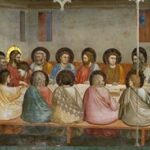
Why did the Eucharist (or the Lord’s Supper), originally a community meal, lose its proper meal character? Surprisingly little scholarly attention is given to this question. What is clear, is that the change took place in the second century CE. But in the works of authors from that period, too few clues are found for us to conclude why the change occurred. In this study, however, pieces of information were found that may contribute to a better educated guess to the answer. One is the discovery that the passage in 1 Cor 11 about the institution of the Lord’s Supper has been misread for ages. In the Greek text the possessive nouns are emphasised (…this is MY body, …MY blood, …in memory of ME). In order to rectify abuses at the community meal, Paul makes clear that the focus should be on Jesus, not on the Corinthians. In a sense, Paul is turning the table, changing the community meal into the ‘Table of the Lord’. In this, the seed can be seen for a process of sacralisation of the Eucharist, in which the meal is eventually replaced by a symbolic act. Another cause of the change is identified in the delayed return of Christ (parousia), resulting, among 2nd century Christians, in a strong focus on the afterlife, combined with a rejection of the world and all its pleasures, including a satisfying meal. In the final analysis, the research question cannot be answered conclusively. As long as no new pertinent second century sources are found, nobody can give the answer.


