


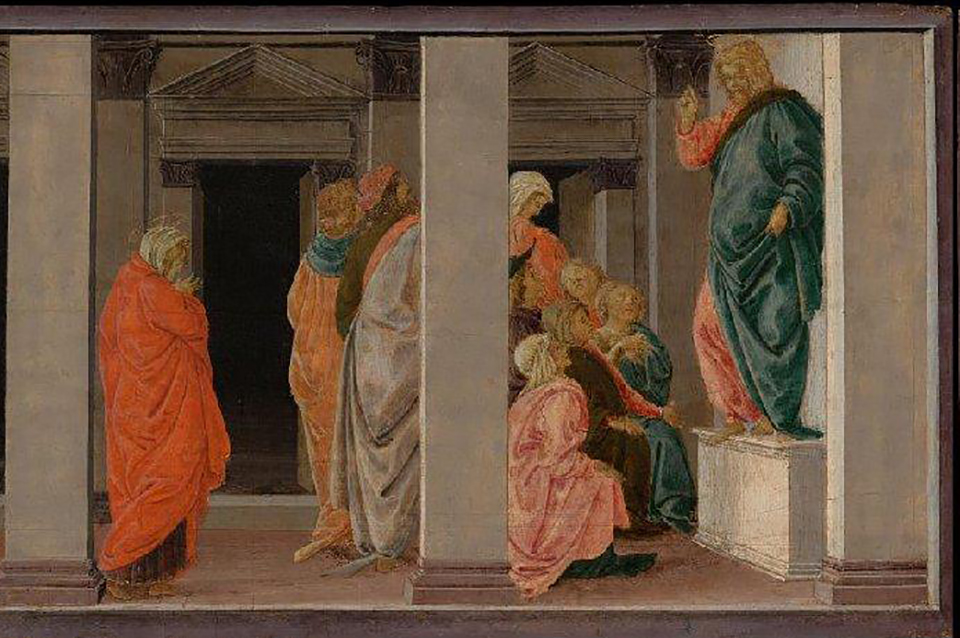
Where did you go if you were a prostitute in Late Medieval Florence? The obvious place was the convent, Sant’Elisabetta delle Convertite, dedicated to enrole you in a life of penitence.
Prostitution, Repentance and Social Welfare in Renaissance Florence: The Monastery of Sant’Elisabetta delle Convertite
By Gillian Jack
University of London Press 2026
ABSTRACT:
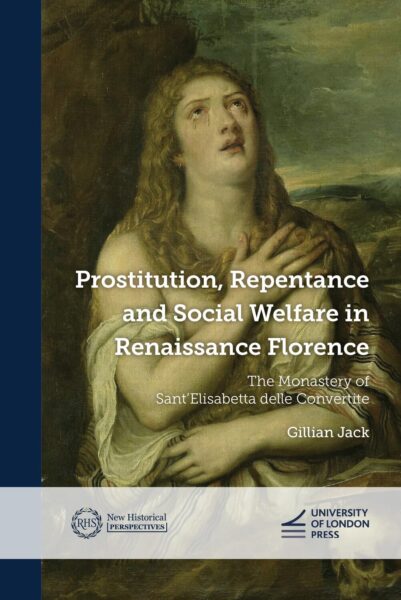

In this new book, Gillian Jack reconstructs the monastery’s changing relationship with Florentine authorities over several centuries. Financial support, public intervention and efforts to regulate prostitution repeatedly altered the institution’s position. Her account places the women who lived there within larger transformations in charitable practice and urban welfare, without reducing them to illustrations of policy. It is only by uncovering successive governments’ involvement in Sant’Elisabetta that we can fully understand how the city attempted to manage both prostitution and welfare.
This is a study at the boundary between medieval and Renaissance history. It offers a way of following continuities that conventional period labels conceal, especially in the complex relationship between penitential religion, social discipline and the lived experiences of women on the margins of urban society.
ABOUT THE AUTHOR:
Gillian Jack is associate lecturer in history at the Open University, where she teaches history from Greek myth to the 1970s.
FEATURED PHOTO:
Detail of the predella with painted scenes of the story of St. Magdalene. By Botticelli c. 1484-91. Now in the Philadelphia Art Museum. Source: Wikipedia


