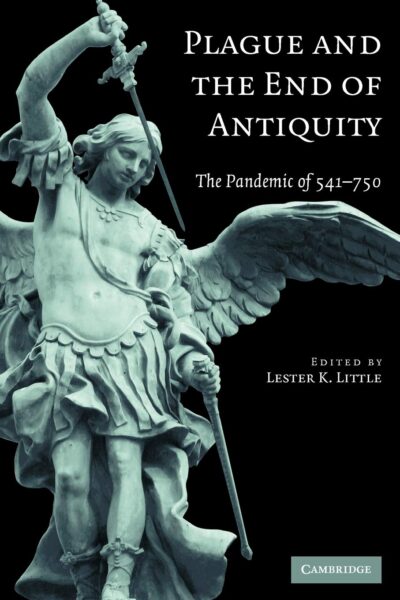
The Justinian Plague hit the Mediterranean in AD 541. Historians, archaeologists, and scientists disagree as to the impact the epidemic had on the transformations from Late Antiquity to the Early Middle Ages
In AD 541an epidemic of plague hit the Near east and the entire Mediterranean, especially the Sasanian and Byzantine Empires. The plague is named for the Byzantine Emperor Justinian I 482–565) who, according to his court historian Procopius, contracted the disease and recovered in 542, at the height of the epidemic which killed about a fifth of the population in the imperial capital Constantinople. Probably, the contagion arrived in Roman Egypt in 541, spread around the Mediterranean Sea until 544, and persisted in Northern Europe and the Arabian Peninsula until 549. Later, epidemics surfaced continuously wll into the 8th century.
The Justinian Plague – key analytical points
1. Event and identification
- Major epidemic in Constantinople, AD 541–543 (“Justinian Plague”).
- Long treated as the first outbreak of the same pathogen responsible for the later Black Death.
- Confirmed through palaeogenomic evidence (notably from 2014 onwards).
- Presence now documented across a wide geographic range: Germany, Britain, France, Spain.
2. Core research questions
- Comparative severity: Was it as devastating as the 14th-century Black Death?
- Transmission dynamics: How did it spread?
- Consequences: What were the social, economic, and cultural effects?
- Interpretation: Was the Justinian plague a historical blip or transformative catastrophe?
3. Historiographical landscape
Increasing scholarly focus since the early 2000s driven by:
- Advances in palaeogenomics (aDNA).
- Recognition of the Late Antique Little Ice Age (LALIA).
- Renewed debate on impact. Two main positions:
– “Maximalists” (e.g. Kyle Harper): pandemic as a major transformative force.
– “Minimalists” (e.g. Lee Mordechai, Merle Eisenberg): limited long-term impact.
4. Methodological challenge I – discrepancy between narrative sources and bioarchaeological data.
- Integrating scientific (genetic, climatic) data with historical interpretation.
– Constantinople: rich contemporary descriptions of the plague.
– Archaeological record: until recently, no confirmed Yersinia pestis victims.
– Implication:
5. Methodological challenge II – shift in analytical scale
- Avoiding environmental or biological determinism.
- Movement from macro/global narratives to regional and micro-scale studies.
- Focus on local variability rather than uniform impact.
6. Key interdisciplinary problem: Aligning three bodies of evidence:
- aDNA from plague victims.
- Identification of multiple epidemic waves.
- Climatic data associated with LALIA (c. 536–600).
7. Competing causal models
- Climate → human vulnerability model:
- Climatic deterioration → famine → weakened populations → higher mortality.
- Climate → ecological shift model:
- Climatic change → altered rodent ecology → increased transmission.
- Open question: relative role of strain virulence.
8. Limits of the bioarchaeological evidence: Extremely low probability of detecting Yersinia aDNA:
- Burial grounds must first be located.
- Many populations practised cremation (no recoverable DNA).
- Burial practices highly variable in the 6th century.
- Detection bias:
- Only more virulent infections tend to leave detectable traces.
9. Medical variability.
Yersinia pestis produces Bubonic, septicaemic, pneumonic, meningeal, pharyngeal clinical forms.
- Not all forms leave skeletal or dental traces.
- Not all deaths produce detectable bloodstream infections.
10. Interpretative implications
- Evidence base remains fragmentary and uneven.
- Strong caution required against both:
- Overstating collapse (maximalism).
- Underestimating impact due to evidential gaps (minimalism).
“And presently the plague came, and such a carnage of the people took place through the whole district that the legions that fell could not be counted. For when sepulchers and gravestones failed, ten or more would be buried in a single trench. Three hundred dead bodies were counted one Sunday in the church of the blessed Peter alone. Death was sudden. A wound the shape of a serpent would appear on groin or armpit and the man would be so overcome by the poison as to die on the second or third day. Moreover the power of the poison rendered the victim insensible.”
(Gregory of Tours, ca. 590, Book 4, 31)


Between AD 541 and 543, a major epidemic erupted in Constantinople, called the Justinian Plague. Long identified as a forerunner of the Black Death, palaeogenomic evidence published in 2014 from Germany provided conclusive evidence of Yersinia Pestis as the bacterial cause. Since the early 2000s, scholarship has intensified due to three developments: new palaeogenomic evidence, recognition of the Late Antique Little Ice Age, and growing historiographical debate over the pandemic’s impact.
Recent studies have documented the presence of this virulent disease in Britain, France, and, recently, Spain, raising multiple questions: Was the epidemic in the mid-6th century as devastating as the later Black Death in the 14th century? How did it spread? What social, economic, and cultural consequences followed? And, in view of this, should we consider it a historical blip or a transformative disaster, as the question has recently been phrased ?
This debate has polarised scholars between “maximalists”, such as Kyle Harper, who see the pandemic as transformative, and “minimalists”, including Lee Mordechai and Merle Eisenberg, who argue it had limited consequences (se below for references).
A central challenge is integrating scientific data into historical analysis without determinism. One avenue increasingly explored is the shift from global narratives to regional and micro-scale studies. With this in mind, a particular dilemma is to align the results of aDNA studies of victims from the disease, the possibility of identifying different waves of the epidemic, and the study of events connected with climatic shifts usually encompassed under the concept of “LALIA”, or the Late Antique Little Ice Age, c. 536–600.
To be precise: did the victims identified in mass graves die of the plague because they were weakened by hunger caused by massive climatic changes? Or did climate change further shifts in the lives of disease-carrying rodents, which led to the exacerbation of the epidemic? And how virulent were the different strains?
Although historians and archaeologists are increasingly cautioning against simplistic “collapsology” and emphasising complexity and variability, scientists and geneticists point out that the chance of identifying aDNA of Yersinia in the remains of interred people in burial grounds from the 6th century is extremely small, as one must first find the burial grounds. Secondly, the barbarian migrants living as pagans in the mid-6th century continued to be diverse in their burial practices, including both cremations and inhumations. (Hence the lack of evidence from beyond the Rhine and Elb. Finally, aDNA from Yersinia can only be identified if it stems from the more virulent infections. Yersinia pestis infections may cause five principal forms of plague, including bubonic, septicaemic, pneumonic, meningeal, and pharyngeal plague, and not all of these leave their mark in the bones of inhumated victims. While the pulmonary version, stemming from aerosols, generally leads to sepsis and, untreated, to death in 100% of cases, “only” 60% of those infected by fleas die, and not all of these deaths end in blood-borne infections. And blood-borne infections are necessary to detect the aDNA in dental pulp or skeletons.
It should give pause to the minimalists that, not until recently, had any victims of Yersinia pestis been identified in the burial grounds at Constantinople, although the most vivid descriptions herald from that city.
The following literature lists the more general recent introductions to the field and the debate.
SOURCES
Arning N, Wilson DJ. The past, present and future of ancient bacterial DNA. Microb Genom. 2020;6(7):000384.
Adapa SR, et al. Genetic evidence of Yersinia pestis from the First Pandemic. Genes (Basel). 2025 Jul 31;16(8):926.
Barbieri R, Signoli M, Chevé D, Costedoat C, Tzortzis S, Aboudharam G, et al. Yersinia pestis: the natural history of plague. Clin Microbiol Rev.
Keller M, et al. Ancient Yersinia pestis genomes from across Western Europe reveal early diversification during the First Pandemic (541–750). Proc Natl Acad Sci U S A. 2019 May 9.
Keller M, Paulus C, Xoplaki E. The First Pandemic: transformative disaster or footnote in history? An introduction. Hum Ecol. 2025;53:677–679.
McCormick M. Tracking mass death during the fall of Rome’s empire I-III. J Roman Archaeol. 2015–2016;28–29.
Mordechai L, Eisenberg M, Newfield TP, Poinar H. The Justinianic plague: an inconsequential pandemic? Proc Natl Acad Sci U S A. 2019.
Mordechai L, Eisenberg M. Rejecting catastrophe: the case of the Justinianic plague. Past Present. 2019 Aug;244(1):3–50.
Preiser-Kapeller, J. et al. The Circulation of Yersinia pestis in Central Eurasia before and during the First Plague Pandemic (Second to Eighth Century CE): Palaeogenetic and Historical Evidence and Sociopolitical, Ecological, and Climatic Factors. Hum Ecol. 2025
Wagner D. et al. Yersinia pestis and the Plague of Justinian 541–543 AD: a genomic analysis
The lancet. 2014 14:4, 319-326
READ ALSO:
Little LK.editor. Plague and the end of antiquity: the pandemic of 541–750. Cambridge: Cambridge University Press; 2006. ISBN: 052171897X.
Harper K. The fate of Rome: climate, disease, and the end of an empire. Princeton: Princeton University Press; 2017. ISBN: 0691192065.
Rosen W. Justinian’s flea: plague, empire, and the birth of Europe. Brécourt Academic; 2007. ISBN: 0670038555.
Tsiamis C. Plague in Byzantine times: a medico-historical study. Berlin: De Gruyter; 2022. ISBN: 3110611198.
Castex D., Laubry N., Rossignol B. editors. Épidémies antiques en Méditerranée et au-delà. UNA Éditions; 2026.