


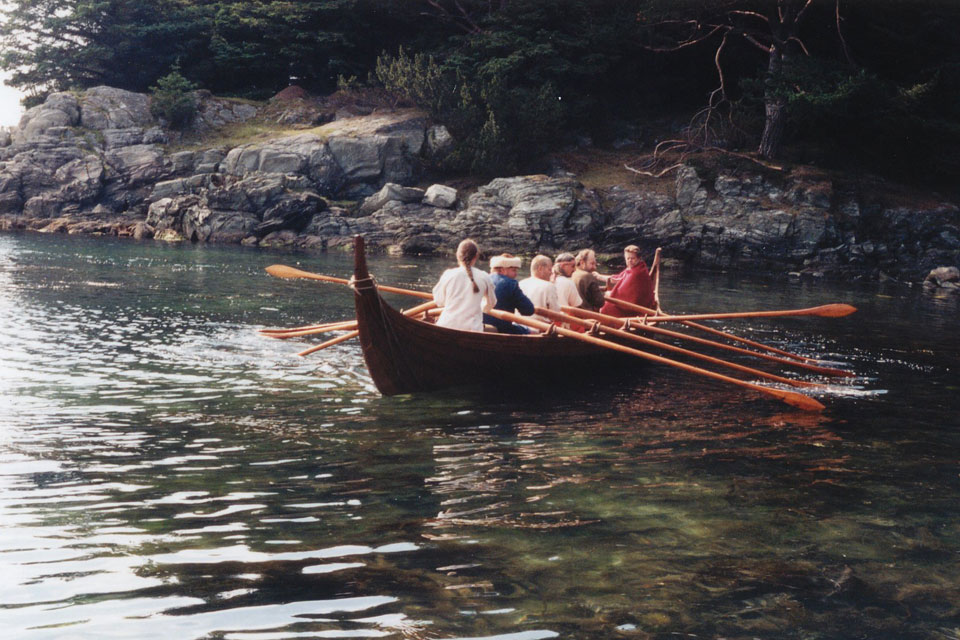
We all know what a Viking is: a heathen, gruesome and wild Scandinavian, who sailed, raided and traded through much of the Northern hemisphere from c. 799 – 1066. The question, though, is what it meant to be a Viking?
Generally speaking, we all know what a Viking is. If nothing else, we can imagine him or her, dressed in beautifully coloured woolen clothings held together with oversized brooches and blink, and sporting all sorts of weapons: swords, axes, bows and arrows, spears and a horned helmet. Standing at the bow of a ship and ready to enter into battle, what we see is nevertheless what we get: a modern fiction. But what if we try to get behind the word. What did “Viking” originally mean and in what contexts was the word used?
It is all in a name
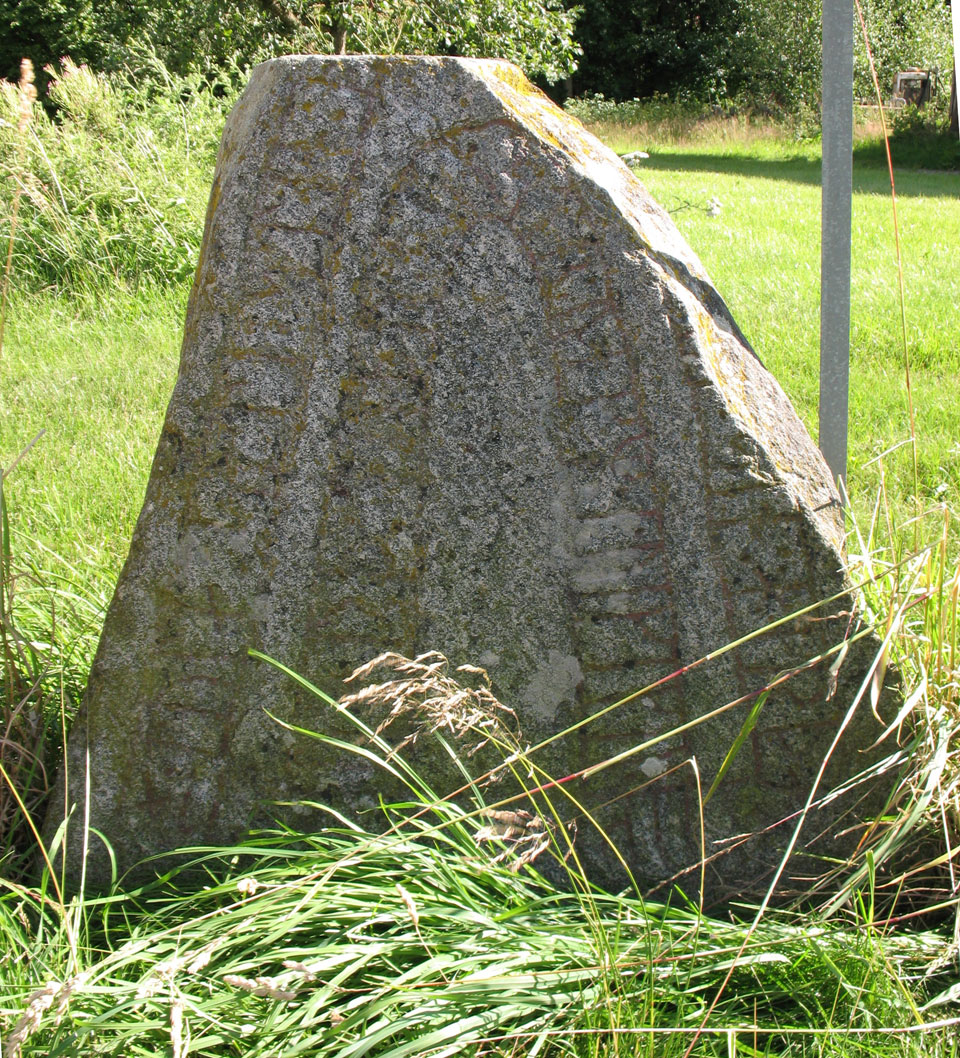
The stone is dated to c. 980 – 1015. The upper right section is missing, but earlier records have supplied the missing parts. The inscription is fitted into two bands, each holding a part of the inscription. It reads:
Tōla satti stæin þ[annsi æft]iR GæiR, sun sinn, harða gōðan dræng. varð dauðr a vestrvegum i vīkingu
Translation: Tola raised this stone after Gæirr, her son, very good boy [who] died on western ways “in Viking”
This stone is thus raised by the mother to a son, who was a very good “boy” and who died when being on a Viking expedition in the west. Drengr was presumably a title awarded to young warriors, who were members of bands of brothers. Together with the title Thegn it is a somewhat unique feature of Swedish Runic stones raised in the region south of the large lake, Vänern. It is believed these titles identified officers in the army of Cnut the Great (c. 995 – 1035 CE) who is thought to have controlled Västergötland in the 11th century.
A. Víkingr m. and víking f. belong to the same root as ON, vika f., which means “sea mile”; originally this would mean the distance between two shifts of rowers (from the root *weik-/ *wīk-). Based on this, a group of linguists are of the opinion that wīkingō > víking f. came to mean a “warlike sea journey” undertaken by rowers, viking-men, aka Víkingr, who were working in shifts. This fits well with the oldest use of the word found in an old English Glossary from c. 700, which explains “wīcingsceaþan” m. as a “piraticam”, with “sceaþa” meaning inflicting harm: usually, the word is translated as “seafarer harm-doer”. However, grammar indicates that it is, in fact, an Anglo-Saxon gloss for the act itself “piracy” (harmdoing while seafaring) rather than the person perpetrating the act; also, it appears, the gloss has nothing specifically to do with Scandinavian piracy per se, but rather Mediterranean. The use of the word “wīcingas” in texts from the end of the 9th century (the translation of Orosius) also seem to refer to non-specified pirates.
B. However, another use of the word can be found in the Old English poem called Widsith (7th century), where Vikings are mentioned three times: once when we are told that Hroðulf and Hroðgar repulsed the “Wikinga cynn” (Viking people – verse 53); later we are told that the poet was together with wicingum (Verse 59) and Lidwicingum – Liðvikings (Verse 80). As the Vikings here are listed alongside other tribes or people, it is generally believed that the word at this point referred to a specific people; more specifically it has been claimed that it denoted persons or people from “Vík(in) on the Norwegian Skagerak coast.” However, –vik (meaning bay or beach) is used in numerous place-names along the coastline of the whole of Scandinavia; at least this definition would tell us nothing more than the people came from a bay, that is an inlet of water aka “ came sailing”. Also it should be noted that the poem Widsith is notoriously difficult to date; hence this evidence is generally no taken much into account.
Evaluating these explanations, it is obvious that the main evidence is found in the glossary, from which we learn that “Viking-activities” c. 700 were considered the same as activities carried out by “pirates” or seaborne raiders.
We also learn from Widsith, that they were considered a “people” in the same category as the Danes and the Swedes; perhaps we may conclude that the word originally designated a specific activity, propelling boats by the means of shifting teams of rowers, bent on carrying out piracy. Later, theis led to the use of the sord to designate those people, which took parts in such raids as “Vikings”; but all this is highly speculative.
Later, from the 10th and 11th centuries, the word, Vikingr m. (used as a noun) can be found as part of inscriptions on Runic stones or in skaldic verses. From this material, we learn that Víkingr was primarily used as part of a personal name. This usage is attested in at least 15 inscriptions stemming from a wide chronological and geographical pool. This is opposed to only three runic inscriptions, where the word is used less specifically, designating the activity as such. On one of these – from 11th century Gotland – the phrase “farin mith uikikum” can be found; that is “travelled with Vikings” or “died with Vikings”. The other stone from Uppland (U 617) tells us about “Assur, who was defender of Vikings together with Kaeti”.
Judith Jesch, who has gone through all the evidence systematically, concludes that in these inscriptions the word Vikingr must have meant something positive; why else, append it as a proper name? However, in the Skaldic verses, the word is used pejoratively. From the late 10th to the late 11th century, seven instances have been found, where Vikings were fighting the rightful king, who is the object of skaldic praise. Whoever, the Vikings were, their status was not univocally positive.
Finally, this leads us towards the three Runic stones, where Viking f. appears as an abstract noun. Here men are commemorated for having been or even died í víkingu, that is “in Viking” (“fara i Viking” literally meaning “dying in Viking”). From these inscriptions, we get a sense of the stones commemorating commendable activities, but we don’t get much closer to the more precise content of what the word “Viking” might mean to the people themselves except that it presumably had to do with waging war or raiding overseas.

Northmanni and Dani
The conclusion is that word “Viking” was at first applied very rarely. Initially just used for describing generic piracy, it later came to designate the specific raiding, robbing and warring perpetrated by Scandinavians. As this was considered an honourable activity by the Scandinavians it is no wonder it was used as a personal name on several Runestones or as a description of seafaring raids and warfare (piracy) enacted by the Northmen commemorated on these. Later, the Anglo-Saxons appeared to have adopted the word to designate more specifically the Scandinavian warriors they encountered in the late 10th century. Thus in the poem, the Battle of Maldon, commemorating the defeat of the Anglo-Saxon army in 991 CE, we hear about Vikings seven times.
However, the most common epithet used in Frankish, and wider European Chronicles was not Viking but: Nordmanni, Northmanni or Normans. Although “Dani” may also occasionally crop up, “Northmanni” was the word universally used. Thus, searching for “Viking” in the large edition of laws, cartularies and chronicles of the 9 – 11th centuries (Monumenta Historia Germanica) yields no results; searching for Nordmanni uncovers results in 44 volumes, with most of them holding numerous citations. To this should be added the multiple uses of the epithet “Dani” found in both Frankish and Anglo-Saxon sources and Chronicles. To what extent these two terms were used interchangeably is still a matter of scholarly contention. For instance, when a Widukind in the mid-10th century calls the city of Rouen, Rothun Danorum Urbs, and elsewhere writes about how “Danes and Northmen invaded our region this year”, it seems as if the distinction between Northmen and Danes was at least of some importance. But elsewhere in the same chronicle, we also hear about Rouen governed by Northmen; in which case Danes seems to have been part of the Northmanni. Later sources will tell us that
“I Vīkingu”
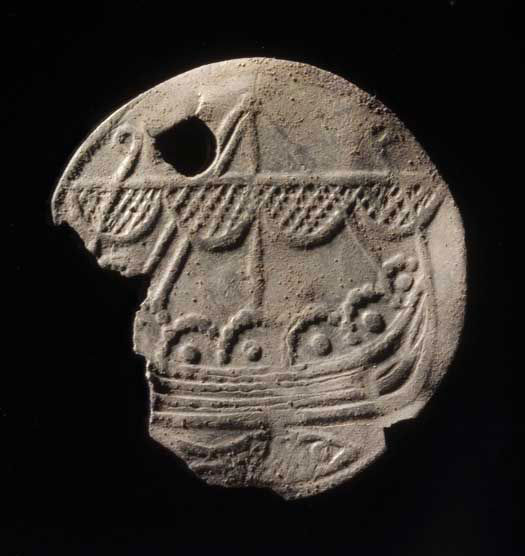
Whatever the roots of the word Viking is, it is obvious that it was early on linked to piracy and thus also linked to their ships; which are exactly what we think of when we encounter the Viking phenomena: their ships and boats.
These ships were known for a number of distinctive qualities: they were clinker-built lap-strake ships, which made them much more flexible and stronger than the Mediterranean carvel-built boats where the straps or stringers butted against each other. It is believed, these clinker-built boats replaced sewn plank-boats in the Roman Iron Age. The magnificent vessels found in the Nydam bog and dated to the 4th century heralded this new shipbuilding technique. It is the same, which was used in the ship found at Sutton Hoo from the beginning of the 7th century.
As far as we know, these ships were not fitted with masts and sails. Rowing seems to have been the main way of propelling these ships, which may have been used for pirating in the channel in the Roman Iron Age, as witnessed by the extensive defence works, erected along the “Saxon Shore” in the 3rd and 4th centuries. However, the finds of ships from this period are few and far between and this cannot be known for certain.
What we do know, however, is that in the mid 8th century Gotlandic Picture stones changed from depicting rowing boats to sailing ships. From the same period, the first ship-graves have revealed ships, which would have masts fitted to keels with mast fishes or keelsons. The earliest ship sporting a mast has been found at Salma in Estonia and has been dated to 750 CE. This was found in 2008, which should make any serious archaeologist pause. Other finds may well move the “sailing vessels” further back in time. To this direct evidence should be added the many depictions of ships bearing sails on coins from Haithabu and Birka, on Runic stones or in graffiti. As might be expected, some of this material is from a later period, but other evidence can be dated to the end of the 8th century.
When did it begin?
In this year fierce, foreboding omens came over the land of the Northumbrians, and the wretched people shook; there were excessive whirlwinds, lightning, and fiery dragons were seen flying in the sky. These signs were followed by great famine, and a little after those, that same year on 6th ides of January, the ravaging of wretched heathen people destroyed God’s church at Lindisfarne (Anglo-Saxon Chronicle: D and E versions)
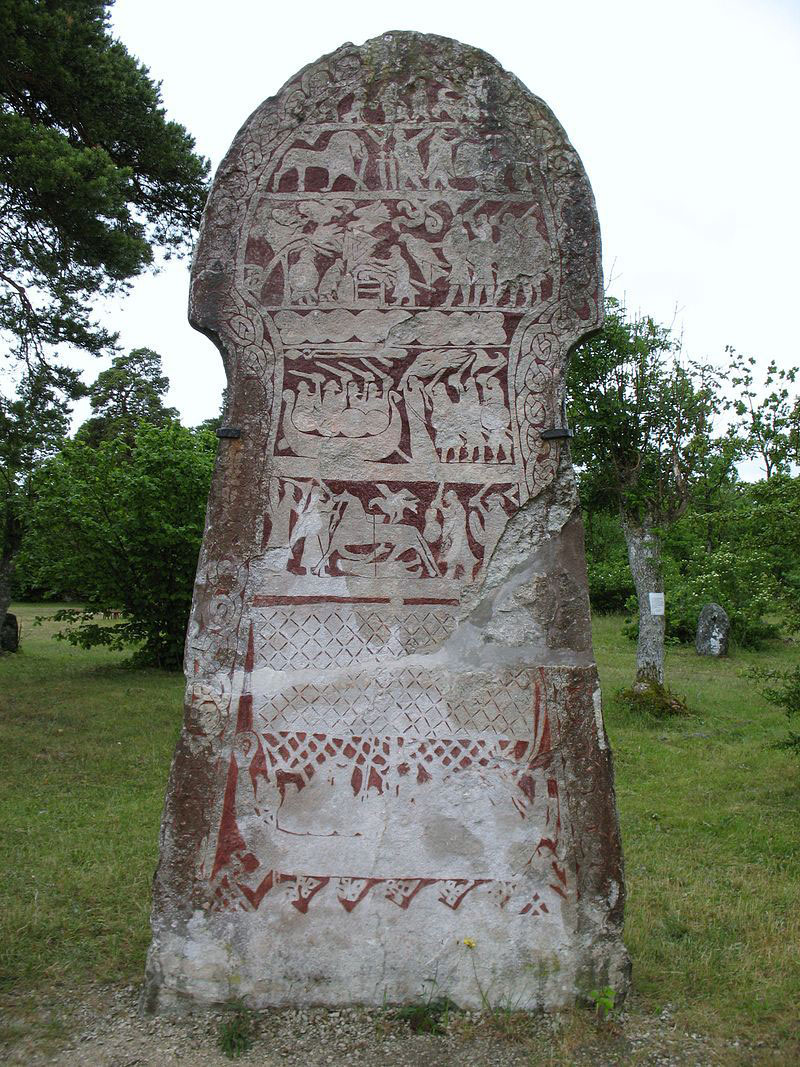
It is exactly at this point we hear for the first time about the ferocious Norsemen. Although attacks may have happened slightly earlier, the convention is to consider the pillage of Lindisfarne in 793 CE as the first.
From this point on, chronicles and letters would be filled by the horrified writings of monks and clerics, who felt like sitting ducks in their rich abbeys and monasteries. It is often claimed that the first fifty years of the Viking Age was characterised by the attacks made of smaller raiding parties or armies consisting of 25 – 35 ships (or less). However, this evaluation is probably due to the skewed role, which the evidence from England traditionally was allowed to play. Contrary to this, we read in the Royal Frankish Annals from 810 that a Danish fleet of 200 ships had arrived at the Coast of Frisia and that all the islands off the coast had been ravaged; and that the Danish king, Godofrid boasted that he wished to fight Charlemagne in open battle. During the following years, numerous Viking fleets came to patrol the French rivers extorting tribute and pillaging wherever people fought back or could not pay up. Later, of course, the Norsemen turned their focus towards England, where they landed with the “great heathen army” in 865 CE, which we hear arrived on 350 ships. As we do not really know how large these ships were, the number of Vikings involved is open to all sorts of estimates. In view of the later events – when the Danelag was established – it is safe to assume that the Vikings armies fielded, might occasionally have been considerable; as they were in France in 810, in England in 865, in Normandy in the beginning of the 10th century, and – finally – in England in 990 CE and later, when the invasions of Swein Forkbeard and Cnut the Great led to the demise of the Anglo-Saxon kingdom.
Warriors, explorers, merchants or farmers?

In the aftermath of WW2 Viking Studies generally came to be peopled by historians and archaeologists, who were politically engrossed in furthering the global peace agenda. Whether politically abhorred by the Nazi appropriation of Viking history, positively engaged as communists, or just inspired by Marxist history writing, Viking scholars and historians began to rewrite the history of the Viking Age. While minimalists began to downsize the estimated number of men engaged in Viking raids, others began to see the Vikings as primarily explorers, tradesmen and farmers. This led to a huge archaeological effort to excavate villages (Vorbasse), proto-towns (Ribe and Kaupang), and outposts (L’ance aux Meadows). It is only recently that the effort has been canalised towards the great manorial complexes with their mead-halls and – lately – the battlefields and winter camps (Torksey and Repton) while the more violent side of the Viking enterprise and diaspora has achieved a more prominent position on the scholarly agenda.
The reason is of course that the Vikings were primarily characterised by their superior shipbuilding technologies. In a Northern world, where agricultural expansion eluded people until the 11th century, and where primogeniture ruled the day, the only way forward for younger sons was to either engage in fratricide or – alternatively – man a boat and go adventuring. Whether as pirates, warriors, merchants, explorers or just immigrants, the Vikings moved west and east raiding, trading and colonising. They did that from c. 750, when their ships began to be fitted with sails and until the 11th century when economic and political centres in Europe shifted once more. Strong Norman and German kingdoms and empires contributed to this demise, although Viking Culture and mentality continued to set its mark on Scandinavia until at least the 13th century. Some will even claim it continues to play a role in modern times, in for instance the management styles, which Danish and Norwegian businessmen and -women are most comfortable with: flat, non-hierarchical and collaborative. As global tradesmen, they continue to excel at striking deals while at the same time mounting competitive raids.
Conclusion
The general opinion is that “Viking” originally meant non-specific pirate activities. Later, in a 10th-century Anglo-Saxon context, pirate activities became more specifically associated with Scandinavians. At this point, the word turned pejorative in the Anglo-Saxon sources, while in a Scandinavian context it became one of several more or less laudatory by-names. However, the word also continued to be used as a description of the warring or raiding undertaken by Scandinavians, as witnessed by a few Runic stones.
All very confusing! However, one conclusion is important to draw: In the eyes of most of their contemporaries, the Vikings were primarily known as Norsemen. Viking was an epithet used among the Anglo-saxons and – perhaps later – by the Norsement themselves. Thus, in the late 9th and beginning of the 10th century, when the Norsemen turned into a significant political force bent on conquering Northern France and the British Isles, “Viking” is witnessed as a significant personal noun designating persons, who had either participated in or died as part of Viking-raids. However, at this point, these raids were not perpetrated so much by pillaging bands of brothers, but rather by significant armies fielded by Danish and/or Norwegian kings as part of the general Scandinavian diaspora at that time. “Vikings” were no longer just pirates, but presumably seasoned sailors siling in some of the greatest war-fleets, the Middle Ages ever witnessed.
Sources:
The Anglo-Saxon Chronicle is a complex text found in nine different manuscripts and versions, each currently being published separately by Cambridge University Press. A useful edition of the collated text(s) is: The Anglo-Saxon Chronicle. Ed. and tr. by Michael Swanton. Routledge 1996. A handy edition has been published as part of the Viking Sources in Translation project at Yale University.
Royal Frankish Annals. In: Carolingian Chronicles. Tr. by Walter Scholz and Barbara Rogers. University of Michigan 1970.
Deeds of the Saxons. Widukind of Corvey. Ed. and tr. by Bernard S. & David S. Bachrach. Catholic University Press 2014
Further Sources:


Eldar Heide: Viking, Week, and Widsith. A reply to Harald Bjorvand.
In: Arkiv för nordisk filologi (2008) Vol. 123, pp. 23 -28
Fell, C.: OE wicing: a question of semantics
Proceedings of the British Acadademy. 72, 1986, pp. 295-316.
Wikinger. By Thorsten Andersson and Klaus Böldl.
In: Reallexikon der Germaischen Altertumskunde, De Gruyter, Berlin & New York. 2007.
“Wikinger” im Mittelalter: Der rezeption von “vikingr” m. und “Viking” f. in der altnordsichen Literatur.
By Jana Krüger. Walter de Gruyter, Berlin and New York 2008.


FEATURED PHOTO:
Holmrygr, reconstruction of the largest of the three boats found in the Gokstad ship burial. Photo: Marit Synnøve Vea/Avaldsnes Info
READ MORE:


Save
Save
Save


