



Voice and Voicelessness in Medieval Europe forges connections between medieval voices and contemporary ones, giving “voices” to a fresh generation of scholars
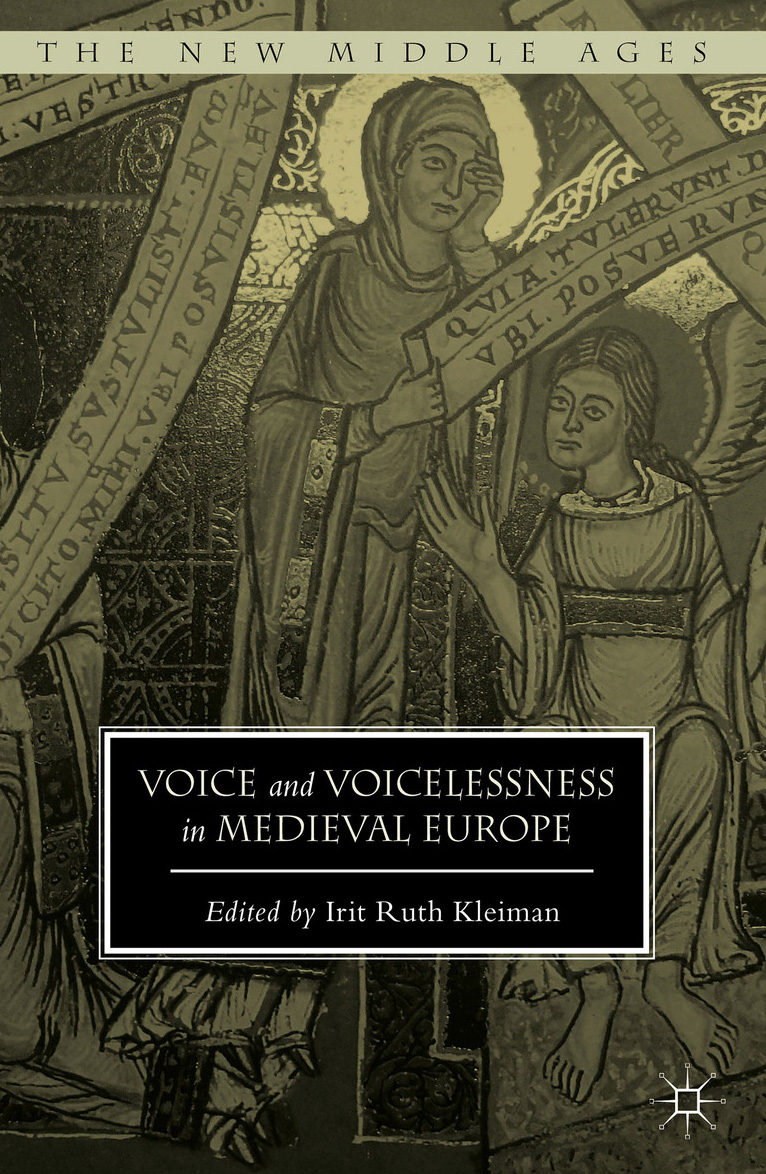
Voice and Voicelessness in Medieval Europe
Ed. by Irit Ruth Kleiman
Series The New Middle Ages
Palsgrave Macmillan October 2015
ISBN 9781137397058
ABSTRACT:
What does it mean to possess a voice — or to be without one? This is the question that twelve scholars of philosophy, literature, history, art history, musicology, religion, law, and classics address in Voice and Voicelessness in Medieval Europe. For medieval thinkers, the categories of voice and voicelessness were deeply embedded in definitions of the human, the divine, and the bestial. This interdisciplinary collection of far-reaching yet closely intertwined essays engages with current debates surrounding historicist models of subjectivity, the poetics and aesthetics of marginality, political theology, embodiment, performance studies, and the affective turn. In turn, Voice and Voicelessness in Medieval Europe forges connections between medieval voices and contemporary ones, giving “voices” to a fresh generation of scholars.
TABLE OF CONTENTS:
PART I: THE NATURE AND LIMITS OF THE HUMAN: VOICE AND LANGUAGE
1. Locutio Angelica, or Language without Voice; Ghislain Casas
2. Mimicry, Subjectivity, and the Embodied Voice in Anglo-Saxon Bird Riddles; Robert Stanton
PART II: THE SOCIAL BODY: VOICE, AUTHORITY, AND COMMUNITY
3. Ritual Voices and Social Silence: Funerary Lamentations in Byzantium ; Hélène Bernier-Farella
4. Viva voce: Voice and Voicelessness Among Twelfth-Century Clerics ; Bruno Lemesle
5. Abelard and Heloise between Voice and Silence; Babette S. Hellemans
PART III: RHETORIC AND SUBJECTIVITY: POLYPHONIC VOICES
6. The Voice of the Unrepentant Crusader: “Aler m’estuet” by the Châtelain d’Arras; Marisa Galvez
7. Margery’s “Noyse” and Distributed Expressivity; Julie Orlemanski
8. The Voice of the Possessed in Late Medieval French Theater; Andreea Marculescu
PART IV: AESTHETIC EXPERIENCES: REPRESENTATIONS OF HUMAN AND DIVINE VOICES
9. “Sanz note” & “sanz mesure”: Towards a Pre-Modern Aesthetics of the Dirge; Anna Zayaruznaya
10. Listening for canor in Richard Rolle’s Melos amoris; Andrew Albin
11. Mary between Voice and Voicelessness: The Latin Meditationes of Bernard de Rosier; Cédric Giraud
12. Picturing the Voiceless in an Age of Visible Speech; Matthew Shoaf
Bibliography
ABOUT THE EDITOR:
Irit Ruth Kleiman is Associate Professor of Romance Studies and Director of Graduate Studies in the Department of Romance Studies at Boston University, USA.


