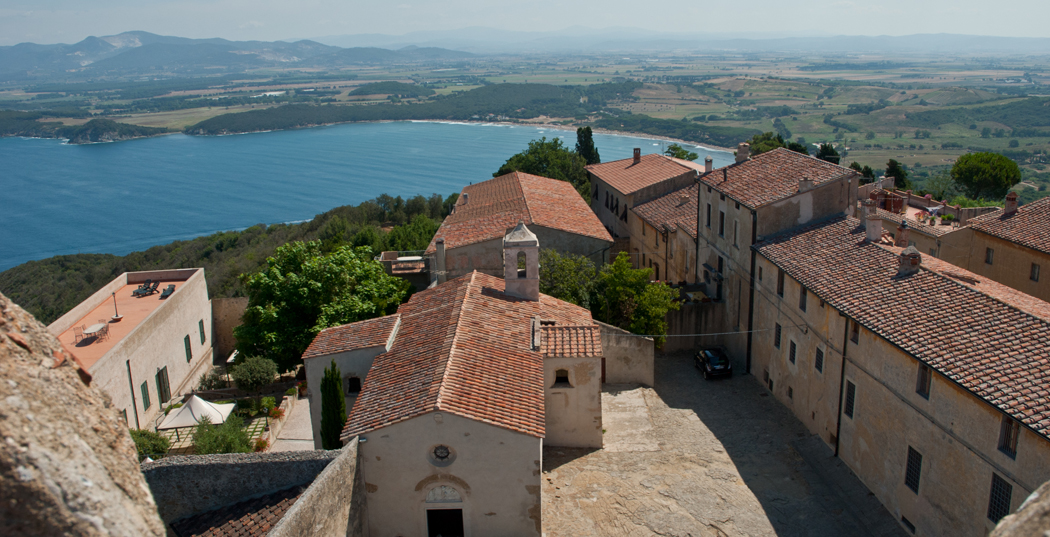
From 200 BC to AD 1300 the landscape of the Etruscan Coast in Central Italy changed from forest to maquis and back again.
Long term analysis of charcoal-deposits from 200 BC to AD 1300 explores how the landscape at The Etruscan Coast in Central Italy changed from forest to maquis and back again. The reason was changing patterns of human interaction with the land and its resources and not changes in climate, concludes a team of scientists and archaeologists in a recent article.
Human-derived landscape changes on the northern Etruria coast (western Italy) between Roman times and the late Middle Ages
By Gaetano Di Pasquale, Mauro Paolo Buonincontri, Emilia Allevato, Antonio Saracino and Mauro Paolo Buonincontri, University of Naples Federico II, via Università
In: The Holocene. Published online before print August 20, 2014, doi: 10.1177/0959683614544063
ABSTRACT:
Anthracological studies – studies of wood charcoal from archaeological sites in order to develop an understanding of the ways in which communities used the plants and trees around them – has been carried out in three sites located on the Tyrrhenian coast of central Italy, ancient northern Etruria. More precisely the following places:
- the Castle of Donoratico
- the Town of Populonia
- the Port of Alberese
The analysis spans the period between the Roman Republican Period and the Late Middle Ages (200 BC–1300 AD).
The integrated comparison of charcoal data from 2456 samples from the three different localities with regional pollen and micro-charcoal data available from elsewhere in northern Etruria shows that the changes in vegetation were completely independent of climate. Instead they were connected to the economic and social dynamics, which characterise the history of this part of Central Italy.
In the beginning Quercus ilex forests progressively retracted from 3rd century BC in favour of open maquis scrubland. This reflected the growing human impact of Romanisation characterised by intensive agriculture and livestock grazing. The transition from maquis to deciduous Quercus forest at the end of the Roman Period from AD 450 – 550 and lasting until AD 800 – 900 is related to economic and cultural factors characterised by the abandonment of land. Finally between AD 1000 -1200 the vegetation cover shifted once again towards open maquis scrubland. At the same time re-settlement took place, as evidenced by intensive orchards. Charcoal data also showed that the expansion of olive and chestnut trees in central Italy first became prolific from AD 1000 and not in the Roman Period.
This means that extensive cultivation of chestnuts and olives has very recent origins and should be attributed to the introduction of a feudal system and the later political organism of the medieval towns.