In ‘The Afterlife of the Roman City’ the story is told of how the ‘Adventus’ was transformed in the Early Medieval City to become one of the most important ritualized ceremonies
The afterlife of the Roman city: architecture and ceremony in late antiquity and the early middle ages
By Hendrick W. Dey
Cambridge University Press 2015
ISBN-13: 9781107069183
ISBN-13: 9781107686335
ISBN-13: 9781316215241
ABSTRACT:
This book offers a new and surprising perspective on the evolution of cities across the Roman Empire in late antiquity and the early Middle Ages (third to ninth centuries AD). It suggests that the tenacious persistence of leading cities across most of the Roman world is due, far more than previously thought, to the persistent inclination of kings, emperors, caliphs, bishops, and their leading subordinates to manifest the glory of their offices on an urban stage, before crowds of city dwellers. Long after the dissolution of the Roman Empire in the fifth century, these communal leaders continued to maintain and embellish monumental architectural corridors established in late antiquity, the narrow but grandiose urban itineraries, essentially processional ways, in which their parades and solemn public appearances consistently unfolded. Hendrik W. Dey’s approach selectively integrates urban topography with the actors who unceasingly strove to animate it for many centuries.
- Proposes a new way of understanding the evolution of the late Roman and post-Roman city, from Western Europe to Byzantium to the Islamic world
- Synthesizes a wide range of both textual and archaeological evidence, and includes eight color plates
- Provides an up-to-date historiographical overview and summary
REVIEW:
 Monumental architecture was a dominating characteristic of the Roman City in Late Antiquity as well as in the Early Middle Ages in so-far as it set the stage for the panoply of collective rituals and ceremonial events, which actively underpinned the claims to authority of the powers that were. Beneath this surface was a distinct structural pattern of an urban paradigm, which permeated life in the city from the mid-third century into the ninth.
In a recent book Hendrik Dey has taken upon himself to untangle this web and in this way contribute to age-old questions to which extent the Middle Ages constituted a break with, a continuity of or a transformation of Antiquity.
In the author’s – and many other scholars’ – opinion the idea of the city was central to what distinguished life in Late Antiquity. In short: Monumental architecture and urban lifestyle epitomized what it meant to be civilized in Antiquity. ‘Romanization’ and urbanization went hand in hand. Thus the Roman city was an entity with well-defined administrative and sacral boundaries and a pronounced concentration of population with access to a productive surplus sufficient for distinct segments of people to engage in activities unrelated to subsistence. This was fundamentally made visible through specific models of topography and architecture – in short a specific form of stage for what was termed a “civilized life”. This basically unfolded in the forum, in the temples and at the many venues for entertainment.
However, what happened from Late Antiquity and onwards, was a dissolution of this generalized pattern: in some parts of the empire, cities and with them city-life was basically obliterated, while other parts experienced a contraction and perhaps transformation.
Different parts of the Roman Empire simply went down very different paths. Some parts experienced whole-sale destruction of the old ways, while others apparently struggled along to preserve some continuity in a more or less confident manner. Or – which is the tentative hypothesis of this book – a gradual transformation took place, which in spite of its definite roots in Antiquity, came to set the stage for a messy rethinking of the city less as a stage (pace the abstract on the blurb) and more as a topographical frame. At the centre of this transformation was the development of the distinct late Antique/early Medieval form of the Adventus.
The question, though, is how these changes unfolded in a concrete manner from place to place and how and by whom they were instigated? Fundamentally this is the set of questions, which Henrik Dey has undertaken to find answers to.
Through a wide-ranging and fascinating exploration of a number of ancient cities like Rome, Milan and Constantinople, but also newly founded cities like Recopolis in Visigothic Spain as well as Mérida, Toledo, Lombard Pavia, Merovingian Tours, Paris, Orléans, Soissons, Reims and Metz etc. we hear not only how streets and fora grew gradually more crowded, while temples, civic basilicas and the many entertainment venues fell into disrepair, but also how churches, monasteries, convents, the residences of bishops and not least the new grandiose city walls came to dominate the topographies of Early Medieval cities. Primarily, though, Dey outlines how these new and changed topographies expressed a distinct plan to reinforce and propagate a new (old) world-view focused on the ritual celebration of the king entering and passing through his city.
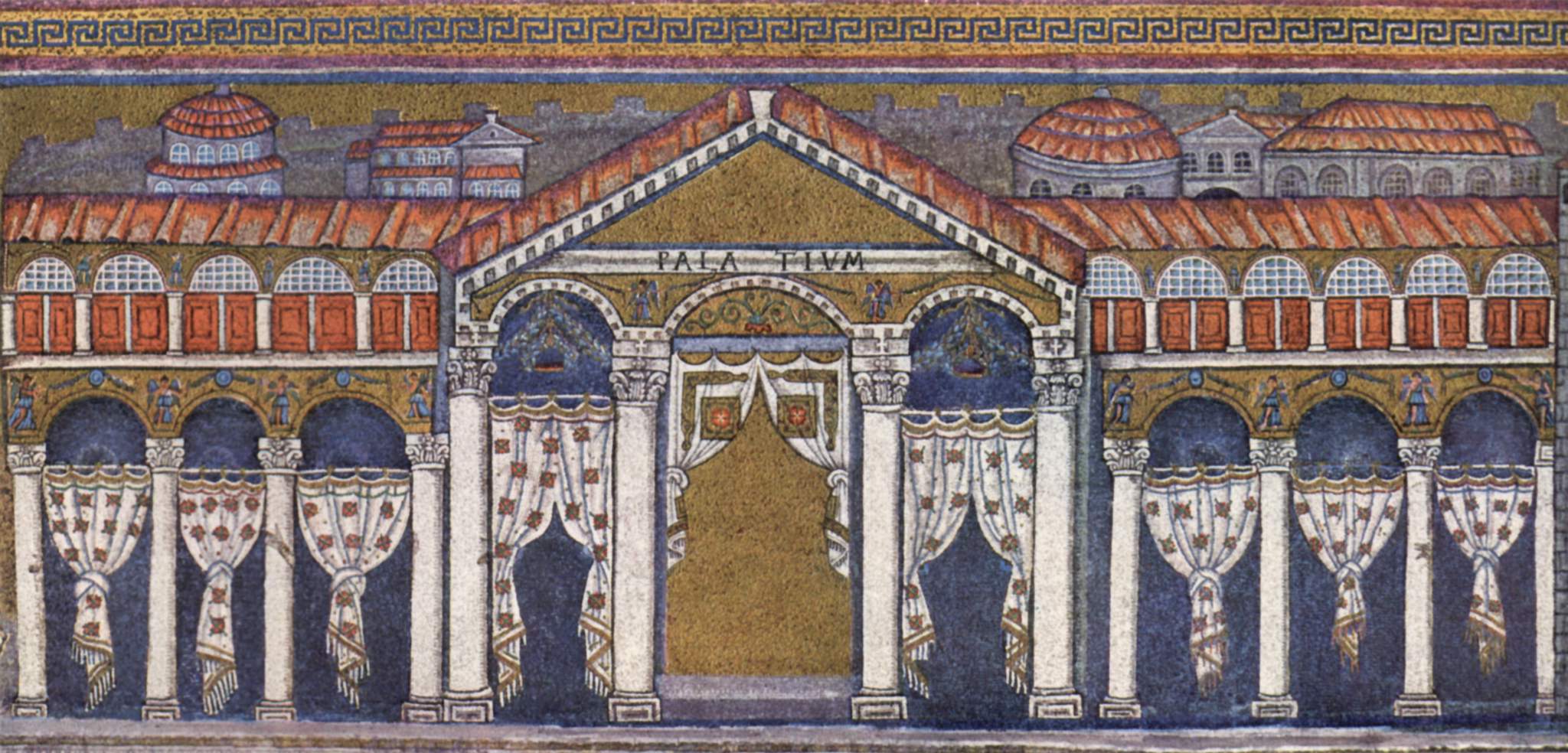
At the centre of this worldview was the ‘Adventus’, the urban spectacle of the triumphal entrance of the ruler into the city, complete with the throng of people – the occursus – outside the gate, the banners, the standards, the boisterous chanting and the regal movement across the city along the cardo, the main street, while passing both civic and ecclesiastical centres of power. An important element was in this connection the rejuvenation or perhaps reinvention of the architectural décor of the colonnade, which continued to embellish the grand cities of the Visigoths, the Merovingians and the Lombards. It was along these carefully outlined linear itineraries, the unfolding of the “new” totalitarian states and their handmaiden: the church, took place by way of demonstrating to the people, the ‘adventus’ of the ruler and his mighty entourage. It stands to reason that these forms of ceremonial movement became a major inspiration for the architectural formation of the religious buildings of the Early Middle Ages.
In short: there developed in the Early Medieval city a distinct spatial syntax, which in a way continued to witness to the perpetuity of the Roman City, even after its traditional markers – the grand temples and civic buildings – had deteriorated and had turned into recycled ruins. Thus the history of the afterlife of the Roman cities does not just witness to the “Fall and Decline” nor does it univocally demonstrate continuity. Rather it demonstrates the messy and yet distinct way in which the cities continued to support monumental corridors through which the crowds could behold the regal demonstrations of power, prestige and patronage.
Anyone in doubt of the perpetuity of this tradition should only look to the highly ritualised presidential inauguration of the American presidents, which take place every four years in this most Roman of all modern capitals, Washington.
This is a joyous read: well-written and highly illuminating, it demonstrates how vigorous the historians of Late Antiquity has approached the need to rethink their theoretical stance and to climb out of the trenches of the historiographical impasse, which have governed our understanding of the ‘Dark Ages’ since WW2. Medievalists might learn something…
Karen Schousboe
TABLE OF CONTENTS:
- Introduction: Urban Living and the ‘Fall of the Roman Empire
- New Urban Forms for a New Empire: The Third Century and the Genesis of the Late Antique City
Philippopolis
Cities and the Reorganization of the Late Roman State
Urban Architecture under Diocletian and the Tetrarchy: Palaces and Capitals
Praesens Deus : Imperial Ceremonial and Urban Architecture - Ceremonial Armatures: Porticated Streets and their Architectural Appendages
Prolegomena to Porticated Streets
Imperial Capitals in Italy: Rome and Milan
Constantinople
Porticated Streets and the Literary Image of Late Antique Cityscapes
Commerce, Commemoration and Ceremony in the Colonnades of the Eastern Mediterranean
The Long Shadow of Constantinople, I: New Cities and Old Traditions in the Sixth-Century East
The Long Shadow of Constantinople, II: Ravenna
The Intersection of ‘Real’ and ‘Ideal’: Cities Depicted
Conclusions - Dark Ages’ and the afterlife of the classical city
Cities, the Seventh Century and the Beginning of the Middle Ages
The Visigothic Kingdom
Merovingian Gaul
Lombard Italy
Byzantium
The Umayyad Levant - Postscript: Architecture, Ceremony and Monastic cities in Carolingian Francia
- Conclusions
ABOUT THE AUTHOR
Hendrik W. Dey is associate professor in the Department of Art History at Hunter College, City University of New York.
FEATURED PHOTO:
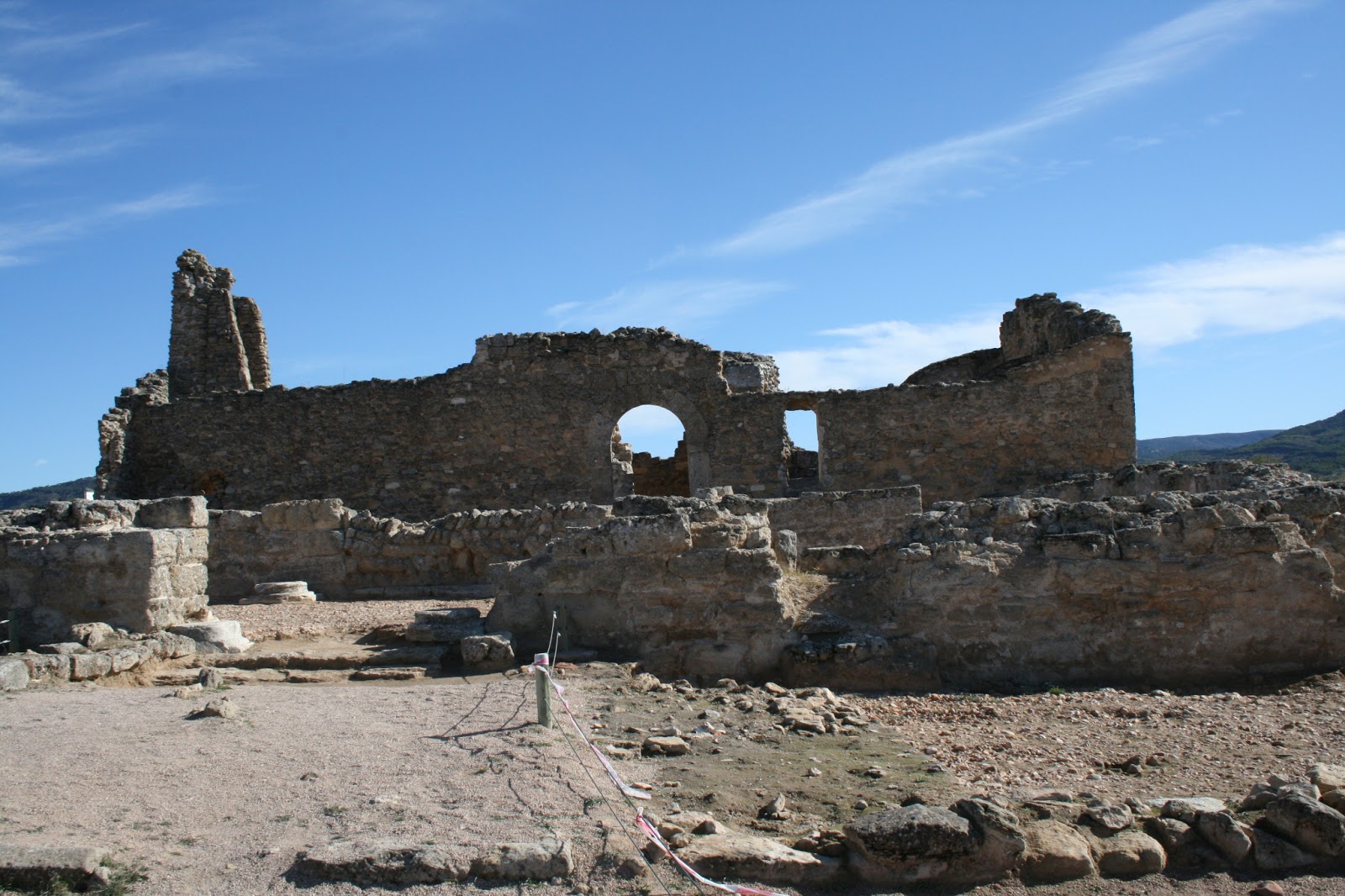
Recopolis in Visigothic Spain