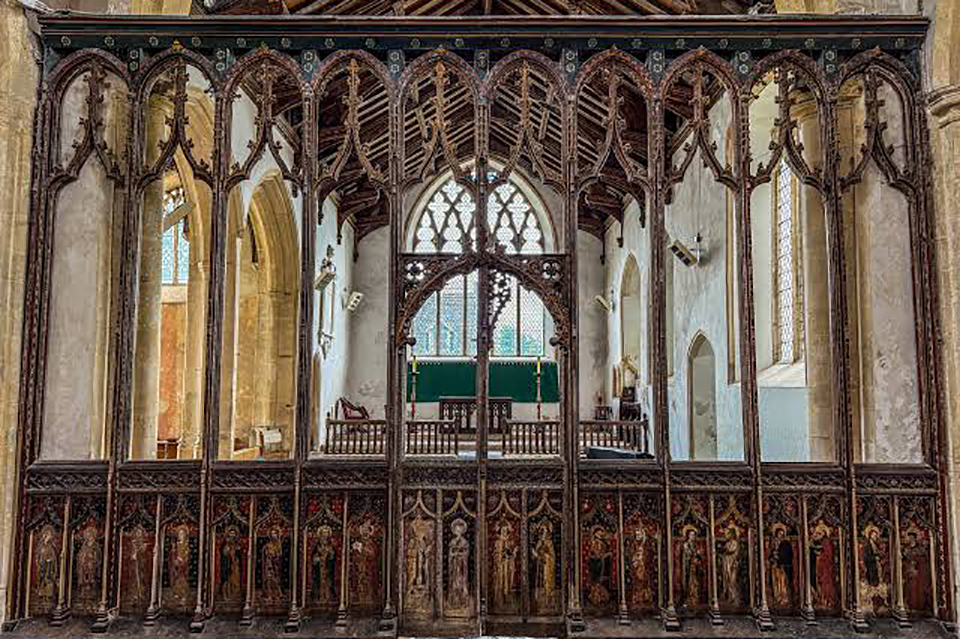
Who actually paid for, organised and built England’s late medieval parish churches? New book enters the discussion with a new contribution focusing on the distinct new design
Building the Parish Church in Late Medieval England: Architecture, Art, and the Collaborative Gothic Monument
By Zachary Stewart
Cambridge University Press 2026
ABSTRACT:
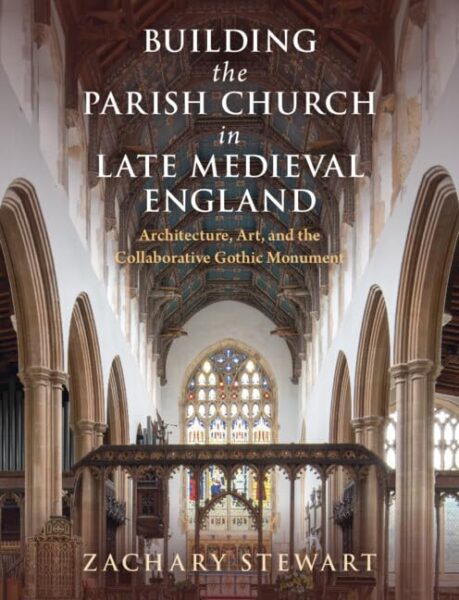 Parish churches are among the most conspicuous survivals of medieval communal life. They were not merely settings for the Mass: they were built, altered, furnished and financed by communities whose interests and resources could differ sharply. In the centuries following the Black Death, some English parishes developed ambitious architectural solutions that placed the congregation within a comparatively unified interior.
Zachary Stewart concentrates on a distinctive open-plan type in which there is no structural separation between nave and chancel. Drawing especially on East Anglia, and combining architectural, archaeological and archival evidence, he asks how this design emerged and what it reveals about the people who commissioned and used such buildings. The central proposition is that church architecture can preserve the traces of collective decision-making, local wealth and negotiated authority. At the same time, though, the local element was overshadowed by the idea that these churches had to conform to what the author calls “The Collaborative Gothic Monument”.
The resulting perspective shifts attention from great ecclesiastical patrons to a less monumental but historically fertile landscape of parishioners, craftsmen and benefactors. The church becomes a social artefact: an expression of shared religious obligations, competition, cooperation and a local community’s ability to organise material work. And yet, these new churches also conformed to the common idea of what such a church should look like.
The result, Stewart argues, was nothing less than a new kind of public monument to collaborative action. Informed by a wealth of archival, archaeological, and architectural research, with special attention to East Anglia, Stewart’s study demonstrates the importance of the parish church as a center for innovative material production in late medieval England. It also reveals how non-elite social arrangements shaped local life on the eve of the modern era.
ABOUT THE AUTHOR:
Zachary Stewart is Associate Professor of Architectural History and Theory at Texas A&M University. A scholar of medieval art and architecture, he is the coeditor of several books, including The Baptismal Font Canopy of St. Peter Mancroft, Norwich.