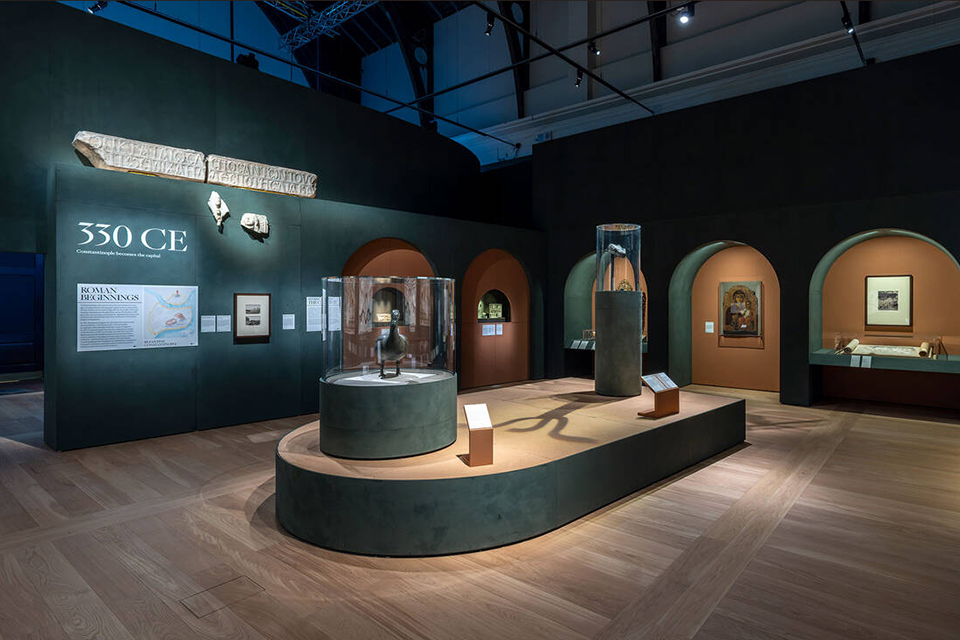
Constantinople to Istanbul: One City, Two Empires explores 1,600 years of extraordinary artistic production in one of the world’s most influential cities. Spanning AD 330 to 1922, it brings together remarkable works of art, design and architecture to reveal the enduring creative legacy of an imperial capital that shaped the Mediterranean world and far beyond.
Few cities have played such a remarkable role in shaping the history, art and culture of the world as Constantinople, the city we know today as Istanbul. For nearly 1,600 years, it stood at the crossroads of Europe and Asia, serving as the capital of two great empires and attracting merchants, artists, scholars and travellers from across the Mediterranean and beyond.
The exhibition Constantinople to Istanbul: One City, Two Empires invites visitors to explore this extraordinary history through a rich collection of art, architecture and precious objects, spanning the period from AD 330 to 1922.
Founded as a new imperial capital by Constantine the Great in AD 330, Constantinople became the political and cultural heart of the Byzantine Empire (330–1453). Following its conquest by the Ottomans in 1453, the city entered another remarkable chapter as the centre of an empire that endured until 1922. Rather than presenting these two empires as entirely separate worlds, the exhibition explores the artistic traditions that distinguished them, as well as the continuities that linked them across the centuries. Through objects ranging from exquisite Byzantine ivories and glittering enamels to Ottoman silks, paintings and ceremonial treasures, it tells the story of a city whose artists, patrons and craftsmen helped shape the visual cultures of both the Christian and Islamic worlds.
Roman Beginnings
The Foundation
The exhibition opens with the transformation of an ancient settlement on the Bosphorus into one of the most magnificent capitals of the Roman world. When Constantine the Great refounded the city in AD 330, he set in motion an ambitious programme of construction that would establish Constantinople as a worthy successor to Rome.
Its location between the Black Sea and the Mediterranean made it a natural meeting place for people, goods and ideas. Over the following centuries, the city developed into a thriving, cosmopolitan metropolis, protected by formidable walls and supplied by an impressive network of aqueducts and reservoirs. Its defences were strengthened not only by military engineering but also, in the minds of its inhabitants, by the sacred protection offered by icons and relics. At the heart of public life stood the Hippodrome, where enormous crowds gathered to watch chariot races, celebrate imperial victories and occasionally express their political grievances. Here, sporting entertainment and imperial ceremony went hand in hand.
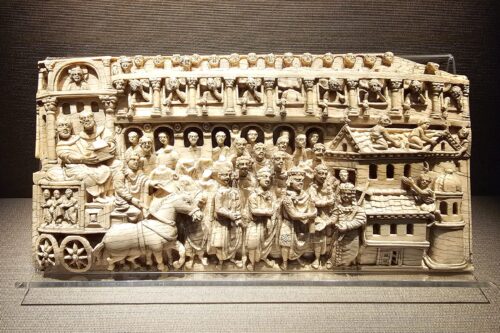
The exhibition brings this early world to life through mosaics, architectural fragments and objects associated with the palaces, churches and public spaces of Constantinople. Among the highlights is a fragment of the famous Serpent Column, originally erected at Delphi in ancient Greece and traditionally believed to have been brought to Constantinople by Constantine himself. Together with other ancient monuments transported to the new capital, it lent prestige and a sense of historical continuity to the imperial city. Fragments of intricate mosaics from the Great Palace offer a glimpse of the splendour enjoyed by Byzantine emperors, while the remarkable Trier Adventus Ivory depicts the ceremonial arrival of sacred relics in the presence of the emperor and his court. Other objects take us into the lively world of the Hippodrome. The Clephane Horn, on loan from the British Museum, and a selection of consular diptychs evoke the excitement of chariot racing and the elaborate rituals surrounding imperial festivities, complete with officials carrying the palm branches awarded to victorious competitors.
Heaven and Earth
From the crowded Hippodrome, the exhibition turns towards the sacred spaces of Constantinople, where art and architecture played a central role in expressing religious devotion and imperial authority. The magnificent Hagia Sophia, built in the sixth century, remains perhaps the most spectacular expression of Byzantine ambition. Its soaring dome, glittering mosaics and immense interior embodied the close relationship between earthly and heavenly power that characterised the Byzantine Empire. Through a selection of icons, reliquaries, illuminated manuscripts and liturgical objects, this part of the exhibition introduces visitors to the rich material culture of the Church of Constantinople. It also reveals how Byzantine artists continued to draw inspiration from the classical past, even while developing a distinctive visual language of Christian devotion.
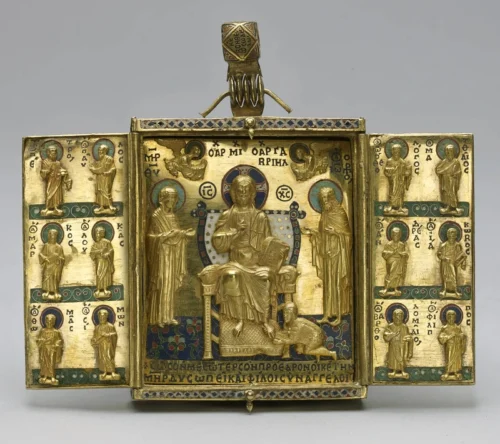
The city’s imperial workshops were celebrated for their exceptional craftsmanship. Goldsmiths, ivory carvers, silk weavers and enamel workers produced luxury objects coveted far beyond the empire’s borders, their creations passing into royal treasuries, churches and private collections across Europe and the Mediterranean. One particularly intimate treasure is an exquisite 11th-century miniature triptych, made in cloisonné enamel and designed to be worn around the neck. It depicts a Byzantine courtier named Constantine kneeling before Christ. On loan from the Wyvern Collection and displayed publicly for the first time, it offers a rare glimpse into the personal devotional life of a member of the Byzantine elite. Equally remarkable is the Veroli Casket, a masterpiece of ivory carving decorated with scenes from Greco-Roman mythology. Its imagery reminds us that the classical world remained an important source of artistic inspiration in Christian Constantinople. Other treasures include a seventh-century gold bracelet depicting the Virgin Mary, on loan from the British Museum, and the Lincoln Typikon, a beautifully illustrated 14th-century manuscript associated with a Constantinopolitan nunnery. On loan from Lincoln College, Oxford, the manuscript is being shown to the public for the first time in more than sixty years. Together, these objects reveal a world in which religious devotion, artistic refinement and imperial patronage were closely intertwined.
A Capital Reborn
In 1453, Constantinople fell to Sultan Mehmed II, marking the end of the Byzantine Empire and the beginning of a new era in the city’s history. Renamed Istanbul in later usage, the city became the glittering capital of the expanding Ottoman Empire.
The exhibition’s third section explores how the Ottoman sultans used art, architecture and public ceremony to express their authority. Like their Byzantine predecessors, they understood the political power of magnificent buildings, lavish court rituals and precious objects.
Silks, jewels, richly decorated armour, ceremonial clothing and luxurious furnishings all contributed to the splendour of the Ottoman court. Grand public processions transformed the city’s streets into spectacular displays of wealth and power, while artists and craftsmen drew upon traditions and materials from across the empire and beyond.
Among the most celebrated works on display is the famous portrait of Sultan Mehmed II, painted in 1479 by the Venetian artist Gentile Bellini and lent by the National Gallery in London. The painting captures not only the image of the conqueror of Constantinople but also the artistic exchanges between the Ottoman court and Renaissance Europe.
Another striking object is a jewelled ivory belt recovered from the tomb of Sultan Selim II, who died in 1574. On loan from the Museum of Turkish and Islamic Arts in Istanbul, it illustrates the importance of elaborate belts and girdles in Ottoman court dress.
Visitors will also encounter sparkling jewelled turban ornaments and a sumptuous horse cover, woven from velvet and silver thread, made for a court procession around 1600. Such objects evoke the extraordinary visual richness of imperial ceremonies, when textiles, precious metals and richly adorned horses helped turn the sultan’s public appearances into unforgettable spectacles.
Ceramics, paintings, clothing, furniture and metalwork are displayed alongside works by Ottoman and European artists, revealing a court whose tastes and ambitions reflected the empire’s far-reaching connections.
Life in the City
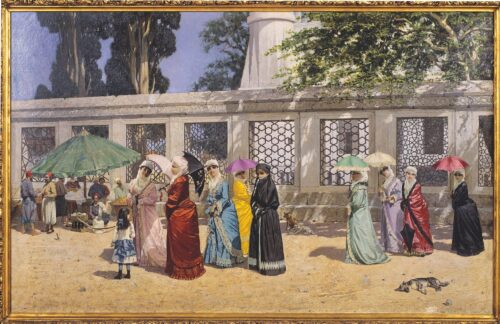
Beyond the palaces, mosques and ceremonial processions lay another Istanbul: the bustling metropolis of merchants, artisans, families, musicians and visitors from many different lands.
The exhibition’s final main section invites us into this everyday world, exploring a city where diverse languages, faiths and artistic traditions existed side by side. Through clothing, household objects, musical instruments and images of urban life, it offers glimpses of the people who inhabited one of Europe’s largest and most sophisticated cities.
Coffee houses and bathhouses provided places to meet and socialise, while music, fashion and the performing arts contributed to the pleasures of urban life. The exhibition also follows the changing tastes of Istanbul’s inhabitants during the 18th and 19th centuries, when Parisian fashions and other European influences increasingly mingled with established Ottoman traditions.
Particularly appealing are the examples of elegant Ottoman dress, including beautifully worked silk garments that reveal the sophistication of fashion among the city’s prosperous inhabitants.
One such garment is an exquisite üçetek entari robe, made from yellow silk and decorated with embroidered floral patterns. Its long sleeves and trailing skirt reflect the distinctive elegance of Ottoman courtly fashion. Lent by the Vehbi Koç Foundation’s Sadberk Hanım Museum, the robe once belonged to a member of the family of Osman Hamdi Bey, one of the leading intellectual and artistic figures of the late Ottoman Empire.
His painting Women Out Walking, on loan from the Yapı Kredi Collection in Türkiye, offers another perspective on the city. Depicting women in an urban setting, it opens a window onto changing fashions, social customs and identities during the empire’s final decades.
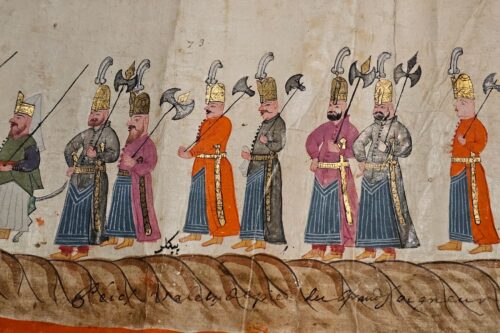
An especially fascinating survival is a 17th-century procession scroll from the John Rylands Library at the University of Manchester. Created to record an Ottoman imperial procession for a foreign diplomat, it captures the spectacle of court ceremony in extraordinary detail. The scroll allows visitors to follow an event that once unfolded through the streets of Istanbul, complete with the elaborate costumes, officials and ceremonial displays that characterised Ottoman public life.
The V&A’s own collections contribute further glimpses of the city’s artistic and social world. Among them are intricate glazed ceramic tiles from the Zeyrek Çinili Hamam bathhouse and one of the earliest surviving long-necked tanbur lutes, dating from around 1750 and richly decorated with ivory, tortoiseshell and mother-of-pearl.These objects bring us closer to the sounds, colours and textures of Istanbul, reminding us that the city’s cultural life extended far beyond the walls of its imperial palaces.
An Enduring Legacy
The exhibition concludes by tracing the influence of Byzantine and Ottoman art on European artists and designers during the 19th century. Prints, textiles and mosaics from the V&A’s collections, including works associated with Owen Jones and William Morris, reveal how the artistic traditions of Constantinople and Istanbul continued to inspire new generations of craftsmen and designers.
Across sixteen centuries, the city changed rulers, religions, languages and artistic fashions. Yet it remained a place where cultures encountered one another, where ancient traditions were transformed and where extraordinary works of art continued to emerge. Constantinople to Istanbul: One City, Two Empires offers an opportunity to discover this remarkable history through the objects that survived it – from the imperial splendour of Byzantium to the sophisticated artistic world of the Ottomans, and from the ceremonies of emperors and sultans to the everyday pleasures of life in one of the world’s great cities.
Two Empires is in partnership with Koç Holding, with support from the Huo Family Foundation.The exhibition has been curated for the V&A by Senior Curator Tim Stanley and Project Curator Bella Radenović
READ:
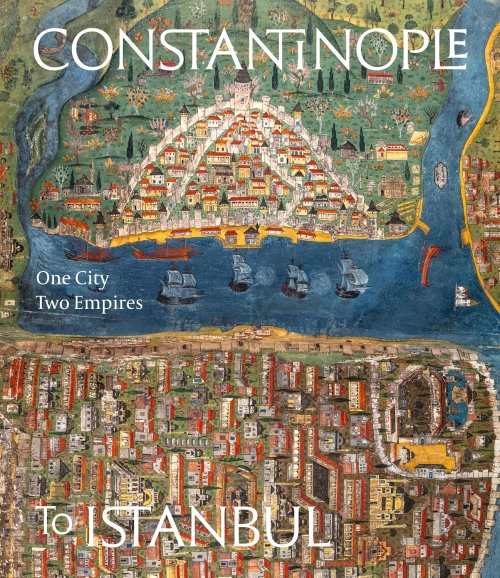 The exhibition is accompanied by a new V&A publication Constantinople to Istanbul: One City, a richly illustrated book telling the story of one of the world’s great capitals and the significance and influence of its artistic culture over the course of 1,600 years. Lavishly illustrated with objects including sculpture, ivories, manuscripts, icons, ceramics, metalwork, textiles, and weapons, this publication will trace the challenges and advantages of the city’s geographical location, the religious currents that influenced the nature of its art, the aims of the ruling courts in their artistic patronage, and a rich urban culture as shared by a remarkably diverse population.
READ MORE:
The Umayyad Advance on Constantinople: The Queen of Cities Besieged, 650-718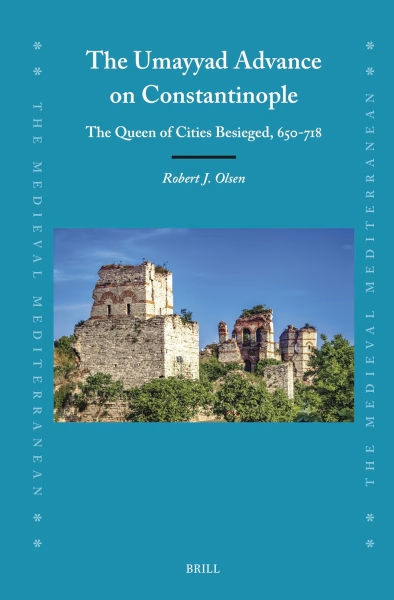 (The Medieval Mediterranean, 149)
Robert J. Olsen
Brill 2026
In 718, a massive Umayyad army led by Maslama b. ʿAbd al-Malik decamped from outside the walls of Constantinople. A terrible set of disasters struck the besieging army, leading to the collapse of the last Arab effort against the Byzantine capital. For the Byzantines, it was a sure sign of the Virgin’s divine protection, an interpretation heightened by careful planning of the cunning new emperor, Leo III. But this was not the first such near-conquest the Byzantines had weathered at the hand of an Umayyad general. This book seeks to explore the strategy and plan of the Umayyad designs on the Queen of Cities, from its inception under then-general Muʿāwiya b. Abī Sufyān through to the disaster in 718. Comparing narratives from more than 50 sources in a variety of languages ranging from Britain to China, this work untangles the complex web of narratives surrounding these campaigns and provides a new reconstruction of chronology of the sieges of Constantinople.
 Fashioning Sixth-Century Constantinople: Text, Translation and Commentary of Book I of the Buildings by Prokopios of Kaisareia (Studies in Byzantine Cultural History)
by Max Ritter, Elodie Turquois, and Marlena Whiting
Routledge 2026
The Buildings is a sixth-century text by Prokopios of Kaisareia (Caesarea Maritima) on the building works attributed to the eastern Roman emperor Justinian I (r. 527–65 CE), extolling the virtues of good rulership through praise of architecture. Book I centres on the imperial capital Constantinople: rich in its use of rhetoric and aesthetics, it portrays the emperor as a builder-patron, but also portrays the city itself as a place of beauty and delight to its inhabitants. Several of the buildings described in Book I – such as Hagia Sophia – are extant today; they and others are also documented in a range of historical sources that allow us to compare Prokopios’s account with that of his contemporaries, and to observe the legacy and changing uses of the spaces he describes into the Middle Ages.
Fashioning Sixth-Century Constantinople presents an all-new English translation of Book I paired with a revised edition of the Greek text. It is accompanied by a detailed interdisciplinary commentary, informed by the respective disciplines of philology, history, archaeology and art history, but bringing a new perspective through cross-disciplinary collaboration, especially on points of technical and topographical descriptions, aiming at the most comprehensive and up-to-date commentary of the text. This volume originates in the project ‘Procopius and the Language of Buildings’ (2018–2022), funded by the Deutsche Forschungsgemeinschaft and hosted by the Universities of Mainz and Halle-Wittenber
The Routledge Handbook of the Byzantine City: From Justinian to Mehmet II (ca. 500 – ca.150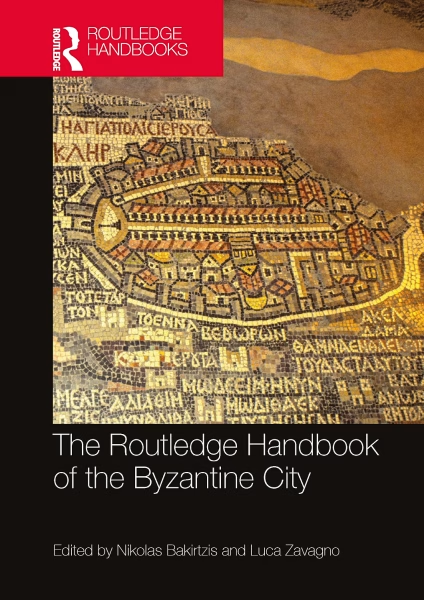 0) (Routledge History Handbooks)
Ed by Nikolas Bakirtzis, Luca Zavagno
Routledge 2024
The Byzantine world contained many important cities throughout its empire. Although it was not ‘urban’ in the sense of the word today, its cities played a far more fundamental role than those of its European neighbors. This book, through a collection of twenty-four chapters, discusses aspects of, and different approaches to, Byzantine urbanism from the early to late Byzantine periods. It provides both a chronological and thematic perspective to the study of Byzantine cities, bringing together literary, documentary, and archival sources with archaeological results, material culture, art, and architecture, resulting in a rich synthesis of the variety of regional and sub-regional transformations of Byzantine urban landscapes.
Organized into four sections, this book covers: Theory and Historiography, Geography and Economy, Architecture and the Built Environment, and Daily Life and Material Culture. It includes more specialized accounts that address the centripetal role of Constantinople and its broader influence across the empire. Such new perspectives help to challenge the historiographical balance between ‘margins and metropolis,’ and also to include geographical areas often regarded as peripheral, like the coastal urban centers of the Byzantine Mediterranean as well as cities on islands, such as Crete, Cyprus, and Sicily which have more recently yielded well-excavated and stratigraphically sound urban sites.
The Routledge Handbook of the Byzantine City provides both an overview and detailed study of the Byzantine city to specialist scholars, students, and enthusiasts alike and, therefore, will appeal to all those interested in Byzantine urbanism and society, as well as those studying medieval society in general.
Constantinople through the Ages: The Visible City from Its Foundation to Contemporary Istanbul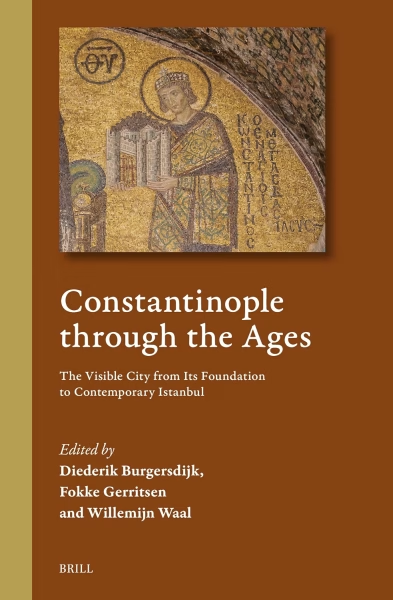 (Cultural Interactions in the Mediterranean, 8)
Ed by Diederik Burgersdijk, Fokke Gerritsen, and Willemijn Waal
Series: Cultural Interactions in the Mediterranean
Brill 2024
Constantinople through the Ages aims to map the long and rich history of Constantinople, from its foundations to the present. Starting point is the ‘visible city’; the ways in which continuity and change in history are still observable in present-day Istanbul. The contributors, each of them foremost experts in their fields, address the interaction between the different layers of time from various sources and perspectives. They explore how later inhabitants received and appropriated the legacy of their predecessors, and how the city’s tangible and intangible heritage has been perceived and (ab)used in both the past and the present.
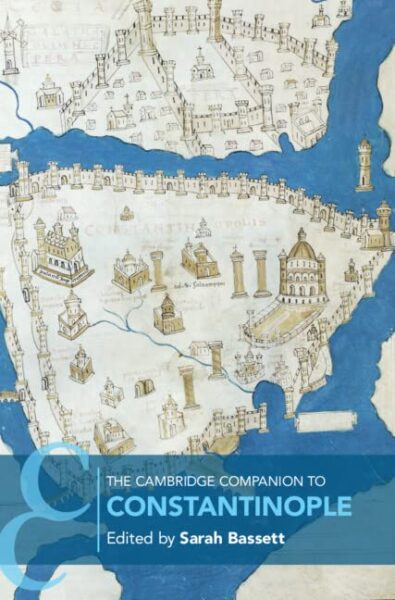 The Cambridge Companion to Constantinople (Cambridge Companions to the Ancient World)
Ed by Sarah Bassett Format
Series: Cambridge Companions to the Ancient Athens (17 books)
From its foundation in the fourth century, to its fall to the Ottoman Turks in the fifteenth, ‘Constantinople’ not only identified a geographical location, but also summoned an idea. On the one hand, there was the fact of Constantinople, the city of brick and mortar that rose to preeminence as the capital of the Roman Empire on a hilly peninsula jutting into the waters at the confluence of the Sea of Marmora, the Golden Horn, and the Bosporos. On the other hand, there was the city of the imagination, the Constantinople that conjured a vision of wealth and splendor unrivalled by any of the great medieval cities, east or west. This Companion explores Constantinople from Late Antiquity until the early modern period. Examining its urban infrastructure and the administrative, social, religious, and cultural institutions that gave the city life, it also considers visitors’ encounters with both its urban reality and its place in imagination.
Byzantium: The Surprising Life of a Medieval Empire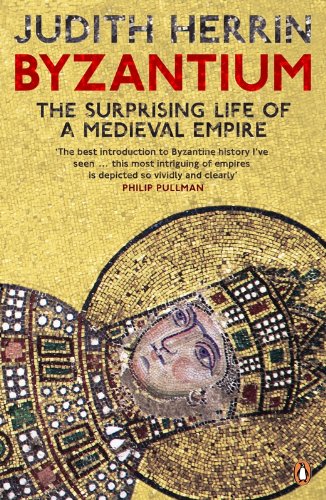
by Judith Herrin
Penguin 2008
For a thousand years an extraordinary empire made possible Europe’s transition to the modern world: Byzantium. An audacious and resilient but now little known society, it combined orthodox Christianity with paganism, classical Greek learning with Roman power, to produce a great and creative civilization which for centuries held in check the armies of Islam. Judith Herrin’s concise and compelling book replaces the standard chronological approach of most histories of Byzantium. Instead, each short chapter is focused on a theme, such as a building (the great church of Hagia Sophia), a clash over religion (iconoclasm), sex and power (the role of eunuchs), an outstanding Byzantine individual (the historian Anna Komnene), a symbol of civilization (the fork), a battle for territory (the crusades). In this way she makes accessible and understandable the grand sweeps of Byzantine history, from the founding of its magnificent capital Constantinople (modern Istanbul) in 330, to its fall to the Ottoman Turks in 1453.
VISIT
07.11.2026- 09.05.2027 Constantinople to Istanbul: One City, Two Empires
Victoria & Albert Museum, South Kensington, Cromwell Road, London, SW7 2RL