


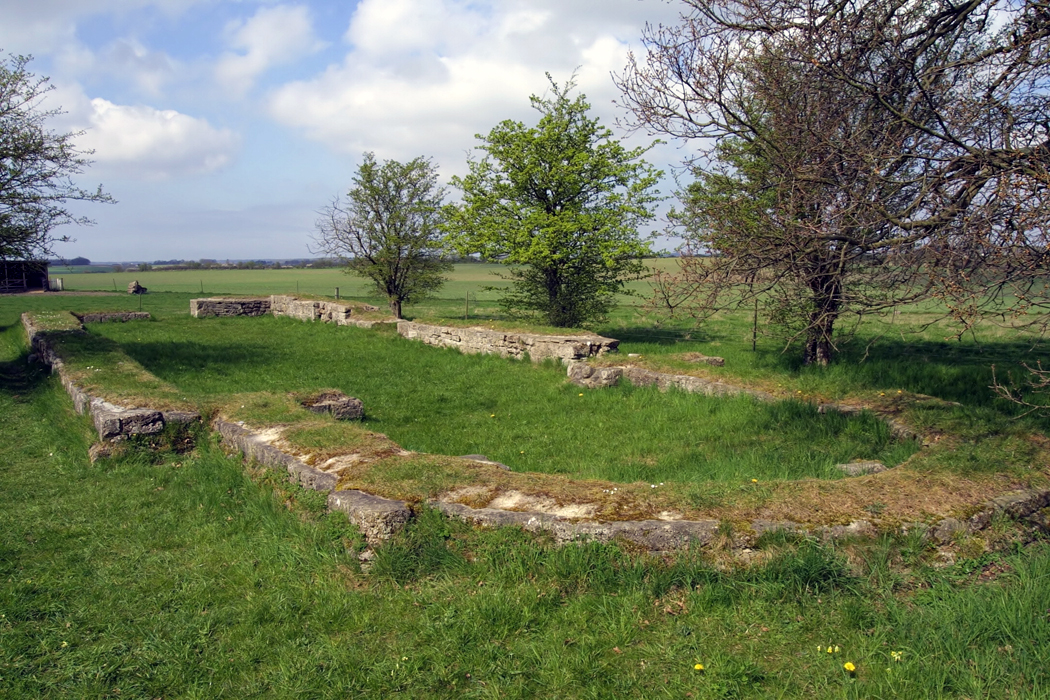
There is a clear link between the celebration of local saints and the ecclesiastical administration, which emerged in Scandinavia in the 12th century
In Scandinavia local cults of saints played important roles in the formation of the emerging ecclesiastical structures, which developed in the period between AD 1000 – 1200. However, the development of cults and dioceses did not follow the same pattern in Denmark and Sweden. The Danish church sought to promote its saints officially. The Swedes were less interested in proper canonisations.
This is one of the results of a new doctoral thesis, which presents a comparative study of all the 23 local saints, which were at the centre of cults in both ecclesiastical provinces. It provides a comprehensive Scandinavian perspective, which has been missing in previous research on saint cults in Europe.
These early saint cults served several purposes. First of all the cults supported the Christianisation, which took off in Denmark from around AD 1000 and a bit later in Sweden. But it was also a way to confirm a series of “new” holy places, reflecting the wish of more or less local magnates to secure powerful central places.
Strängnäs, Uppsala and Vaxjo in present day Sweden are examples of sacred sites whose legitimacy was strengthened by a saint. In Denmark important local sites were Haraldskilde near Ringsted and Vestervig.
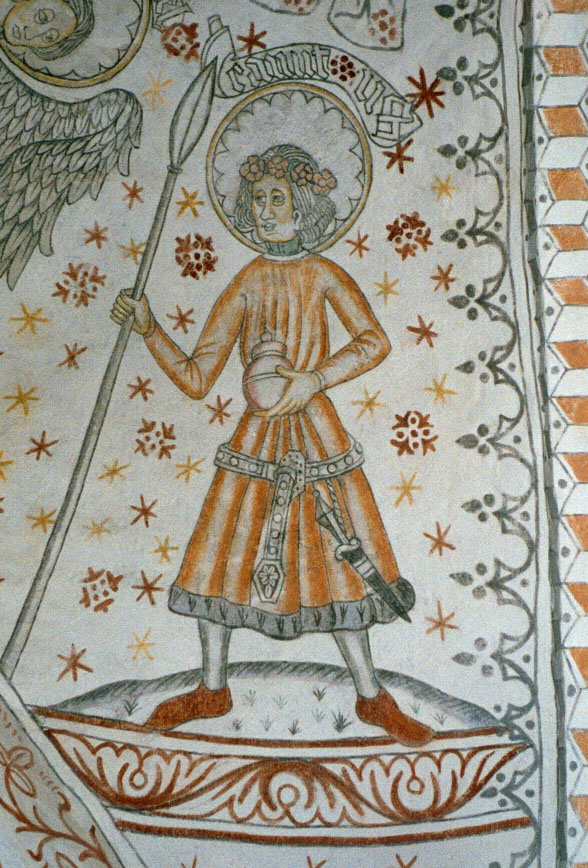
These saints were often people who had lived on the site, such as Helena of Skövde, Botvid of Södermanland, Thøger of Vestervig and Margaret of Roskilde. They were important role models for the population in areas newly Christianized. All were considered to have performed miracles, which were recorded in their vitae. Some saints were martyred while others were canonized for their good deeds. For instance Helena of Skövde was known for her effort to collect money for local church-building.
However, Sara Ellis Nilsson shows that Denmark was very early on interested in papal canonization; this suggests the Church of Denmark had stronger ties with the Holy See.
In Denmark a holy person had to be canonized by the Pope, to be officially celebrated in the Church. This was not a necessary precondition in Sweden, she says. Another difference was the very early royal cult in Denmark from after 1086. The Swedes did not get their “royal saint” until 80 – 100 years later; and then he was seriously contested and never formally canonised.
Her research on local cults has at times looked like pure detective work. She has had to use a wide variety of sources – extant vitae, registrations of feast days in calendars, traces in ecclesiastical art etc. Of special importance has been fragments of the medieval church records, which after the reformation were used for bindings. A hundred years ago historians began the work of registering these fragments. Now there is a digital catalog of the Swedish fragments.
List of multilocal saints:
Multilocal cults:
- Thøger of Vestervig. Denmark † ca. 1070
- Kjeld of Viborg, Denmark † 1150
- Knud the Holy, Danish King, † 1086, canonized 1100
- Knud Lavard, Royal Danish Duke, † 1131, canonized 1169
- Margarete of Højelse/Roskilde, Denmark † 1176
- Wilhelm of Æbelholt, Denmark, French Augustinian † 1203, canonized 1224
- Erik Plovpenning, Danish King † 1250
- Eskil of Tuna, Strængnæs in Sweden, missionary bishop † ca. 1069
- Botvid of Södermanland, Sweden 11th century
- Elin of Skövde, Sweden 12th century
- Sigfrid of Växjö, Sweden † ca. 1045
- Henrik of Turku, Finland 12th century
- Erik the Holy, Swedish King, † ca. 1160
List of multilocal cults
- Liufdag of Ribe, Denmark, 10th century
- Niels Knudsen of Aarhus, Danish Prince, † 1180
- Anders of Slagelse. Denmark † ca. 1205
- Magnhild of Fulltofta in Scania (present-day) Sweden † 1228
- David of Munktorp. Sweden, 11th century
- Nicolaus of Edsleskog, Sweden, 12th century
- Eric peregrinus, Sweden 10th– 11th century
- Ragnhild of Tälje, Torger of Strand and Torgils of Kumla, Sweden, very local cults.
- The special case of Olav the Holy of Norway, † 1030.
The thesis focuses on the character of the cults and their geographical and temporal presence and not the saints per se. Accordingly the dates here are just provided as a guide to readers of this introduction. It is debatable whether some of the cults even built on the legacy of living people.
Creating Holy People and Places on the Periphery.
A Study of the Emergence of Cults of Native Saints in the Ecclesiastical Provinces of Lund and Uppsala from the Eleventh to the Thirteenth Centuries
By Sara E Ellis Nilsson
PhD at University of Gothenburg. Faculty of Arts
Date of Defence 20.02.2015
The dissertation is in English
ABSTRACT:
Holy people have been venerated in various forms by all religions and ideologies throughout history. Christianity is no exception with the development of the cults of saints beginning shortly after its formation.
By the time Christianity reached Scandinavia, saints’ cults had been fully integrated into the Roman administrative structure. The new religion brought with it institutions, as well as religious practices. This thesis examines the cults of native saints that arose in Scandinavia during the Christianization of the region. It compares the Ecclesiastical Province of Lund, established in 1103, and the Ecclesiastical Province of Uppsala, established in 1164.
The focus on these two provinces is partly based on their, at times, unequal relationship. The study aims to explain the underlying reasons for the establishment of new cults of saints in connection with the development of an ecclesiastical organization. The primary source material is comprised of liturgical manuscripts and fragments, iconography and diploma.
Due to the relative lack of early medieval sources from Scandinavia, the surviving parchment fragments provide an especially valuable resource for research into Scandinavian medieval society. They can reveal the importance of cults of saints for those who promoted them.
The first part of this study presents the native saints whose cults are believed to have been established before the year 1300 and places them in categories developed in previous research. The analysis of the geographical spread of cults of native saints in the Lund and Uppsala provinces reveals that the type of saint has no bearing on the spread of the cult.
The second part examines and compares the rise of cults of native saints and their place in the early liturgy in each bishopric in the two provinces.
The study concludes that the right conditions and permanent central ecclesiastical institutions were required before new cults could be created, especially on an official level with a feast day and liturgy. Although all cults played a key role in conveying ideology and creating a permanent holy landscape on the Christian periphery, their later use in the legitimization of ecclesiastical and secular institutions differed in the two provinces.
SOURCE:
Local Cults of Saints Had a Role in Christianisation
FEATURED PHOTO:
Haraldsted Chapel, where Knud Larvard was killed during Christmas 1131


