


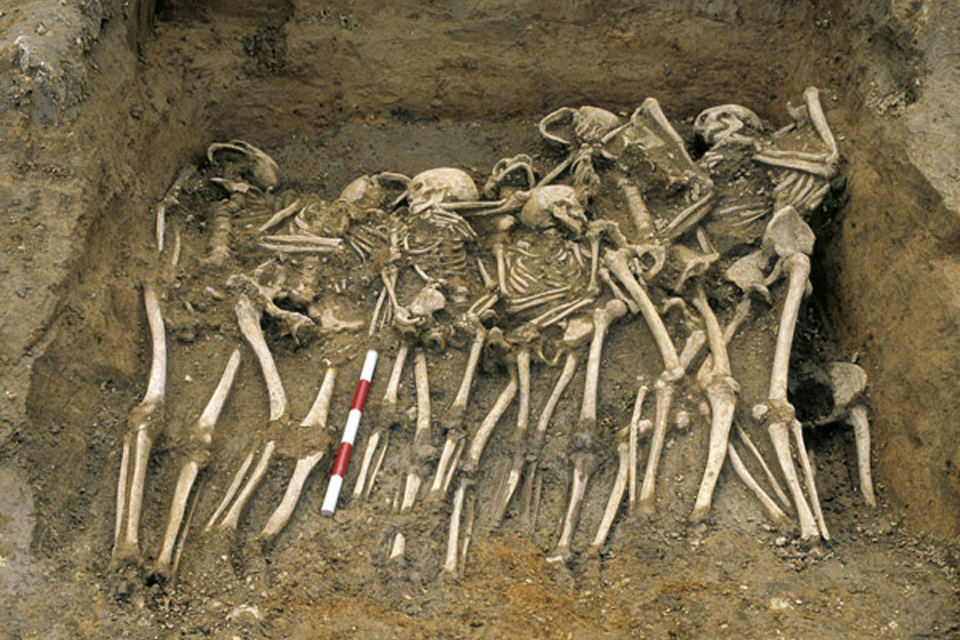
Famines occurred in the Middle Ages from time to time. The question is whether some individuals were more prone than others to outlive a period of harsh conditions. New study of skeletons from Medieval London points in that direction
Frailty and Famine: Patterns of mortality and physiological stress among victims of famine in medieval London
By Samantha L. Yaussy, Sharon N. DeWitte and and Rebecca C. Redfern
In: Americal Journal of Physical Anthropology vol 160, no 2, pp. 272 – 283
ABSTRACT:
Famines can be caused by any number of natural events like droughts, floods, and blights. However, wars, issues with transport systems, market panics and political inadequacy may also cause a shortage of foodstuffs that instigates widespread excess mortality due to starvation, infectious disease, and social disruption. Like other causes of catastrophic mortality, famine has the potential to be selective. This study examines how famines in medieval London were selective with respect to previous stress, age, and sex.
The study compares “famine” burials to “non-famine” (singular) burials from the St Mary Spital cemetery, London (c. 1120–1540 AD). The Spital was founded in 1197 to serve the poor, pilgrims wayfarer and women in childbirth. The cemetery was excavated between 1998 and 2001 and resulted in the location of 10,516 individuals out of an estimated 18,000 individuals. The cemetery included both single and multiple interments. This study has selected and compared 713 adults from single graves and 814 adults from mass-graves of differing characters. In general, the chronology of the graves has been well-established and the individuals were selected from periods 14 and 15 predating the Black Death 1349 – 50 and period 17 postdating this. The 713 individually buried persons would have belonged to the group of officials, benefactors and hospital inmates, while the other group consists of individuals “passing by” and dying in masses of either famines or epidemics caused by these. In order to assess the difference between the two groups, the 814 individuals were picked form type D burials, which consists of “multiple layers of horizontally arranged bodies stacked on top of each other”. (Type A being the singular grave, type B a grave with two or more skeletons buried together, type C a grave with many bundled individuals and type D a grave with multiple stacked individuals).
In thie study, the scientists explored the associations between age, sex, and different skeletal stress indicators. The results suggest that early exposure to stressors did indeed increase frailty in the context of famine. More interesting, though, is the observation that sex did not significantly affect risk of mortality in the 12th–13th centuries, while it appears this was the case c. 1400 – 1539, when males faced a lower risk or mortality compared to females.
Possible causes include the selective mortality during the Black Death, which might have influenced risks of mortality among survivors. Another explanation might be an unequal distribution of improvements in standards of living after the epidemic.
In another study the same group of scientists have explored the differences in the length of the femurs and general stature of people in the different types of graves: short stature reflecting a tough childhood was apparently a risk factor.
READ ALSO:
Setting the Stage for the Black Death – Medieval Histories
READ MORE:
Crisis Mortality and Stature in Medieval London.
Poster session at CAA archaeology 2015
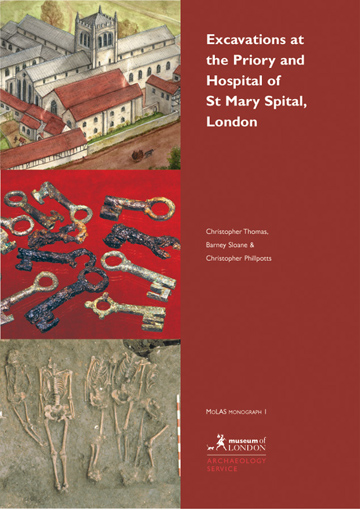
By Christopher Thomas, Barney Sloane and Christopher Phillpotts
MOLAS, London 1997. ISBN 1-901992-00-4


