


New Journal – Medieval Worlds – aims to be the hub for Medievalists, Social Anthropologists, Scholars of Islam and of Asian Culture, stimulating comparative research
Ed by Andre Gingrich and Walter Pohl
ISBN13: 978-3-7001-7849-1
Format: pdf (download)
Open Access
Background
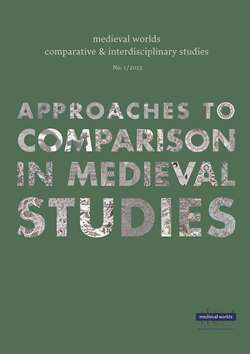
Medieval Worlds is created by an interdisciplinary team including medieval historians of Europe, social anthropologists combining field-work with the study of historical sources, scholars of Islam and of (philological and cultural) Asian Studies working in a joint long-term project, Visions of Communities
The journal is especially interested in publishing:
- Comparative articles by individual authors or clusters of articles by groups of authors, provided that they represent different disciplines or approaches, or address different macro-regions. ›Medieval Worlds‹ will be open to regular submissions on comparative topics.
- Thematic issues ranging across different fields and disciplinary boundaries, announced by the editors by means of a call for papers, or also proposed as a whole by groups of authors.
- Presentations of larger comparative projects and their results and review articles addressing relevant issues or current debates in comparative medieval studies. At least initially, there will be no reviews of single publications.
A specific format will allow searching for matching or complementary studies from different fields. Papers that address topics relevant for comparison can be submitted for a call for (a) matching paper(s) from other fields. For this purpose, a discussion forum has been set up on the website: Medieval Open which will hopefully serve to put people working on related topics in different academic environments in touch with each other, and provide a moderated forum for debate and for developing comparative perspectives. (Not active yet: 23.08.2015)
Additionally, a search for matching articles can also involve the Advisory Board of the journal. ›Medieval Worlds‹ will thus explore ways to bring together scholars from different disciplines interested in comparable topics, and encourage interdisciplinary groups to publish focused sets of articles.
TABLE OF CONTENTS OF VOLUME 1.1
Walter Pohl – Andre Gingrich
Medieval Worlds: Introduction to the First Issue 2
Patrick Geary
The Discourse of Herrschaft as the Practice of Herrschaft in the Fifth Century 5
Robert Moore
The First Great Divergence? 16
Lars Boje Mortensen
Comparing and Connecting: the Rise of Fast Historiography in Latin and Vernacular (Twelfth to Thirteenth Century) 25
Helen Siu
Historical Anthropology: A View from »South China« 40
Ian Wood
Universal Chronicles in the Early Medieval West 47
Ann Christys
Universal Chronicles in Arabic before c. 900 61
Michael Borgolte
Foundations »For the Salvation of the Soul« – an Exception in World History? (Foundations of Medieval Societies FOUNDMED) 86
Catherine Holmes – Naomi Standen
Defining the Global Middle Ages (AHRC Research Network) 106
Eduardo Manzano
Why Did Islamic Medieval Institutions Become So Different from Western Medieval Institutions? (Power and Institutions in Medieval Islam and Christendom PIMIC) 118
Walter Pohl – Andre Gingrich
Visions of Community (VISCOM): Comparative Approaches to Ethnicity, Region and Empire in Christianity, Islam and Buddhism (400-1600 CE) 138
John Tolan
The Legal Status of Religious Minorities in the Euro-Mediterranean World (RELMIN) 148
FEATURED PHOTO:
Hadith Bayāḍ wa Riyāḍ (Arabic,حديث بياض ورياض The Story of Bayad and Riyad) or Qissat Bayad wa Riyad is a 13th-century Arabic love story. The main characters of the tale are Bayad, a merchant’s son and a foreigner from Damascus, Riyad, a well educated girl in the court of an unnamed Hajib (vizier or minister) of ‘Iraq (Mesopotamia) and a “Lady” (al-sayyida). The Hadith Bayad wa Riyad manuscript is believed to be the only illustrated manuscript known to have survived from the more than eight centuries of Muslim medieval life in Spain and Portugal. The sole manuscript is in the Vatican Library, where it is catalogued as Codex Vat. Arabo 368. it may be hoped that the same conviviality conveyed in the illumination will inspire the work of the new journal.
Save


