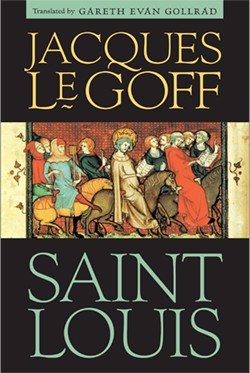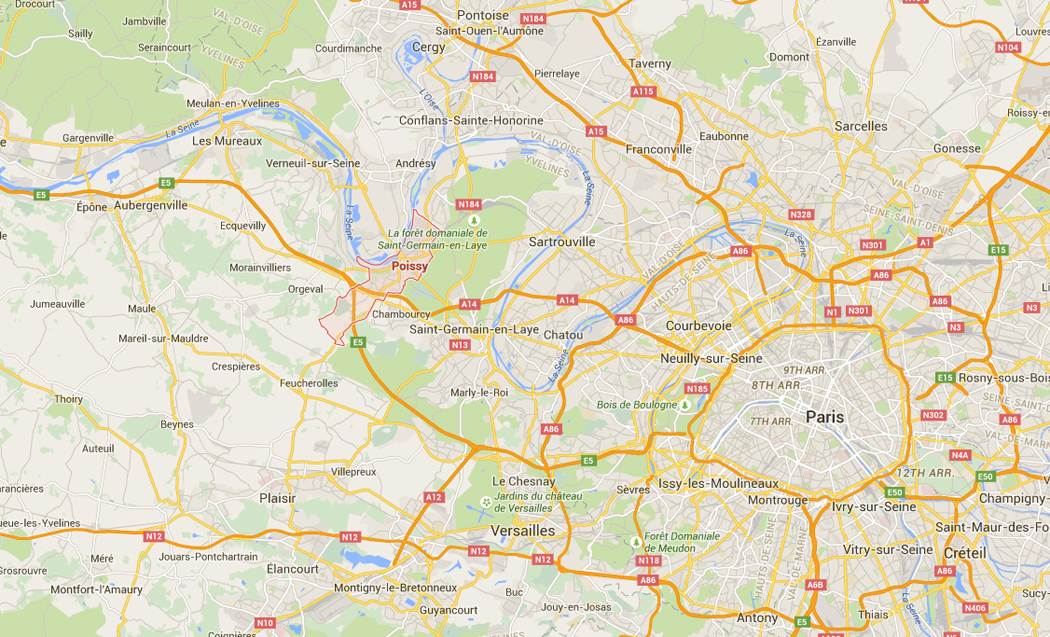
Poissy was the birthplace of Louis IX, who was sanctified as Saint Louis. One centre of his cult was at Poissy.
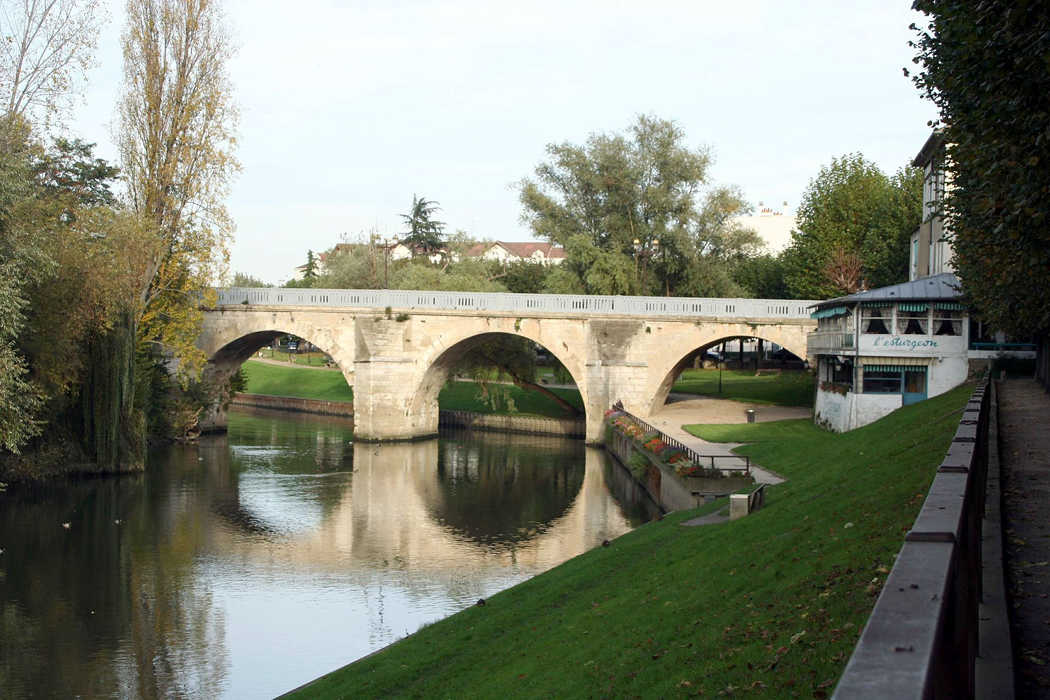
Source: wikipedia/Spedona
Poissy is a small town situated north-west of Paris on the left bank of the Seine. The east borders on the royal forest of Saint-Germain-en-Laye and to the west is the French countryside. Today it is famous for its very large Peugeot factory. But the area is also dotted with golf-courses pointing to its favourable location.
During the Early Middle Ages it was known as Pinciacum and housed a royal residence since the 5th century. This was enlarged by Robert the II of France (Robert le Pieux AD 972 – 1031). His second wife, Bertha of Burgundy (Berthe de Bourgogne c 952 – 1016 or 1035) founded an Augustinian convent, which later in the 14th century became the nucleus of the Royal Abbey. At that point there existed two castles in Poissy, the old and the new. The old one was reminiscent of the old Merovingian hunting lodge, while the new one was built in the 12th century. In 1188 Philippe-Auguste presented the village with privileges of a town and began to fortify the place. In 1200 he presented Poissy to his son at his marriage to Blanche de la Castille. Until the 19th century the medieval ramparts were still in existence. Now only vestiges may be seen in the boulevard Louis-Lemelle. The ancient bridge across the Seine was also part of this. The fortifications encircled an area 800 x 500 m2 and had seven ports.
From the 12th century Poissy became a favourite place for the French Royal Family to stay. Here Saint-Louis was born and baptized and here the centre of the cult of his sainthood was established. Not much of the medieval heritage has been preserved, but the town itself is a friendly small Parisian suburb and it is worthwhile to take a walk inside the former Abbey (The Nuns Walk). Many of the names of the streets reminds us of the importance of the town as provider of meat to the Parisian markets (rue de la Triperie, rue des Moutons etc.) Another sight is the remains of the old bridge from the 14th century, which burned in the mid of the 19th century. A pleasant walk along the side of the river pays off.
The Priory of Poissy
Source Wikpedia
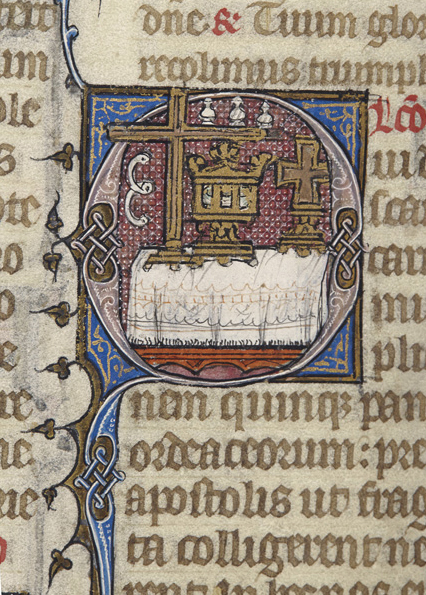
In the beginning of the 14th century most of the new castle was erased to the ground to make way for the Dominican Priory at Poissy, erected in honour of Saint Louis, who had been canonized in 1297. It was generously endowed and soon became one of the more wealthy abbeys in France. Here a number of royal descendants of Saint-Louis lived as Dominican sisters involved in the liturgical celebration of this royal cult. Although not much of its treasury is preserved, a couple of medieval manuscripts – eg. Le bréviaire royal de Saint-Louis de Poissy – witness to its former glory

The area of the priory (sometimes erroneously called an “abbey”) covered more than 48 ha with 14 ha covered in buildings and could house between 120 – 200 Dominican sisters. Apart from the Church and the convent there were royal quarters built on to the Abbey, where the king might stay when in the neighborhood. The church was 95 m x 45 m and 30 m high. In the aisle were statues of Saint Louis and his wife Marguerite de Province and their six children. Only one of these statues still exists and may be found in the Collégiale Notre Dame de Poissy (see below).
There exists a very charming poem by Christine de Pizan – Dit de Poissy – from around 1400, describing her visit to her daughter, who was living there as part of the entourage of princess Marie, daughter of Charles VI. She had entered the community in 1397 and it is believed that Christine de Pizan’s daughter was endowed by the king at that time. In her poem Chrstine describes how she and some friends rode from Paris and arrived in the afternoon where a sumptuous meal had been prepared by the Prioress. She also gives a long and detailed description of all the wonders – the buildings, the chapel, the gardens and the fountains. Christine de Pizan likened the place to Paradise.
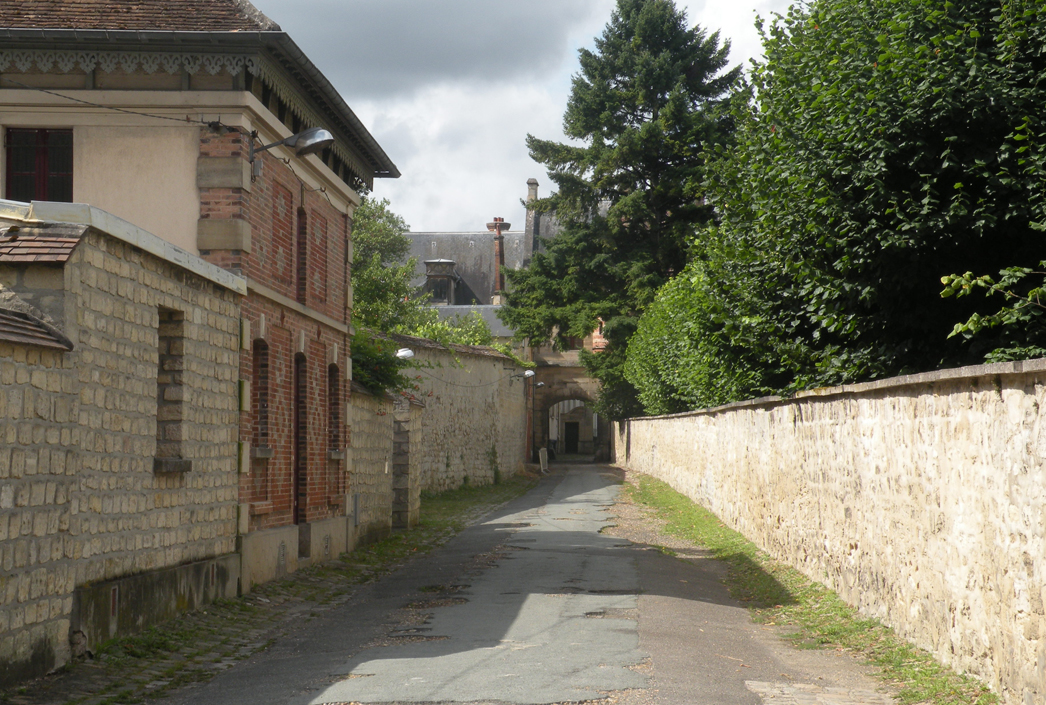
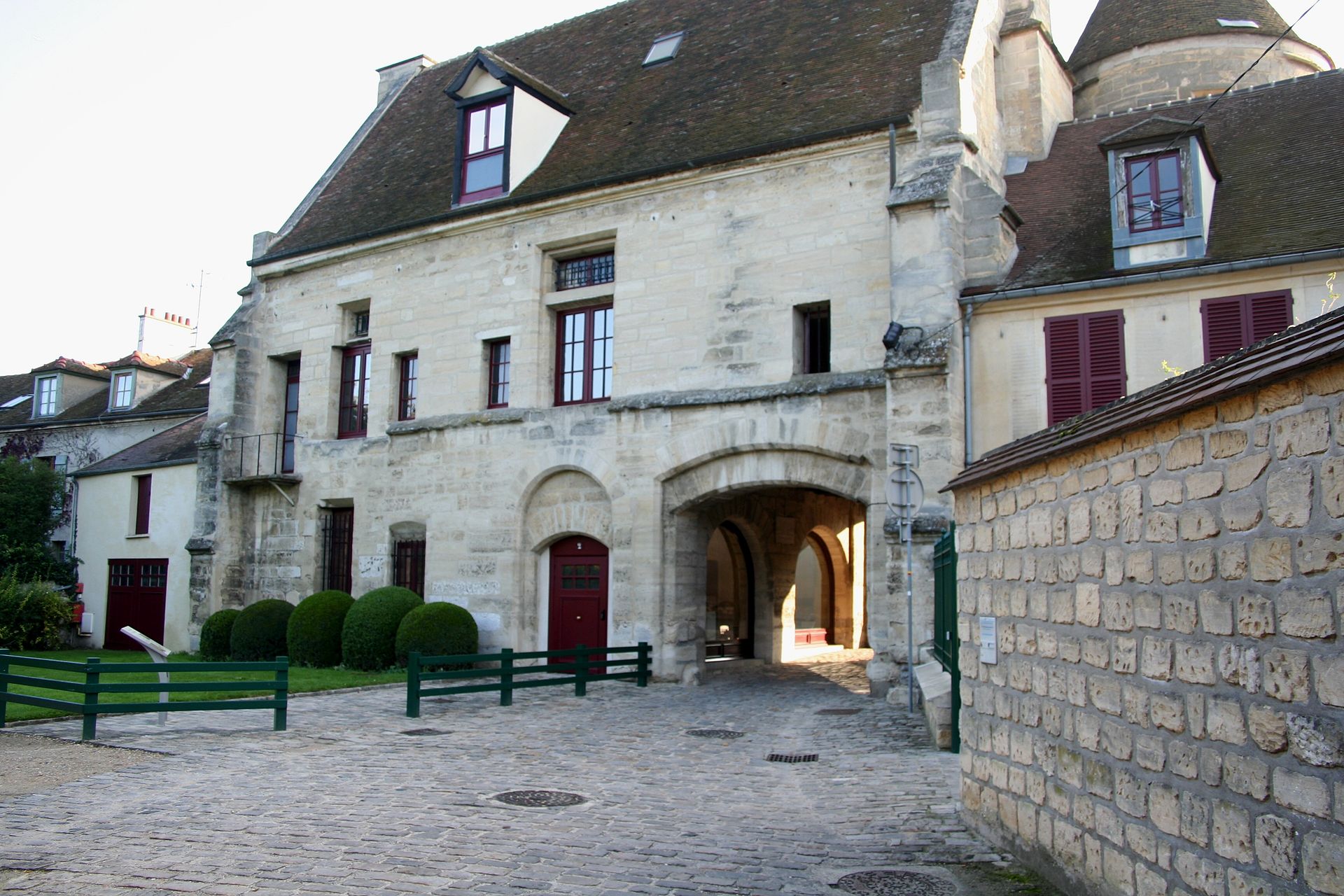
Nothing is left of the Priory except the Porters Lodge (la Porterie), which is currently used as the locale for a small museum of toys. But walking through the port, the visitors enter the former grounds of the Abbey, which miraculously has been preserved as a park. This is still enclosed by the former wall of the priory.
Collégiale Notre Dame de Poissy
Source: wikipedia/Chatsam
The most important medieval building still standing in Poissy is the collegiate church of Our Lady, which was founded in 1016 by Robert the II of France (Robert le Pieux AD 972 – 1031). However, apart from the portal of the church tower, the present church is the result of a reconstruction from the 19th century of the church, which was basically built in the 12th century. Its architecture is Romanesque but with distinct Gothic elements. A number of carved capillaries may be seen; especially no. 6, sporting vile medieval monsters is worth studying in detail.
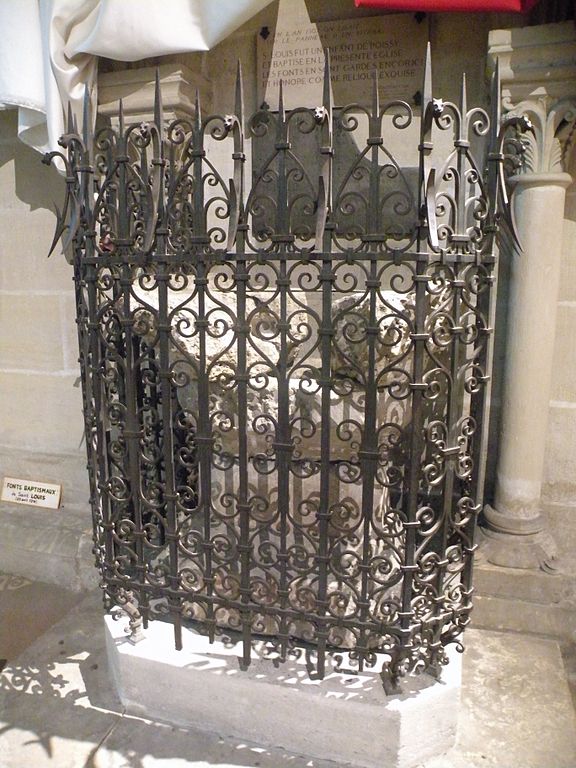
Between the 13th century and the Revolution, it was entrusted to a college of Canons. The main interest adheres to the fact that Saint-Louis was baptized there (April 1214) and that the font may still be seen. As a relic it is unfortunately no longer used, but instead kept behind a very solid iron grille. Local children have to be satisfied with being dipped in a dark and unprepossessing corner of the church
Inside the church are some statues from the dismantled Priory church worth noticing:
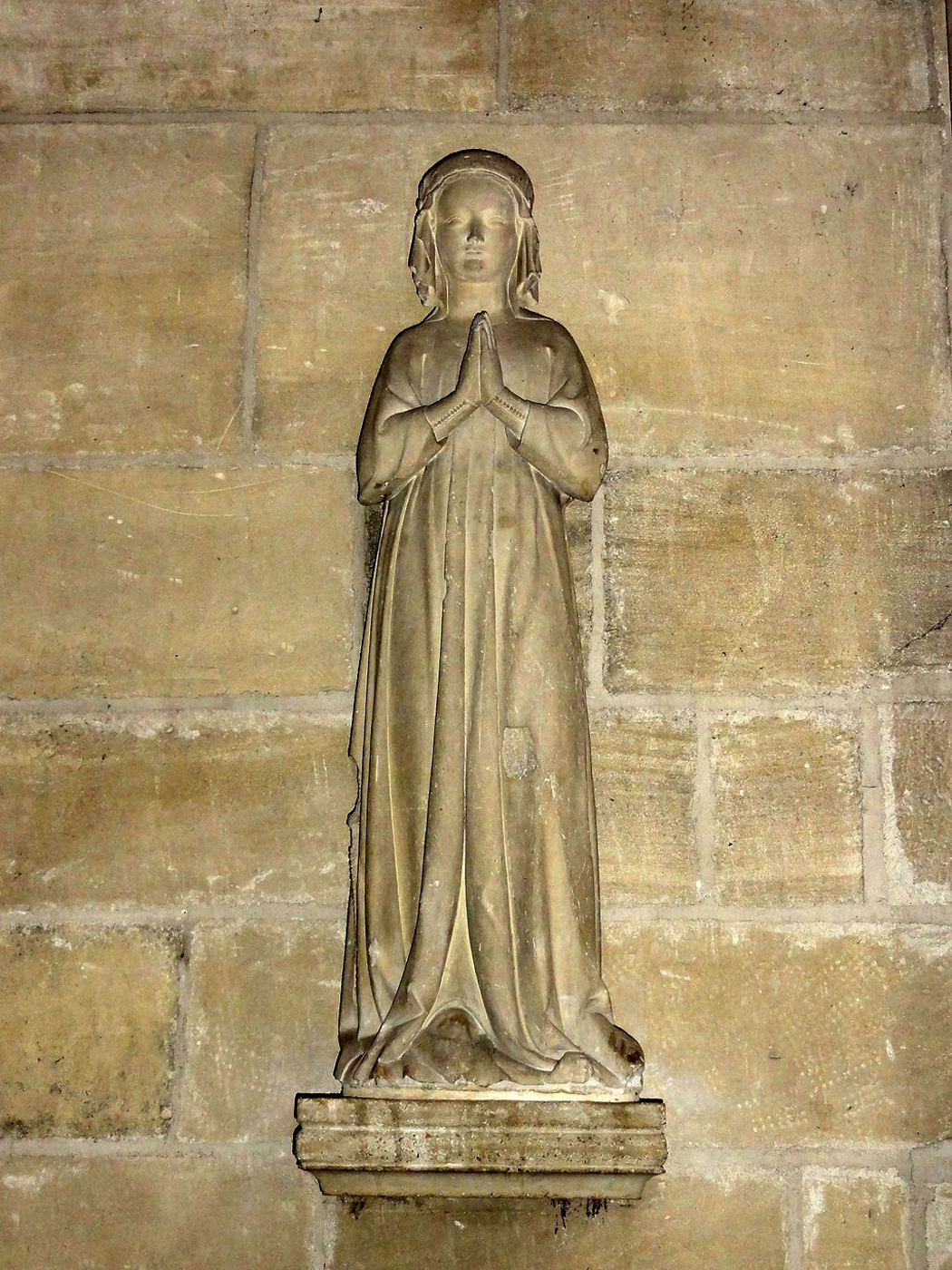
- A statue of Isabelle of France, the daughter of Saint Louis, originally from the Priory Church. It is is the work of one of Philip the Fair’s (ca. 1300) sculptors (worth a detour)
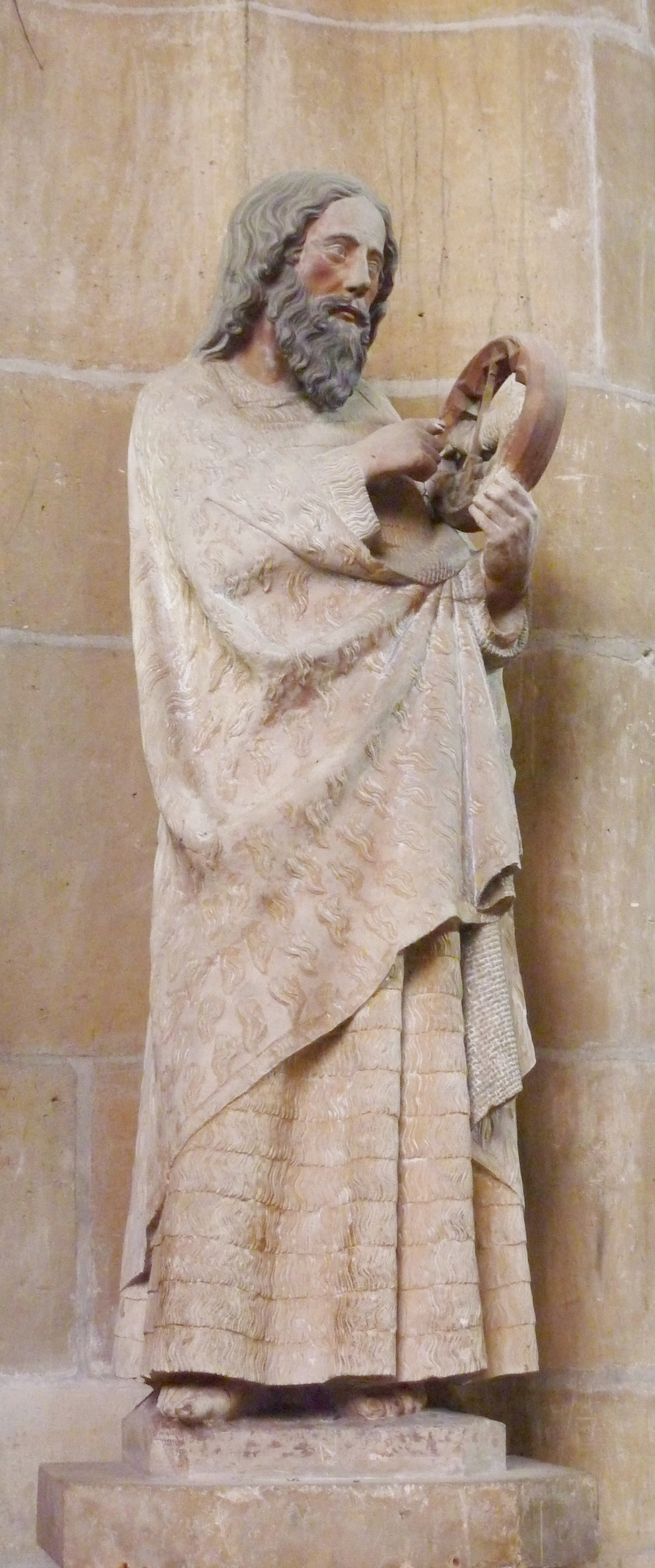
- An impressive statue of Saint John the Baptist pointing to the Lamb of God in a circle, the symbol of eternity (14th century)
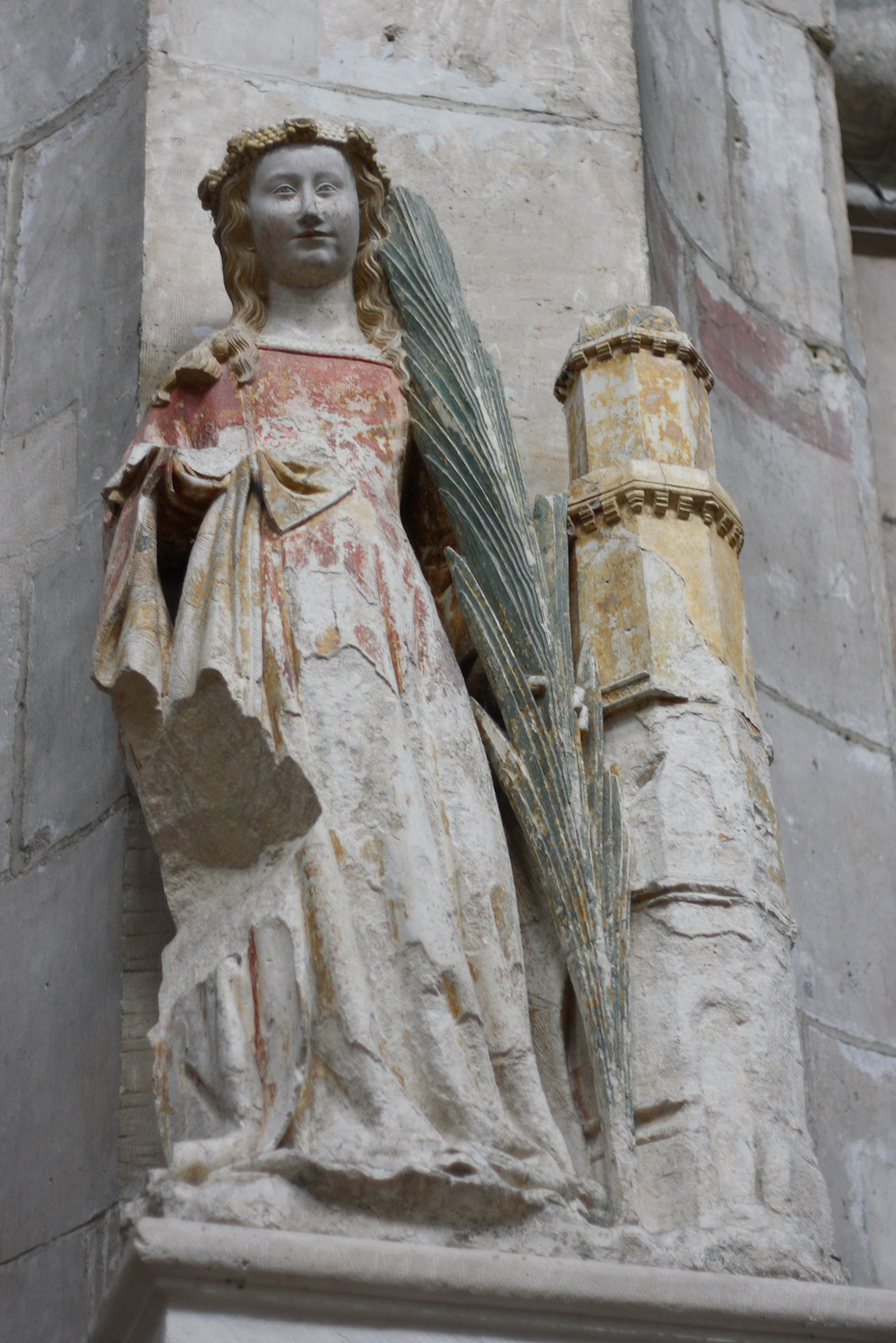
- A statue of Saint Barbara attractively adorned at the hip, which has retained its original colours (15th century)
The church is open daily from 08.00 AM to 07.00 PM (2015)
FEATURED PHOTO
Source: wikipedia/poschadel
VISIT:
Poissy, Yvelines department, Île-de-France – 23.8 km from Paris
READ MORE:
 Royal Breviary of Saint Louis de Poissy up for sale
 Louis IX – A Man with a Hairshirt