Archaeologists aim to unravel the mystery of the Rhynie Man, a Pictish symbol stone from the 5th century
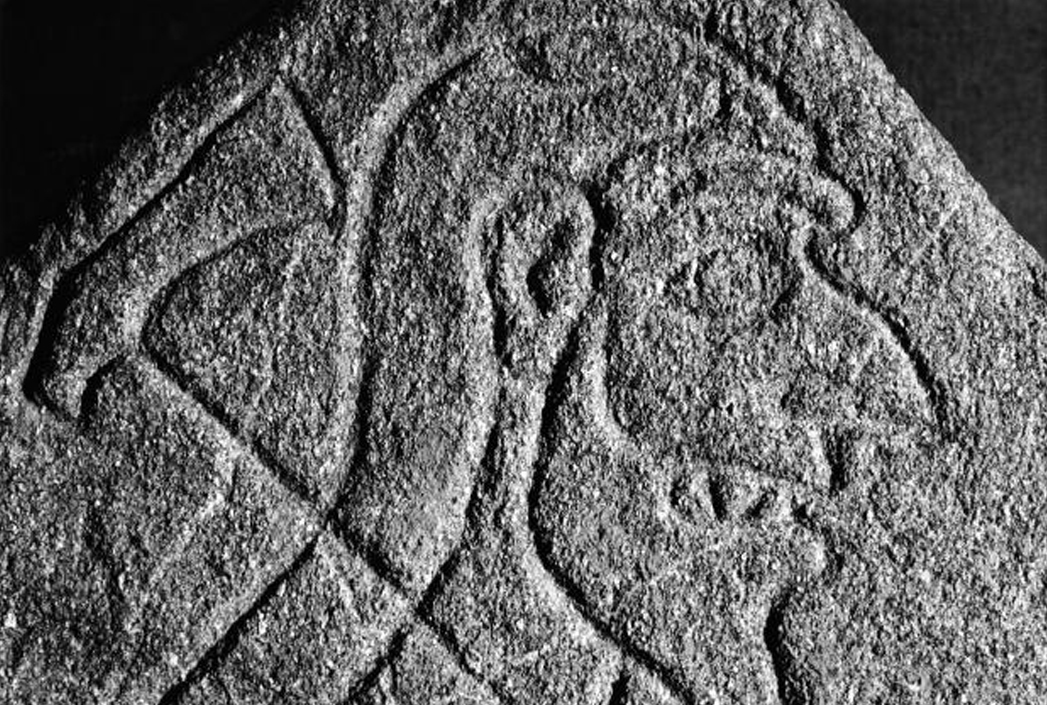
Archaeologists aim to unravel the mystery of the Rhynie Man, a Pictish symbol stone from the 5th century
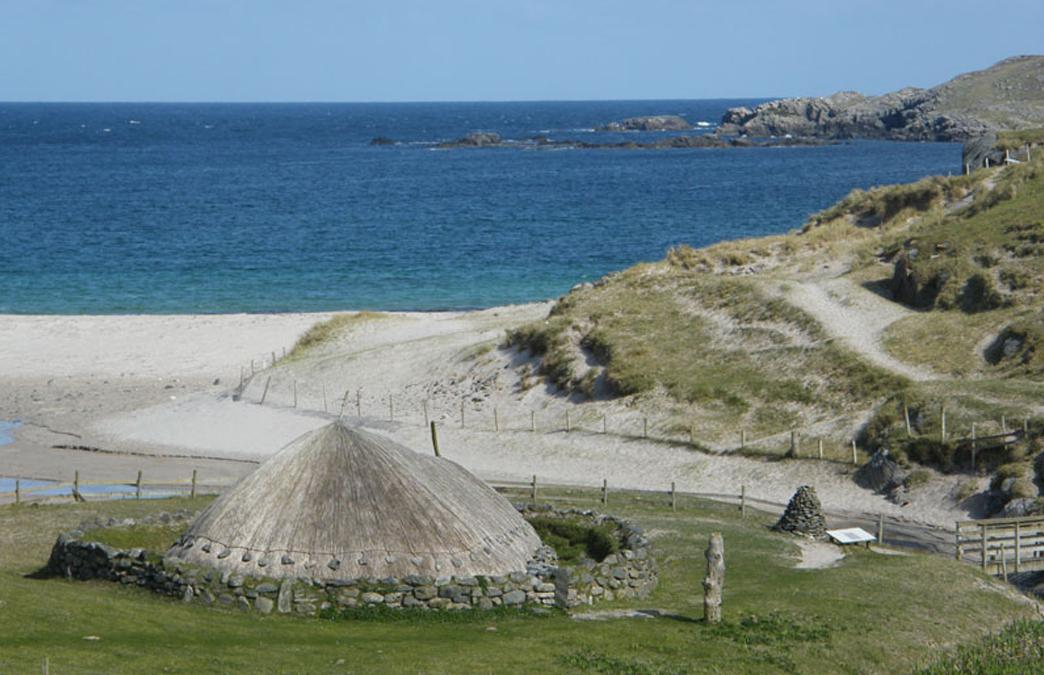
The history of the Vikings in Lewis is an amazing story of how a Pictish Life-world changed when Norse immigrants arrived
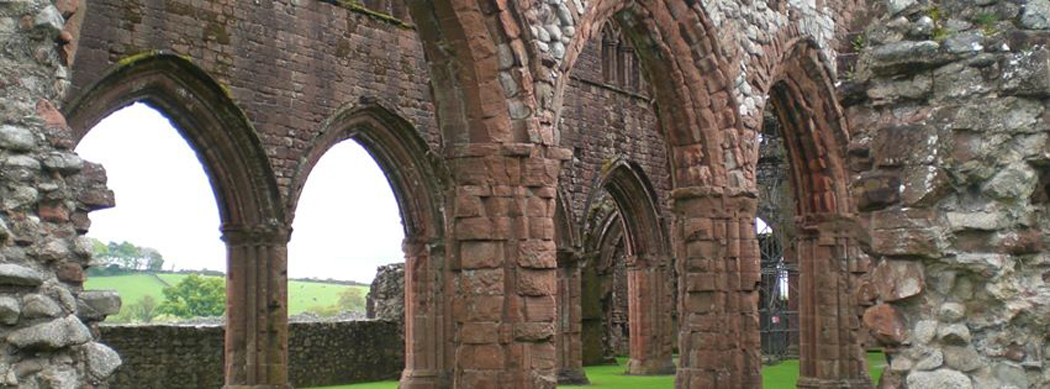
From 1093 - 1286 Scotland became a nation, fully recognized by the rest of Europe. This book offers new perspectives on the role of literacy and the growing institutions of Medieval Scotland

When did Scots first think of Scotland as an independent kingdom? What did they think was Scotland's place in Britain before the age of Wallace and Bruce?
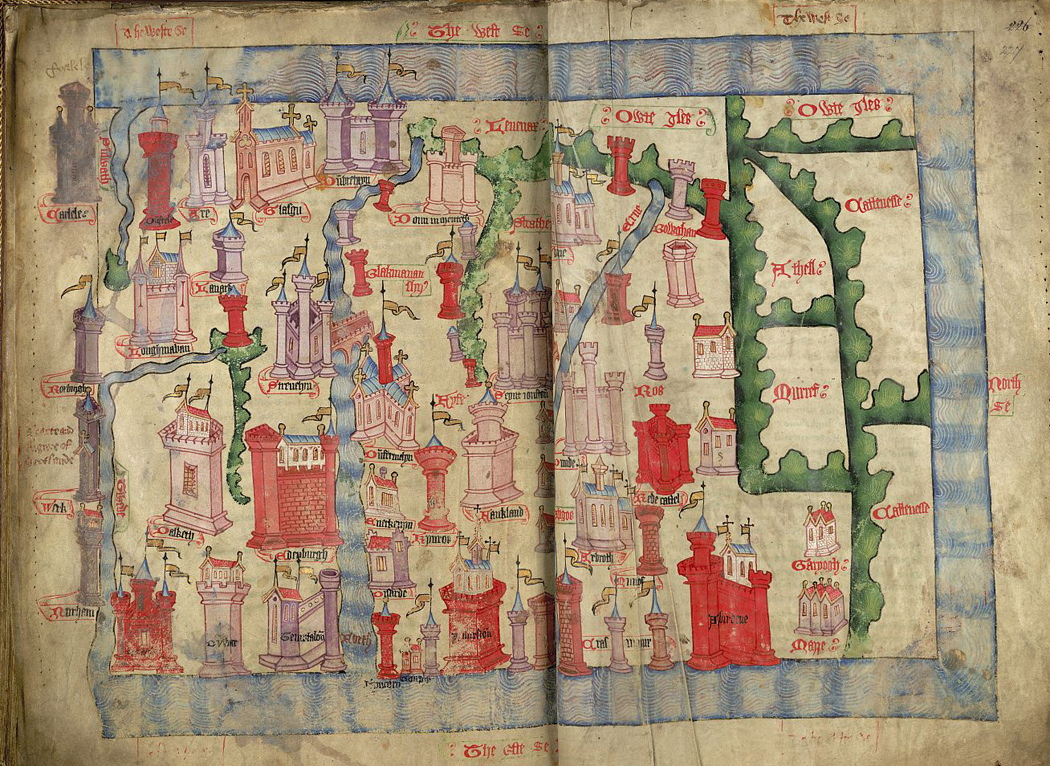
New History of Scotland is the flagship series for Edinburgh University Press

The Edinburgh History of Scotland
The New Edinburgh History of Scotland comprises ten textbooks exploring the development of Scotland from earliest times to the present. Scotland’s evolution as a political entity provides the structure of each volume. Combining chronological narrative with analytical rigour, each book offers an informative and accessible account of a defined period in Scottish history. Authors make full use of the explosion of scholarly research that has taken place over the last three decades.
This series tells the story of Scotland as a political entity, but it also promotes an awareness of broader social, cultural and religious change and is informed by a richly textured understanding of the diversity of the Scots’ historical experience. To talk of the Scots – or the Scottish nation – is often misleading as local loyalty and regional diversity have more frequently characterised Scotland than any sense of ‘national’ solidarity. The authors in this series show that there are other and more revealing ways of capturing the distinctiveness of Scottish experience.
Series Editor: Roger A. Mason
The collection so far comprises seven volumes published between 2004 – 2011. Here is a list of the volumes focusing on the Middle Ages
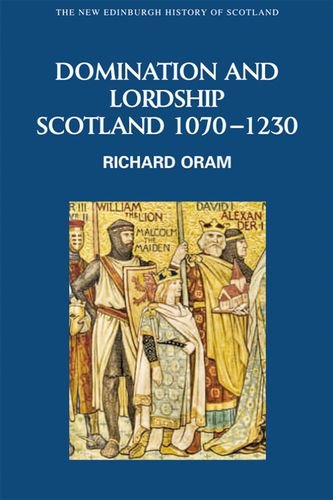 Domination and Lordship: Scotland, 1070-1230
Richard Oram
Edinburgh University Press 2011
ISBN: 9780748614967
ISBN: 9780748614974
From Caledonia to Pictland: Scotland to 795
James E. Fraser
Edinburgh University Press 2009
ISBN: 9780748612321
ISBN: 9780748612314
From Pictland to Alba, 789-1070
Alex Woolf
Edinburgh University Press 2007
ISBN: 9780748612345
ISBN: 9780748612338
Scotland Re-formed, 1488-1587
Jane Dawson
Edinburgh University Press 2007
ISBN: 9780748614547
ISBN: 9780748614554
The Wars of Scotland, 1214-1371
Michael Brown
Edinburgh University Press 2004
ISBN: 9780748612383
ISBN: 9780748612376
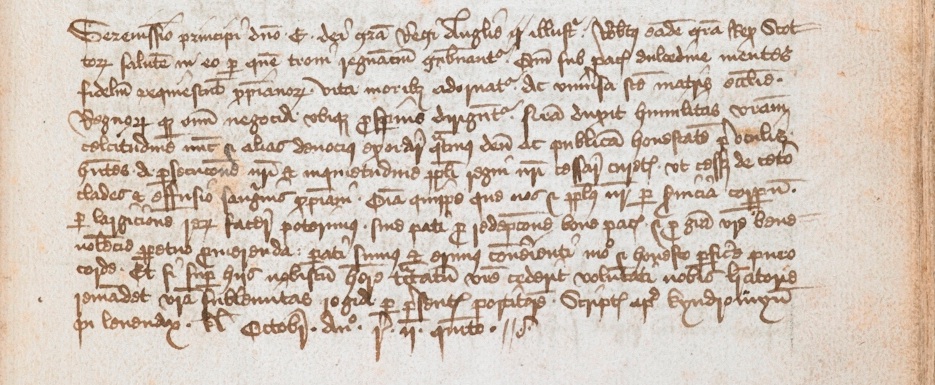
Letter from Robert the Bruce to Edward the Hammer of Scots from 1310 found at British Library...
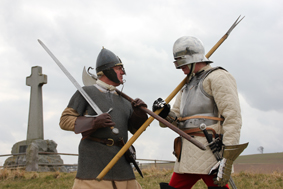
1513 an English army defeated James IV and his invading army at Flodden in Northumbria...
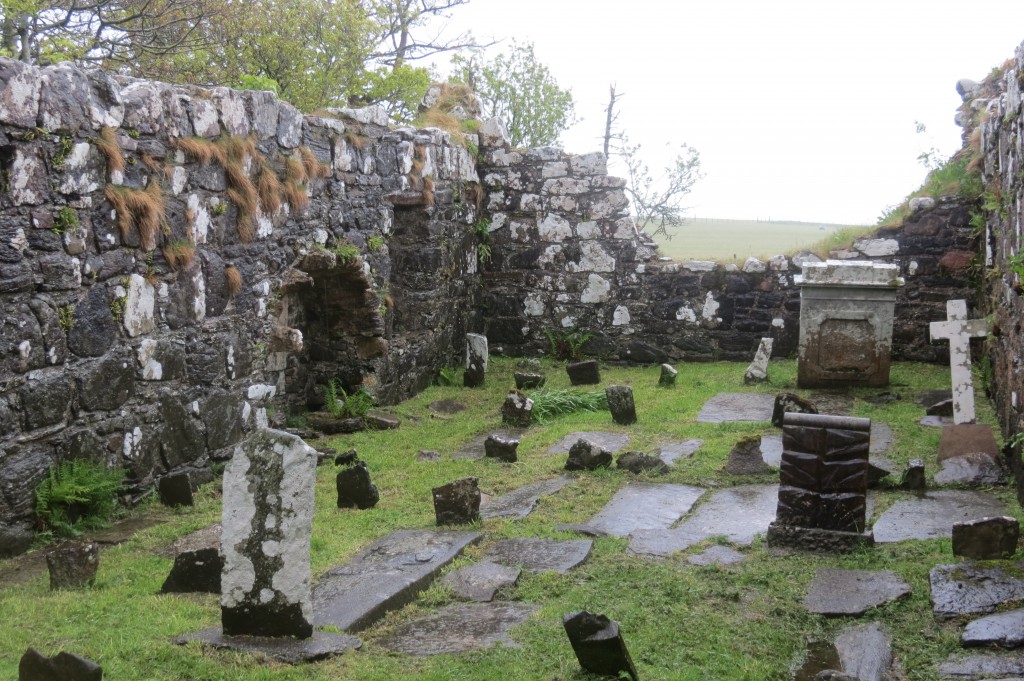
Eigg is one of the small isles in the Scottish Inner Hebrids. Around 600 St. Donnán or Donan, a Gaelic priest, arrived from Ireland to introduce Christianity to the Picts of Northern Scotland. According to the martyriology of Oengus St. Donnan was a friend of St. Columba, whom he followed from Ireland to Scotland toward the end of the sixth century. But while Columba chose a socalled “white martyrdom” (i.e. life of exile from his kindred) St. Donnan went for a “Red Martydom” going up further North. Seeking a solitary retreat, he and his companions settled on the island of Eigg, off the west coast of Scotland, which used only to pasture sheep belonging to the queen of the country. Informed of the invasion, the queen ordered the monks to be slain. Her agents, probably a marauding band of Picts, or pirates according to one account, arrived during the celebration of Mass on Easter eve 617. Being requested to wait until after Mass. Then St. Donnan and his fifty-one companions gave themselves up to the sword. According to legend St. Donnan specifically asked to be the last of his flock.
Eventually a new monastery at Kildonnan was founded from Iona, which lasted several cnturies until the Vikings settled on Eigg. Probabaly the monastery was an important and wealthy institution as is suggested by the later mentioning in the Annals of Oan, a Princeps or superior of Eigg, who died in 725 and of Cumméne, another religious who was mentioned in 752. At this time the monastery is believed to have become a royal institution. Several fragments of early Christian Crosses have been recovered from the Kildonnan graveyard and are currently displayed at “The Lodge”
Last year Eigg History Society won £17.500 from the Heritage Lottery Fund to carry out an archaeological excavation of the graveyard in order to locate the first monastery from the 7th century. According to the History Society the archaeologists have succeeded in identifying the likely oval enclosure and ditch surrounding the first settlement. Emeritus professor John Hunter based at the University of Birmingham has led the excavation. According to the Scotsman the findings have surpassed all his expectations: Pictish pottery was found in the enclosure which together with the oval form helps to date the settlement to the 7th century.

The Isle of Eigg is owned by The Eigg Heritage Trust
Read about the excavation at the dedicated Eigg Excavation Blog
Current plans for archaeological excavations on Eigg and the other Small Islands
READ MORE:
Warlords and Holy Men: Scotland Ad 80-1000. Alfred P. Smyth. Edinburgh University Press, 1984
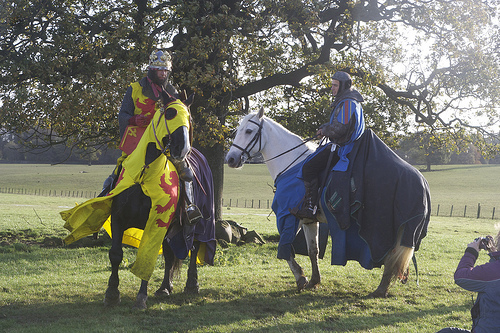
Prepare for battle 2014 in Scotland...
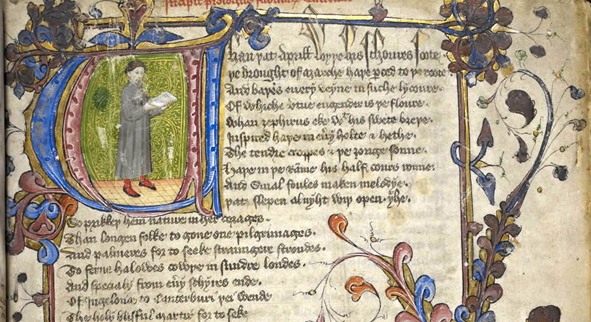
What Britain looks like, when seen through the pen of poets...
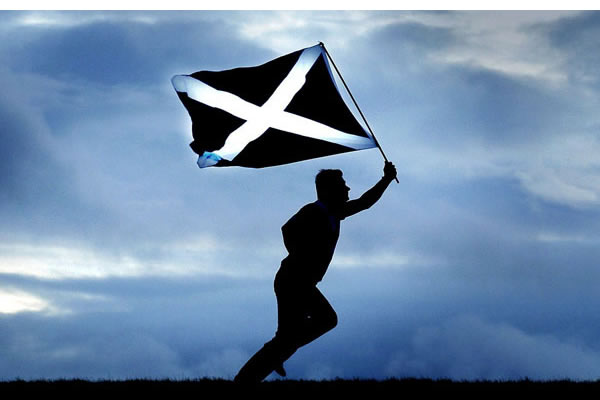
Scotland is heading towards a referendum 700 years since Bannockburn
Suddenly Bannockburn plays a new role...