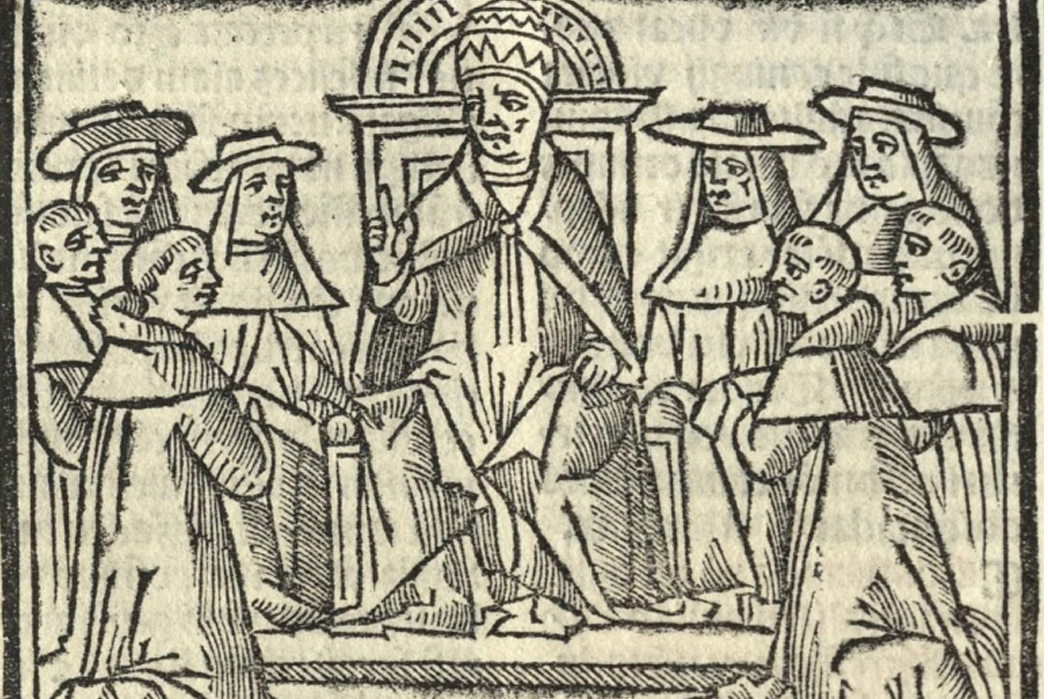
In the Middle Ages the Pope gradually became the highest judicial authority in the church. Exhibition at Yale traces the impact of the Pope on both Canon law and Civil law.
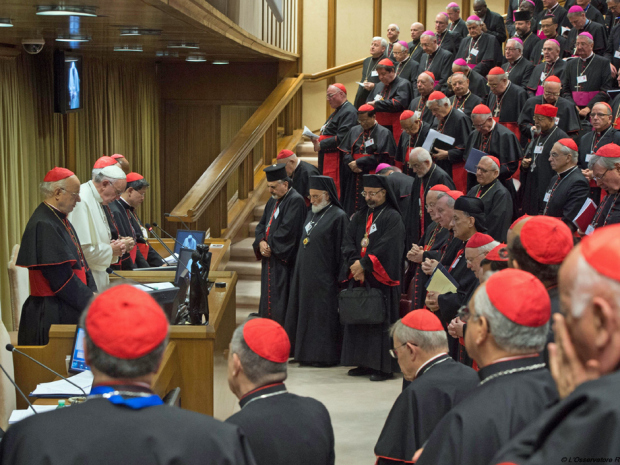
As the bishop of the ancient capital Rome, the pope was always recognized as the foremost bishop. He became the highest judicial authority in the Church, especially after the reform movements of the eleventh and twelfth centuries centralized the Church in Rome. The pope’s legal decisions became precedents and popes continued to issue new laws at councils (meetings of bishops). When the law schools came back in the twelfth and thirteenth centuries, canon law (the law of the church) took center stage as a most sophisticated legal system, not only inspiring much secular law but also be-coming recognized as the sole authority in several legal fields, such as the law of marriage, the law of just war, and the legal implications of oaths. In spite of this it is often forgotten that for much of the papacy’s history the Pope was the most important judicial and legislative authority in western Europe.
A new exhibition at the Yale Law Library, “The Pope’s Other Jobs: Judge and Lawgiver,” illustrates the Pope’s legal responsibilities throughout history using rare books and a medieval manuscript from the Law Library’s outstanding collection. It is curated by Anders Winroth, Forst Family Professor of History, Yale University, and Michael Widener, the Law Library’s Rare Book Librarian. Winroth is one of the world’s leading authorities on medieval canon law.
“In the Middle Ages, canon law (the law of the church) took center stage as a most sophisticated legal system, not only inspiring much secular law but also becoming recognized as the sole authority in several legal fields, such as the law of marriage, the law of just war, and the legal implications of oaths,” says Winroth. The books and manuscripts in the exhibition show how the papacy has shaped areas as diverse as human rights, international boundaries, due process, and marriage law. Many of the legal rights that Americans take for granted, such as the presumption of innocence and the right against self-incrimination, are rooted in the decrees and judicial decisions of medieval popes.
The exhibition is on display September 8-December 15, 2015, in the Rare Book Exhibition Gallery, located on Level L2 of the Lillian Goldman Law Library, Yale Law School (127 Wall Street, New Haven, CT). It will also appear here in the Yale Law Library Rare Books Blog.
The books and manuscripts in this exhibition, from the Yale Law Library’s Rare Book Collection and the library of the Stephan Kuttner Institute of Medieval Canon Law, show how the papacy has shaped areas as diverse as human rights, international boundaries, due process, and marriage law. Hopefully they will also inspire teachers to exploit these collections for teaching and research.
SOURCE:
VISIT:
Yale Law School
127 Wall Street, New Haven Connecticut
08.09.2015 – 15.12.2015
The exhibition has been curated by Anders Winroth and Michael Widener