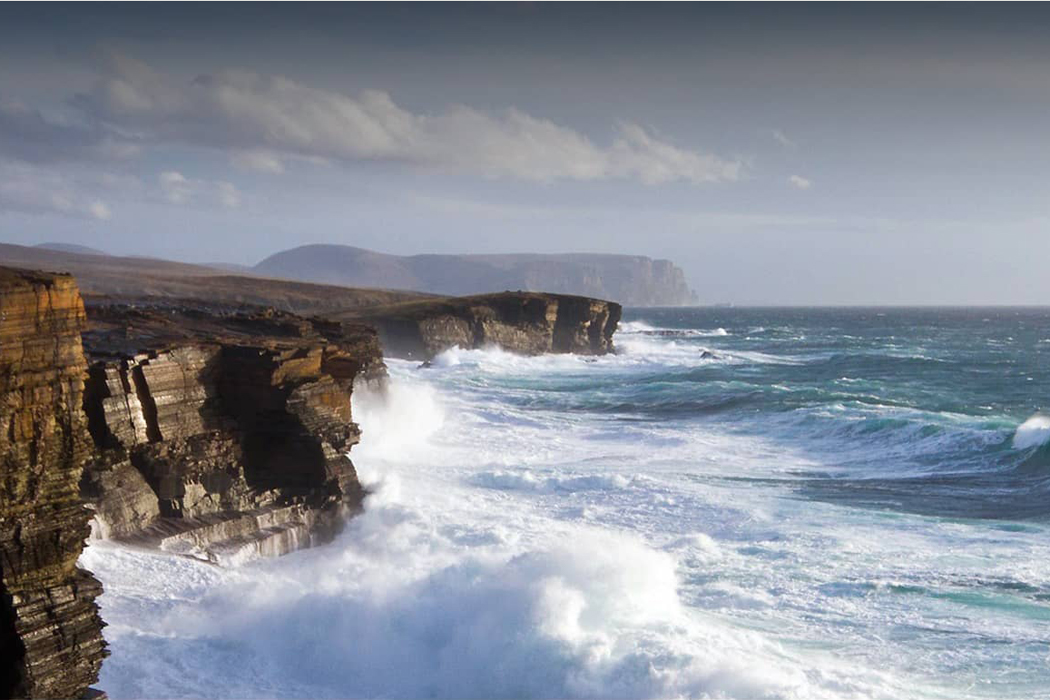
Seafaring in the Early Medieval Archipelagos of the North Atlantic is a three-day international conference bringing scholars together in order to create a platform for future collaboration, interdisciplinary projects and research programmes.
Seafaring: an early medieval conference on the islands of the North Atlantic
University of Denver
03.11.2016 – 05.11.2016
Deadline for CfP:
Individuals who would like to participate in a seminar should submit one-page paper proposals directly to the seminar organizers by April 4th, 2016 to submit your proposal for masterclass, workshop, mini-tutorial, or other format for active learning to SeafaringConference2016@gmail.com , subject line: “Workshop Submission”
Presentation:
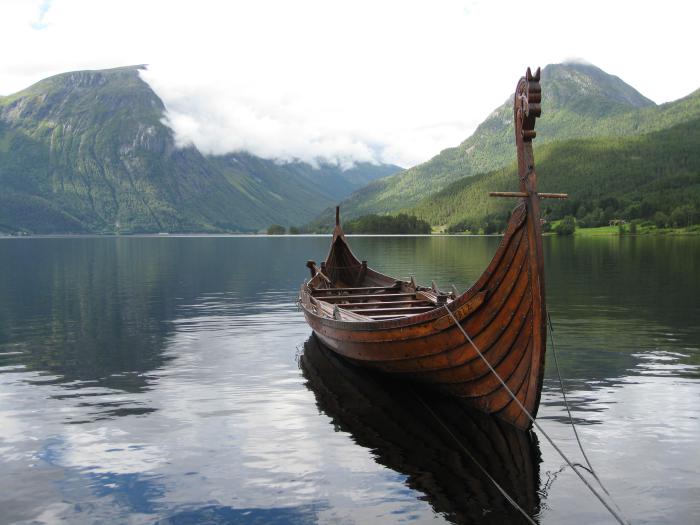
Seafaring: an early medieval conference on the islands of the North Atlantic is a three-day international conference that aims to bring together scholars of early medieval Ireland, Britain, and Scandinavia to imagine cooperative, interdisciplinary futures for the study of North Atlantic archipelagos during the early medieval period. Seafaring invites proposals for two kinds of sessions, seminars and workshops/forums, that will help imagine more collective and cooperative futures for scholars of the so-called “British” archipelago and/or reinvigorate the interdisciplinary mandate of early medieval studies.
Designed less around traditional conference presentations than as a “workspace,” Seafaring: an early medieval conference on the islands of the North Atlantic invites proposals that will engage participants in mini-tutorials, masterclasses, writing workshops, and learning laboratories – all of which are designed to widen their linguistic competence, interdisciplinary methods, geographic familiarity, and temporal scope, within and beyond the early medieval period.
The primary workspace for this conference will be an eight-to-twelve-person seminar. Seminars will meet for two days of the conference in order to foster extended discussion. Seminar organizers may wish to ask participants to read their papers or summarize pre-circulated writing. Either way, the emphasis of the seminar is on protracted, constructive discussion: of an individual’s paper, of connections between papers, and of the seminar topic. As a format that takes up some but not all of the conference, the seminar allows each participant to be a full member of one seminar and to sample others during remaining time blocks.
Plenary Speakers:
Dr. Alf Siewers, Associate Professor of English and Affiliate Faculty Member in Environmental Studies at Bucknell University, where he is also is an affiliate faculty member in Environmental Studies. Author of Strange Beauty: Ecocritical Approaches to Early Medieval Landscape (Palgrave), and editor of Re-Imagining Nature: Ecosemiotics and Environmental Humanities (Bucknell Press), as well as co-editor of Tolkien’s Modern Middle Ages (Palgrave). His current work focuses on non-modern environmental semiotics, rhetoric, and ecopoetics (both written and visual). His current projects include an ecocritical survey of Anglophone ecopoetics (including literature and film) from those perspectives; a series of environmental humanities documentaries produced in collaboration with students as part of the Stories of the Susquehanna Valley project at Bucknell; and a collaborative effort with other universities to produce a digital edition of the pioneering nature text Rural Hours by Susan Fenimore Cooper. A former urban affairs writer for the Chicago Sun-Times and Midwestern correspondent for The Christian Science Monitor, his background includes experience in environmental journalism, and he also teaches journalism and advises student media at Bucknell.
Dr. Siewers’ plenary talk is titled “A Green World in the Desert Sea: Seeking an Ecopoetics of Nature’s Hidden God.” It engages connections between sea, desert, and forest in early medieval and nineteenth-century literature that are directly relevant to ways of thinking about nature today.
Clare Lees, Professor of Medieval Literature and History of the Language, King’s College London and Gillian Overing, Professor of English, Wake Forest University.
Clare Lees and Gillian Overing have a long collaborative history, as co-authors and co-editors. They share a deep interest in and commitment to the study of women and gender studies in the field of Old English, and a passion for place. Their published work together includes “The Clerics and the Critics: Misogyny and the Social Symbolic in Anglo-Saxon England,” in The Debate on Women, Men, and Gender in the Middle Ages (Palgrave 2001), Double Agents: Women and Clerical Culture in Anglo-Saxon England, (Pennsylvania UP 2001, rprt. University of Wales Press, 2009), A Place to Believe In: Locating Medieval Landscapes (Penn State Press 2006), and “Women and the Origins of English Literature,” in The History of British Women ’ s Writing 1350-1500 (Palgrave 2012).
They have given many joint presentations in a variety of formats and contexts, most recently, “Sonic Illumination,” a multi-media presentation at Whitechapel Art Gallery (London, UK, February 2015); “The Collaborative Spiral: Thinking over Time,” at the International Medieval Congress (Leeds, UK, July 2014); and “Deep Water Tales,” a multi-media presentation for Midsummer Water Day, as part of a day long series of interactive talks and events by King’s College London in collaboration with the Museum of Water installation at Somerset House, London UK (June 2014).
Their plenary talk for this conference is titled ,””Still Water” (Roni Horn, 1999): The Contemporary Medieval in Art, Culture and Practice.” It explores their developing interest in water as a lens and mirror for the contemporary and the medieval, and their current book in progress, The Contemporary Medieval: Reflections on Practice.
Planned Seminars:
BORDERLANDS AND FRONTIER ZONES: TRANSMARITIME INTERACTIONS WITH THE CELTIC WORLD
Joey McMullen, Harvard University, mcmull@fas.harvard.edu
Georgia Henley, Harvard University
ARCHIVES OF THE NORTH ATLANTIC
Jordan Zweck, University of Wisconsin-Madison, jlzweck@wisc.edu
Mary Kate Hurley, Ohio University
THE ARCHIPELAGO: COMPARATIVE METHODOLOGIES FOR THE MEDIEVAL ATLANTIC
Jeremy DeAngelo, Rutgers University, JeremyDeAngelo@gmail.com
Marjorie Housley, Univerisity of Notre Dame
NAVIGABLE LANDSCAPES AND SEASCAPES IN EARLY MEDIEVAL BRITAIN
Rebecca Shores, University of North Carolina-Chapel Hill, rpshores@unc.edu
21ST CENTURY VIKING
Daniel Remein, University of Massachusetts-Boston, danielremein@umb.edu
FEMINIST FEELINGS: WHAT ARE THE STATE(S) OF AFFECT THEORY IN EARLY MEDIEVAL CULTURAL STUDIES
Eileen Joy, eileenajoy@gmail.com
FREE FLOATING ACROSS THE NORTH ATLANTIC
Tiffany Beechy, University of Colorado-Boulder, tiffany.beechy@colorado.edu
Planned Workshops:
TRANSLATION AS POIESIS: BRINGING THE ANCIENT INTO THE NOW
Michael Joseph Walsh, University of Denver, mkwlsh@gmail.com
Aditi Machado, University of Denver, amachado8@du.edu
More information about the seminars and workshops is available at the dedicated website
INTRODUCTORY MASTERCLASS ON OLD AND MIDDLE IRISH FOR BEGINNERS*
Joey McMullen (with Georgia Henley), Harvard University, mcmull@fas.harvard.edu
*Scholars with expertise in this language who are interested in co-teaching should contact Joey
INTRODUCTORY MASTERCLASS ON MIDDLE WELSH FOR BEGINNERS*
Georgia Henley (with Joey McMullen), Harvard University, ghenley@fas.harvard.edu
*Scholars with expertise in this language who are interested in co-teaching should contact Georgia
OLD ENGLISH AND OLD FRISIAN RUNES
Gaby Waxenberger, LMU Munich, gaby.waxenberger@anglistik.uni-meunchen.de
PODCASTING FOR MEDIEVALISTS: AN INTRODUCTION
Andrew Pfrenger, Kent State University, apfrenge@kent.edu
John Sexton, Bridgewater State University
EZRA POUND’S “THE SEAFARER”: WORLD LITERATURE AND THE PLANET
Maxwell Gray, University of Wisconsin-Madison, mgray5@wisc.edu
THE INS AND OUTS OF PALAEOGRAPHY: SCRIPT AND PAGE LAYOUT, 900-1250
Elaine Treharne, Stanford University, treharne@stanford.edu
INTERNET RESOURCES FOR RESEARCHING THE OLD NORSE TEXTUAL TRADITION
Lyle Tompsen, Durham University (UK), University of Iceland, lyledragon@yahoo.com
VEGETABLE MATTER: AN INTERDISCIPLINARY WORKSHOP ON PLANTS IN THE EARLY MIDDLE AGES
Erin E. Sweany, Indiana University, esweany@indiana.edu
Mathew T. Sharples, University of Colorado-Boulder, mathew.sharples@colorado.edu
SCANDINAVIAN RUNES IN THE NORTH ATLANTIC VIKING DIASPORA
Ragnhild Ljosland, University of the Highlands and Islands, ragnhild.ljosland@uhi.ac.uk
FEATURED PHOTO:
Visit the Orkey Islands © Visitorkney