New research aims to pinpoint the dynamic interplay of volcanic forcing of climate cooling, its consequences for malnutrion and epidemics, and how it might have played out in the 6th century after the eruptions AD 536 and 541
RESEARCH:
Volcanoes, Climate Cooling, Malnutrition and Epidemics: A New Theory of the Justinianic Plague
By Vaughan T. J. Phillips et al., A Theory of the Linkage between Volcanoes, Climate Cooling, Malnutrition and Epidemics: Case Study of Justinianic Plague.
EGUsphere preprint, 8 September 2026.
The relationship between major volcanic eruptions, climatic deterioration, agricultural crises and epidemic disease has long attracted the attention of historians, archaeologists and climate scientists. In this interdisciplinary study, Vaughan Phillips and fourteen colleagues from climatology, history, archaeology, biology and epidemiology propose a mathematical explanation for how these processes may have interacted during the sixth century, when two exceptionally powerful volcanic eruptions preceded the outbreak of the Justinianic Plague. Their model serves as a particular interesting correction to the less than nuanced positions distributed and debated among minimalists and maximalists.
Their central argument is that volcanic cooling may have amplified plague mortality indirectly, through its effects on food production, nutrition and the following vulnerability of human populations to infectious disease. The authors do not argue that volcanic eruptions caused the bacterium responsible for plague to emerge. Instead, they explore how environmental disruption might have transformed an initially limited outbreak into a devastating epidemic.
The study focuses on the eruptions of 536 and 540 CE, which produced substantial atmospheric disturbances and contributed to the period of climatic cooling commonly known as the Late Antique Little Ice Age. The first major outbreak of the Justinianic Plague followed in 541, reaching Constantinople in 542. The coincidence of these events has prompted various explanations, but previous research has struggled to quantify the mechanisms connecting them.
The paper attempts to address this problem by developing a model incorporating volcanic activity, temperature change, agricultural productivity, food reserves, malnutrition, plague transmission, mortality and human migration. Rather than reconstructing the entire pandemic geographically, the authors investigate the behaviour of these interconnected processes within a hypothetical population.
Their findings suggest that malnutrition could substantially increase epidemic mortality, while migration away from infected settlements might moderate its immediate impact. They also reveal a more complicated relationship between famine and plague than might initially be expected: severe nutritional deprivation can increase susceptibility to infection while simultaneously reducing the population available for further transmission.
Historical background: The volcanic eruptions of 536 and 540
The eruptions of 536 and 540 were among the largest volcanic disturbances of the past two millennia. By injecting substantial quantities of sulphur dioxide into the stratosphere, they produced sulphate aerosols that reflected incoming solar radiation, reducing temperatures across extensive areas of the Northern Hemisphere.
Ice-core records, tree-ring sequences and climate modelling indicate that these events contributed to several years of unusually cold summers, shortened growing seasons and widespread environmental disruption. Contemporary observers recorded atmospheric abnormalities, including the remarkable reduction in sunlight described in Mediterranean accounts.
The authors estimate that the combined volcanic forcing produced global mean cooling approaching 1.5°C, with substantially stronger effects over Northern Hemisphere landmasses. Their model suggests that average cooling over northern continental areas could have approached 3°C at its maximum.
The consequences for agriculture would have varied considerably between regions. Northern and northwestern Europe were particularly vulnerable to shortened growing seasons and crop failures, while rainfall changes could produce contrasting effects elsewhere.
Historical evidence supports the existence of serious agricultural concerns. In 537–538, Cassiodorus, writing within the Ostrogothic administration in Italy, described unusual weather and urged the preservation of grain reserves. Archaeological evidence, pollen studies and palaeoclimatic reconstructions likewise suggest agricultural disturbances and settlement abandonment in parts of Scandinavia and elsewhere.
The authors place these events within a broader historical pattern. They identify several major epidemics occurring within a few years of significant volcanic eruptions, including outbreaks associated with the thirteenth-century Samalas eruption, the Black Death following the eruption of 1345, and epidemics after Tambora in 1815.
These chronological associations do not themselves establish causation. However, they provide the historical motivation for investigating whether a consistent environmental and biological mechanism might explain some of the observed connections.
The mathematical model: Climate, agriculture and disease
The study’s principal innovation is its attempt to integrate environmental, agricultural and epidemiological processes within a single mathematical framework. This model consists of three interconnected components.
The first calculates the climatic consequences of volcanic eruptions, using a simplified representation of the atmosphere and ocean. It incorporates the immediate cooling caused by volcanic aerosols and the slower recovery associated with heat exchange between the ocean and atmosphere.
The second component translates climatic deterioration into declining agricultural productivity, depleted food reserves and worsening nutrition. Importantly, the model assumes that agricultural recovery is not instantaneous. A community experiencing repeated harvest failures may exhaust its grain reserves, lose seed corn and suffer declining agricultural productivity because malnourished workers become less capable of cultivating the land.
The third component simulates plague transmission. It distinguishes between animal reservoirs, infected vectors such as fleas and lice, susceptible human populations, infected individuals and those recovering from infection. It also incorporates pneumonic transmission between humans, temporary immunity and migration.
Malnutrition is treated as a variable ranging from adequate nutrition to extreme starvation. Increasing nutritional deprivation is assumed to impair immune function, increase vulnerability to infection and raise mortality from both plague and other diseases.
The resulting system incorporates several feedback mechanisms. Poor harvests increase malnutrition, which weakens agricultural labour and can further reduce food production. Malnutrition also makes people more susceptible to infection. Conversely, death, recovery and migration reduce the number of susceptible individuals remaining within an affected community.
The model is deliberately simplified. It represents an average population rather than a geographical landscape containing individual settlements, agricultural districts and trading networks. Its purpose is to identify mechanisms and test their effects rather than reproduce the detailed historical geography of the pandemic.
Testing the model against the Black Death
Before applying their model to the sixth century, the authors evaluate it against evidence from fourteenth-century England, where agricultural and demographic documentation is considerably more extensive. Thus, they examine the eruption of 1345 and the subsequent agricultural crisis associated with the Black Death.
Their calculations reproduce an agricultural decline broadly comparable with historical estimates. The model predicts a substantial reduction in agricultural production during the years following the eruption, including a decline of approximately 60% during the initial crisis and markedly reduced output during the 1350s.
The authors also construct an indicator of nutritional stress using agricultural production, wages and grain prices. This suggests a prolonged deterioration in nutritional conditions, broadly consistent with their simulations.
A further comparison draws on recent bioarchaeological research into skeletons from medieval London, particularly the study by Godde and colleagues (2025). Nitrogen-isotope measurements in human bones provide evidence relevant to dietary conditions and nutritional stress. These archaeological findings indicate differences in isotopic signatures between individuals who died from plague and those whose deaths were attributed to famine or other causes. The authors argue that their model reproduces the approximate relationship between nutritional stress and relative plague mortality.
This exercise provides some support for their assumptions, although it does not independently establish that the eruption caused the agricultural crisis or that malnutrition determined individual plague outcomes. The comparison relies on simplified assumptions about the relationship between isotopic measurements, nutrition and mortality.
Nevertheless, it gives the researchers a historical benchmark before applying their model to the more poorly documented sixth century.
Results for the Justinianic Plague
The central simulation begins with the eruptions of 536 and 540 and introduces plague from animal reservoirs in 541. Further introductions are prescribed at five-year intervals.
To investigate differences in social and economic resilience, the authors divide their hypothetical population into three groups: a majority comprising 60%, a particularly vulnerable population comprising 20%, and a relatively affluent population comprising the remaining 20%.
These proportions are illustrative assumptions rather than reconstructed sixth-century demographic statistics.
The simulations predict that food reserves could collapse dramatically. Among the majority population, reserves decline to approximately 10% of their original levels, while the vulnerable group experiences a decline to around 5%. Severe nutritional stress persists for more than a decade, with recovery complicated by the exhaustion of agricultural reserves.
The resulting epidemic outcomes differ substantially between population groups.
| Populations Group | Plague mortality | Malnutrition related mortality | Combined Mortality |
|---|---|---|---|
| Majority 60% | 38% | 19% | 57% |
| Vulnerable 20% | 36% | 35% | 71% |
| Affluent 20% | 27% | 3% | 30% |
| Population-weighted | 36% | 19% | 55% |
Modelled cumulative mortality after approximately thirty years, from Table 3, p. 32. Percentages are relative to initial populations, not historical measurements.The vulnerable population experiences the highest overall mortality, although its plague mortality is slightly lower than that of the majority group. This apparently paradoxical result reflects the interaction between malnutrition, mortality and disease transmission.
Extreme nutritional deprivation increases the severity of the initial epidemic. However, the resulting mortality also removes susceptible individuals from the population, limiting subsequent transmission.
The affluent population experiences less severe nutritional deterioration and correspondingly lower mortality. The authors therefore demonstrate how the same climatic shock might produce very different demographic consequences depending on access to food and the resilience of agricultural production.
An important additional prediction concerns transmission pathways. The model attributes approximately two-thirds to three-quarters of plague infections and deaths to human-to-human transmission, rather than transmission through infected vectors. The authors acknowledge that this proportion remains highly uncertain and should not be interpreted as an established characteristic of the historical Justinianic Plague.
5. The importance of malnutrition and migration
The authors investigate their conclusions through a series of sensitivity experiments, modifying individual components while retaining the others.
The most striking experiment removes the additional malnutrition caused by volcanic cooling while retaining the same introductions of plague into the population.
Under these conditions, modelled plague mortality declines from approximately 36% to just 6%. Within the model, volcanic-induced malnutrition therefore increases eventual plague mortality by approximately sixfold. This represents the paper’s strongest argument for a potentially important causal connection between volcanic eruptions and epidemic severity.
Migration produces a second significant finding. When individuals are permitted to leave infected communities, they temporarily reduce the local population susceptible to transmission. This diminishes the initial epidemic peak and reduces overall mortality. When the authors prohibit migration, calculated plague mortality increases from 36% to 56%. The implications require careful qualification. The model treats migration as a protective movement out of the affected population. However,it does not simulate migrants carrying the infection elsewhere, infecting new communities or encountering additional food shortages at their destinations. Consequently, the results demonstrate the potential protective effect of migration within an affected locality, not necessarily its consequences for the pandemic as a whole.
A third experiment doubles volcanic forcing. Surprisingly, this produces little additional plague mortality. Instead, deaths associated with malnutrition increase, removing individuals who might otherwise have become infected. Combined mortality rises from 55% to 63%.
Even when the authors allow increased volcanic forcing to enhance the introduction of plague from animal reservoirs, the total outcome changes relatively little.
These experiments demonstrate that the relationship between environmental stress and epidemic mortality is nonlinear. More severe cooling does not necessarily produce proportionately higher plague mortality, because competing biological and demographic mechanisms operate simultaneously.
Epidemic feedbacks and population density
The paper also develops a theoretical explanation for why epidemics initially accelerate before declining. Transmission increases as infected individuals encounter susceptible people. However, this process eventually encounters limits as susceptible individuals die, recover or leave the affected population.
The model identifies a critical threshold below which infections no longer increase exponentially. Once the population crosses this threshold, transmission begins to decline, although subsequent introductions from animal reservoirs may generate additional waves.
Population density is therefore particularly important. In the authors’ theoretical calculations, very sparsely populated regions – below approximately five individuals per square kilometre – may be less capable of sustaining an epidemic than densely occupied settlements. This offers a possible – even likely – explanation for the uneven geographical consequences of the First Plague Pandemic.
The interconnected cities and trading networks of the former Roman Empire might have supported greater transmission than relatively isolated rural communities. Such differences could help explain why some European regions appear to have experienced substantial disruption while others show little archaeological evidence of demographic decline.
Limitations and historical implications
The authors emphasise that their study is not intended as a precise reconstruction of mortality during the Justinianic Plague.
Several important uncertainties remain:
- The model assumes that malnutrition increases plague susceptibility and mortality according to relationships derived partly from later medieval and modern evidence. These may not accurately represent sixth-century populations or the particular bacterial lineages responsible for the First Plague Pandemic.
- Likewise, the model simplifies agricultural systems, population structure and migration. It cannot reproduce the regional differences in climate, crop production, food distribution and settlement networks that characterised the early medieval world.
- The mechanism introducing plague from animal reservoirs is also prescribed rather than independently explained. In particular, the model does not establish that volcanic cooling caused the original introduction of Yersinia pestis into human populations.
- Finally, substantial disagreement persists among historians concerning the demographic consequences of the Justinianic Plague. The calculated mortality figures cannot resolve these controversies because they depend on assumptions about transmission, nutritional vulnerability and social conditions.
The paper should therefore be understood principally as a theoretical investigation demonstrating how particular mechanisms might interact, rather than independent evidence that the sixth-century pandemic killed a specified proportion of the population. Nevertheless, it offers a substantial model uncovering the vulnerability of local economies in the Early Middle Ages.
Conclusion
The study proposes a coherent explanation for how volcanic eruptions might have amplified historical epidemics through interconnected climatic, agricultural, physiological and demographic processes. Its central contribution is to demonstrate the importance of prolonged nutritional stress as an intermediary between environmental shocks and epidemic disease.
The results also challenge straightforward assumptions about historical catastrophes. Greater malnutrition may increase the intensity of an epidemic while simultaneously restricting its subsequent spread. Migration may protect individual communities while potentially spreading infection elsewhere. A more powerful eruption need not produce proportionately greater plague mortality.
Above all, the paper suggests that the demographic consequences of the sixth-century volcanic eruptions cannot be understood through climate or disease alone. Agricultural resilience, access to food, physiological vulnerability, settlement density and human behaviour must be considered together.
The authors’ wider conclusion is that epidemics emerge from complex interactions between environmental conditions, biological processes and human societies. Their model provides a framework for investigating those interactions, while leaving the historical magnitude and geographical distribution of the Justinianic Plague open to further research.
FEATURED PHOTO:
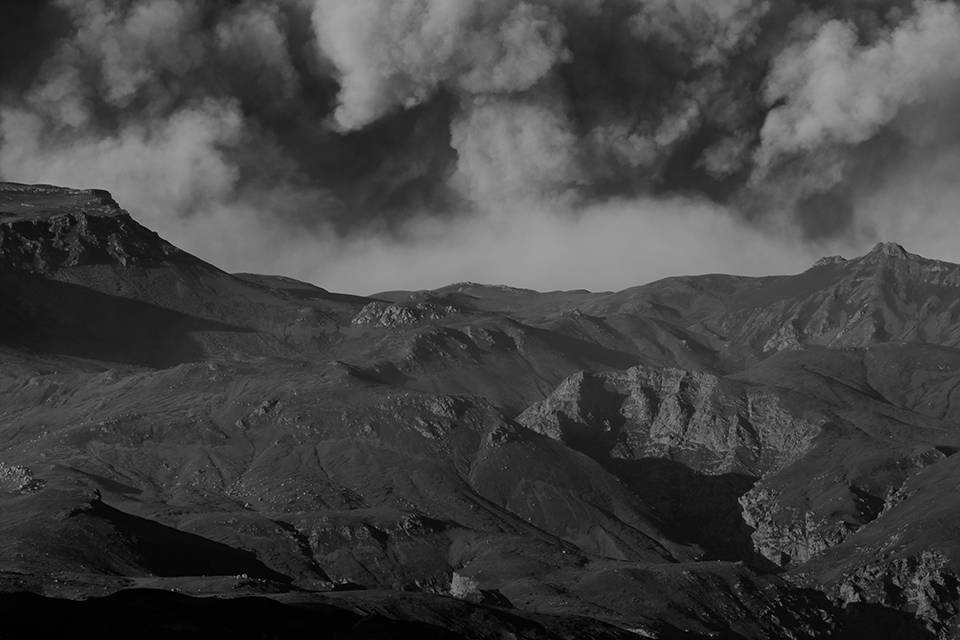
Cloud over Eyjafjällajokulla in Iceland. This was the eruption which closed off the airspace in 2010 darkening the skies over the Northern Hemisphere for several weeks. Eyjafjallajökull was a relatively modest eruption compared with the enormous volcanic events of 536 and 540 CE. Its impact on aviation resulted primarily from the fine volcanic ash carried towards Europe by prevailing winds, rather than from its climatic effects. © Dreamstime/Johann Helgason 14298982
NOTES:
READ ALSO: