The visual aesthetic and the moral stance of Noah, the film, is obviously inspired by medieval maps of the ancient world
Inside a week the film Noah has succeeded in becoming not only the major blockbuster of the season, but also of being condemned by every respectable radical film-critic, as well as being flooded by Midwestern bile from the Evangelicals. Finally a long list of Muslim countries – United Arab Emirates, Quatar, Bahrain, Indonesia and Malaysia have banned it, because it is not faithful to the Muslim rendering of story!
To say the least, Noah, the film, is a cheeky production.
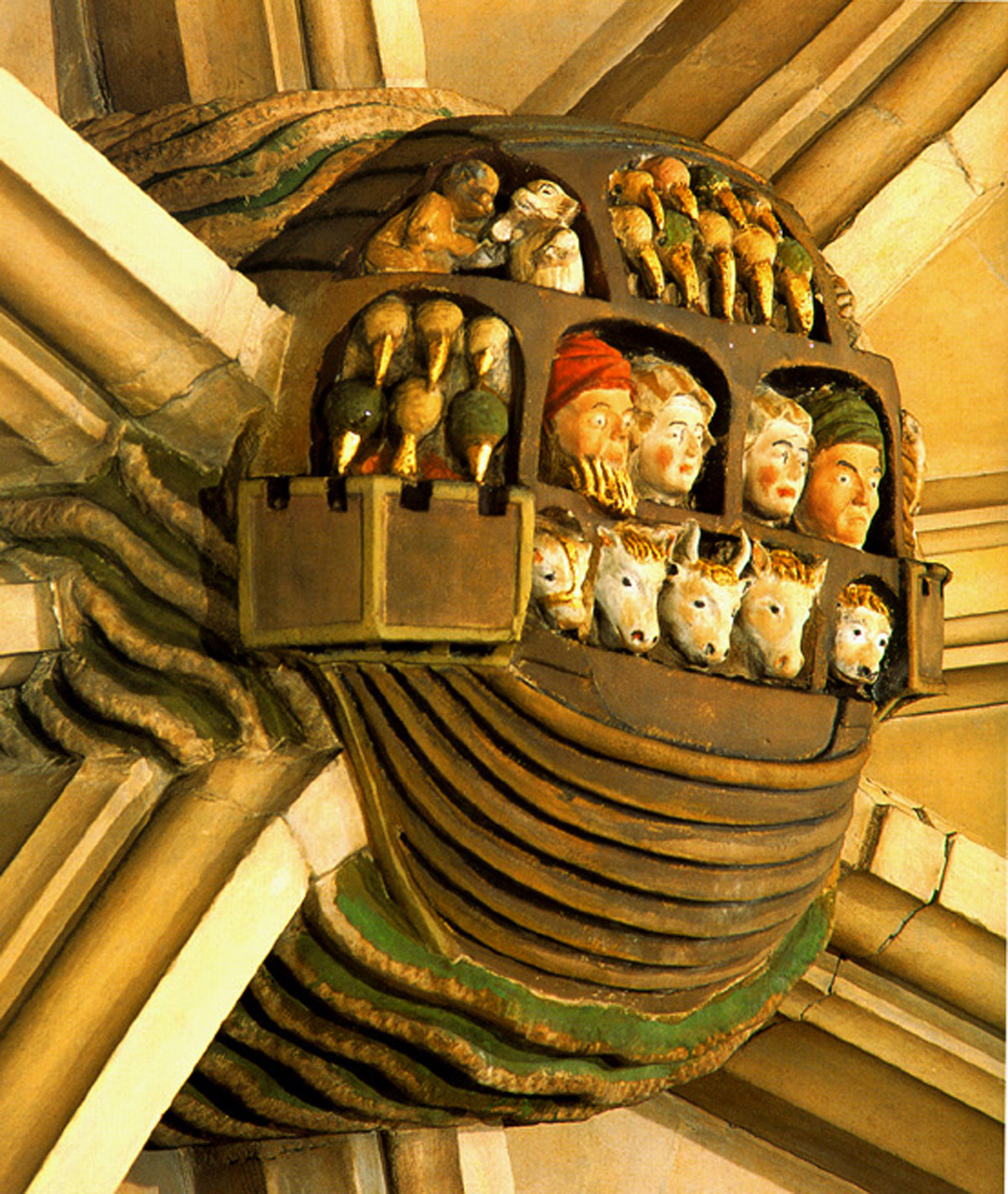
On the surface it is an epic production on par with the Tolkien-trilogy inviting us all on-board a mythical cruise in godawful waters of both a factual and ethical storm of biblical proportions.
On the other hand it is a postmodern cinematic comment to Cecil B. DeMille’s “The Ten Commandments”, which is such a beloved and fixed feature on Saturday Night film clubs among Evangelicals.
Third, it is of course also a highly controversial story about what is sure to happen in a world inhabited by nine billion locusts devouring every other living creature on the Blue Planet.
All this is something Evangelicals, Pentecostals and Mormons – the progeny of Cain – just hate to be reminded of, because it disturbs their fundamental belief in Prosperity Theology, their Godgiven right to three cars, unrestrained procreation, and in general a grill-partying, beef-eating lower-middle class-culture.
It is also no wonder that the left-winged high priests in the media hate the idea that the solution to our looming global environmental crisis, will be found not among the mandarins in the international community, but among the spiritualists – the seed-planting descendants of Seth, who have gone off the grid and live simple lives.
Neither is it wondrous that people are streaming into the theatres all over the free world. This film has a distinctly new character – post-romantic. More than anything it reminds the viewer of classic heroic epics like the Iliad or the Odyssey. Or perhaps even Gilgamesh from Mesopotamia, in which we meet “Old Man Noah” for the first time. Which of course is also why we encounter a group of boisterous young sons in a deadly infight with the patriarch par excellence, while the women are mild and wise (though not meek).
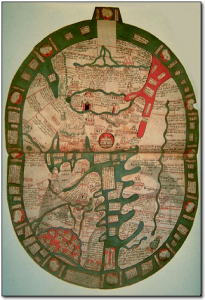
© British Library
And yes: the visual aesthetics are obviously inspired by medieval maps of the ancient world (see for instance the way in which the streams of water flow through the barren desert from one central source, mimicking the four rivers coming from the Garden of Eden.)
Please do go and see it! If the time has really come, when we will be called to heroic action in face of an apocalyptic mixture of war, famine and pestilence we might end up needing some medieval survival tricks.
The film may not win any Oscars (except perhaps a token to Anthony Hopkins, who plays a simply delightful old Metusalah). It is simply too weird. However, I am pretty sure we will see many more such films in the next decade. A watershed, perhaps?
Karen Schousboe
FEATURED PHOTO:
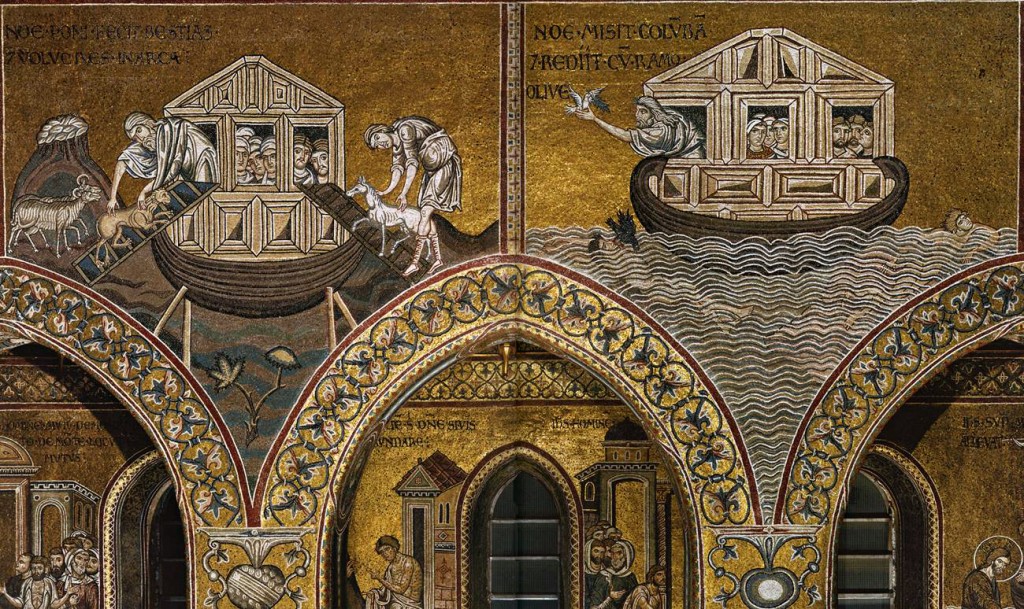
Mosaics from Monreale, Sicily. Perhaps inspires by the spiritual writing s of Hugo of St. Victor
READ SOME REVIEWS:
The Guardian: Darren Aronofsky’s Noah is, quite simply, godawful
The Telegraph: ‘astonishing and miraculous’
The Economist: “Noah” is a modern, intimate and claustrophobic Biblical interpretation.
Jon Stewart: ‘They Didn’t See the F*cking Movie!’
Noah Movie Banned in More Muslim Countries as Indonesia and Malaysia Block Film
READ MORE:
Hugh of St. Victor. Selected Spiritual Writings
Harper & Row 1962