Unpacking chivalry is necessary for anyone trying to grasp the history of Europe 1000 – 1500. And to come to grips with many ways in which the Middle Ages return in the 21st century. New handbook offfer a solid introduction
A Companion to Chivalry
Edited by Robert W. Jones, Peter Coss
Boydell & Brewer 2019
REVIEW:
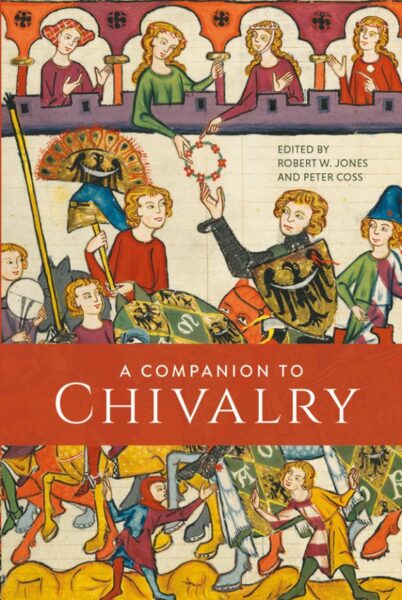 In the Middle Ages, the idea of the warrior as one of the linchpins in society came to rule the minds of people. Following this, chivalry – the cultural code of conduct ruling these warriors – turned into a pregnant concept combining the ideas of military service, physical skills, horsemanship, and courteous behaviour. Rooted in various ideas about chivalry, the elite came to embody a certain habitus and mentalité – a way of life. Embodied by glorious knights and pretty damsels in distress, chivalry conquered not only the minds of poets, readers and artists but also the European elite from one end to the other. As such, chivalry did not just rule the day-to-day way of life among the privileged; chivalry also governed the politics of the day. Whether in diplomatic negotiations or warfare, chivalry was fundamentally another way of conducting “politics”.
Thus – as a way of life or habitus, a life style, and a code of conduct – chivalry set its mark on landscapes, clothes and armour, artefacts, gestures and legends, daily life and feasts, language, poetry and visual arts. Huizinga famously called it “an aesthetic ideal assuming the appearance of ethical ideal” (1919, p. 58). To reduce the idea of chivalry in this way, however, is to reduce its very real and bloody impact on the lives of people from the 11th century, and onwards until it petered out in the 16th century, when it was finally turned into a laughing matter, marked out by the novel of Don Quixote by Miguel de Cervantes (published 1605). And yet, it lingered on as a bottomless well of inspiration to be reinvented whenever politics became too messy and bloody. Ivanhoe created by Walter Scott in 1820 is an excellent example of such a reinvention of the chivalric tradition. From our day and age, the exploits of Jamie Lannister in ‘Game of Thrones’ is another such timely invention. In a world ruled by fear and terror, it seems we once more need armoured knights coming to our rescue.
Such media events partly explain why the last decade has once again seen a handful of major introductions to the proper medieval history of chivalry. Interest was reignited in 1999, when Richard Kaeuper published his introduction, Chivalry and Violence in Medieval Europe. In 2009, the same historian followed up with his book on “Holy warriors: the religious ideology of chivalry”, and again in 2016, Cambridge University Press published a textbook on Medieval Chivalry by the same author. Interspersed, we find such introductions as The Knight: The Warrior and World of Chivalry, which Robert W. Jones published in 2011. Mixed up are numerous monographs and scholarly studies of chivalry as it unfolded at specific times, in special locations and among particular groups of people.
According to Keuper, chivalry is foremost a tough and pragmatic warrior code with which the elite made sense of violence and cruelty in a world of constant feuds and wars. At seen through this lens, we are able to pinpoint a special way of life and how it helped the knights to deal with piety, women, victimhood, friendship, and not least power involving who would live and who would die; and how. Through Keuper’s work we are nearly able to listen in on the chivalric small-talk exchanged over a mug of beer in a soldier’s tavern. Thus Keuper offers a well-wrought thesis positioned to explain and convince.
However, chivalry was performative. As such it existed not just as word-play, but as a continued stage play, where the constant reworking of the ‘text’ supplied the audience with further inspiration as to their own reenactment. As such, the idea of chivalry was always practical and hands-on. Chivalry was constantly reworked, rethought, represented in new ways, while creating complexity and countless nuances.
The new handbook edited by Robert W. Jones and Peter Coss aims to tackle this set of challeges by providing an “accessible and more holistic survey of the subject”. Its chapters, by leading experts in the field, cover a wide range of areas: the tournament, arms and armour, the chivalric society’s organisation in peace and war, its literature and its landscape. They also consider the gendered nature of chivalry, its propensity for violence, and its post-medieval decline and reinvention in the early modern and modern periods. In short: this book aims to offer a synopsis of the diverging scholarship governing the field.
Each contributor has been asked to draw on their own areas of expertise, outlining the many diverging viewpoints and offering a guide through the perplexities. For instance one of the editors, Peter Coss opens the volume with a well-argued explanation of the difference between the Anglophone and Francophone historiographies, essential for anyone who grew up on a diet of Duby and the Annales School. And thus, the book proceeds, offering nuances in a much disputed scholarly field.
Chivalry is a debated and contested field. It eludes a formal definition, and yet it is central to our popular ideas of what the Middle Ages were all about. We need to be able to teach this complexity to secure a more nuanced attitude towards the history of these past times.
The past is a foreign country. We need robust and comprehensive travel-guides. This book will indeed be invaluable to the student and the scholar of chivalry alike.
Karen Schousboe
TABLE OF CONTENT:
- Introduction – Robert W. Jones
- The Origins and Diffusion of Chivalry – Peter Coss
- The Organisation of Chivalric Society – David Simpkin
- The Secular Orders: Chivalry in the Service of the State – David Green
- The Military Orders – Helen J Nicholson
- Marshalling the Chivalric Elite for War – Robert W. Jones
- Chivalric Violence – Samuel A. Claussen and Peter Sposato
- Chivalry in the Tournament and Pas d’Armes – Richard W Barber
- Heraldry and Heralds – Robert W. Jones
- Arms and Armour – Ralph Moffat
- Constructing Chivalric Landscapes: Aristocratic Spaces Between Image and Reality – Oliver H. Creighton
- Gendered Chivalry – Louise J. Wilkinson
- Chivalric Literature – Joanna Bellis and Megan G. Leitch
- Manuals of Warfare and Chivalry – Matthew Bennett
- The End of Chivalry? Survivals and Revivals of the Tudor Age – Matthew Woodcock
- Chivalric Medievalism – Clare A Simmons
- Bibliography
ABOUT THE EDITORS AND AUTHORS:
Robert W. Jones is a Visiting Scholar in History, Franklin and Marshall College
Peter Coss is Emeritus Professor of Medieval History, Cardiff University
Contributors: Richard Barber, Joanna Bellis, Matthew Bennett, Sam Claussen, Peter Coss, Oliver Creighton, David Green, Robert W. Jones, Megan G. Leitch, Ralph Moffat, Helen J. Nicholson, Clare Simmons, David Simpkin, Peter Sposato, Louise J. Wilkinson, Matthew Woodcock
READ ALSO:
READ MORE:


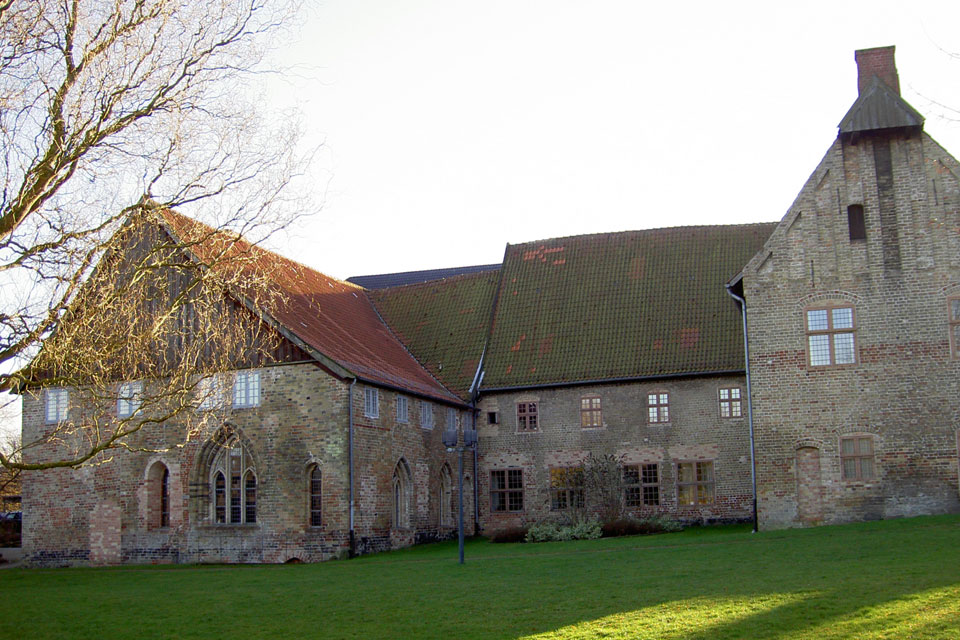
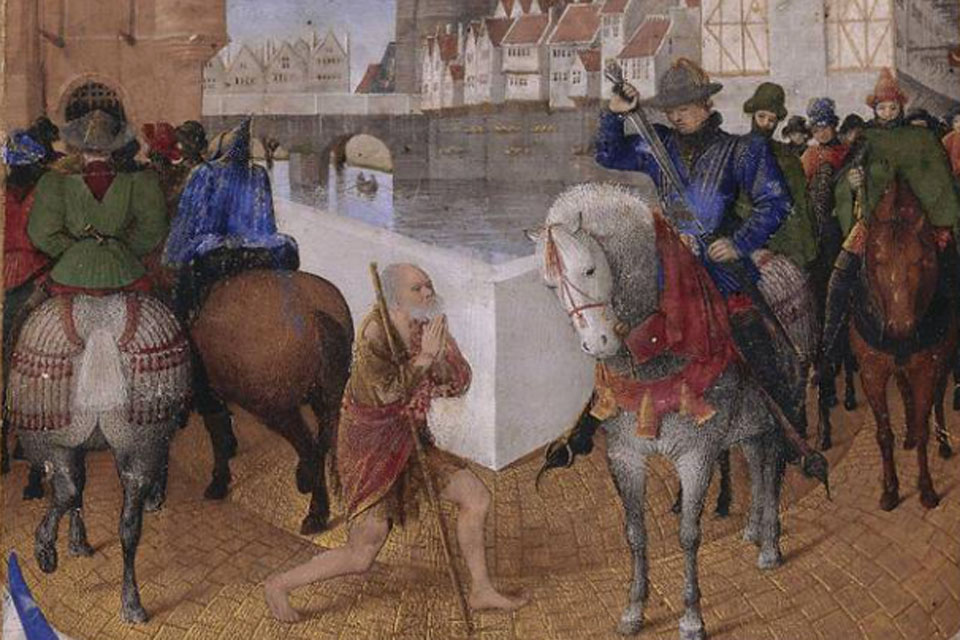


 As a place of royal residence under Louis XI, Charles VIII and Louis XII, Tours had nevertheless never been a truly important political capital. However during the forty years, from 1480 to 1520, Tours was imagined as the new capital of France. Home to Jean Fouquet and a beloved royal palace it became an artistic hotspot. Breathtaking manuscripts, rare painted panels, tapestries, sculptures, and numerous works by Michel Colombe, Guillaume Regnault, Jean Poyer, Jean Bourdichon, and anonymous masters, Tours became an exceptional crucible for the early Renaissance artists. The book is a catalogue presenting numerous works of art including the splendid miniatures of the Hours of Louis XII, here presented for the first time to the French public. The exhibtion and the book restores the importance of Tours at the time of the pre-Renaissance France..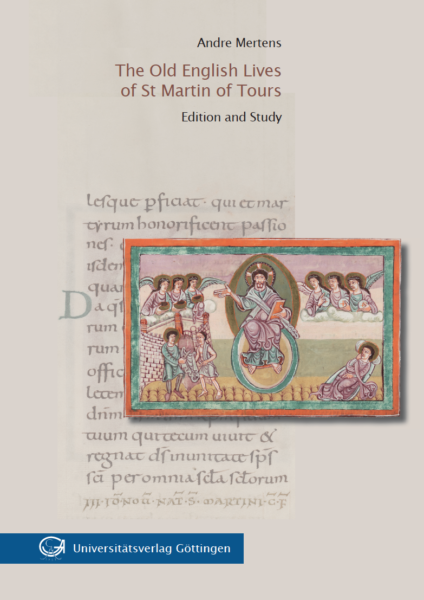

 Soldiers of Christ brings together for the first time in one volume eleven critical writings about the saints from Late Antiquity and the Early Middle Ages.To understand European culture and society in the Middle Ages it is essential to understand the role of Christianity. And there is no better way to understand that role than to study that religion’s greatest human heroes, the saints. For if Christians regarded God as their king, then the saints were the Christian nobility, human members of the divine court. To use one much-repeated phrase, they served as “soldiers of Christ.” The purpose of this volume is topresent in English translation some of the most significant records of the lives of those people considered to be saints. In exploring these works the reader will be presented with rich evidence about the development of religion and society in western Europe from the late Roman empire to the great changes that transformed European society around the year 1000.Each text is newly annotated and prefaced by the editors, and a general introduction on saints and saints’ lives makes the volume ideal for students and general readers. Included are lives of Martin of Tours, Augustine of Hippo, Germanus of Auxerre, Boniface of Crediton, Sturm, Willibrord, Benedict of Aniane, Leoba, Willehad of Northumbria, and Gerald of Aurillac, as well as the Hodoeporicon of Saint Willibald.
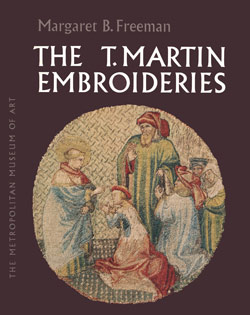 In the Middle Ages pictorial embroidery was considered one of the fine arts, and those who made pictures with needle and thread were often as highly skilled and highly valued as those who made pictures with brush and pigment. Franco-Flemish and Flemish pictorial embroideries of the first half of the fifteenth century are rare today, and a series as extensive and fascinating as the one analyzed here can hardly be equaled. The thirty-seven individual works have been known to scholars and connoisseurs for eighty years or so, and during this time speculation has accumulated as to their origin, purpose, and iconography. The present study resolves at least part of the mystery.