Who were Chaucer’s thirty-three pilgrims, and why were they heading to Canterbury? What do they and their tales tell us about medieval England as a place, and about the daily lives of its people? New book tells the story
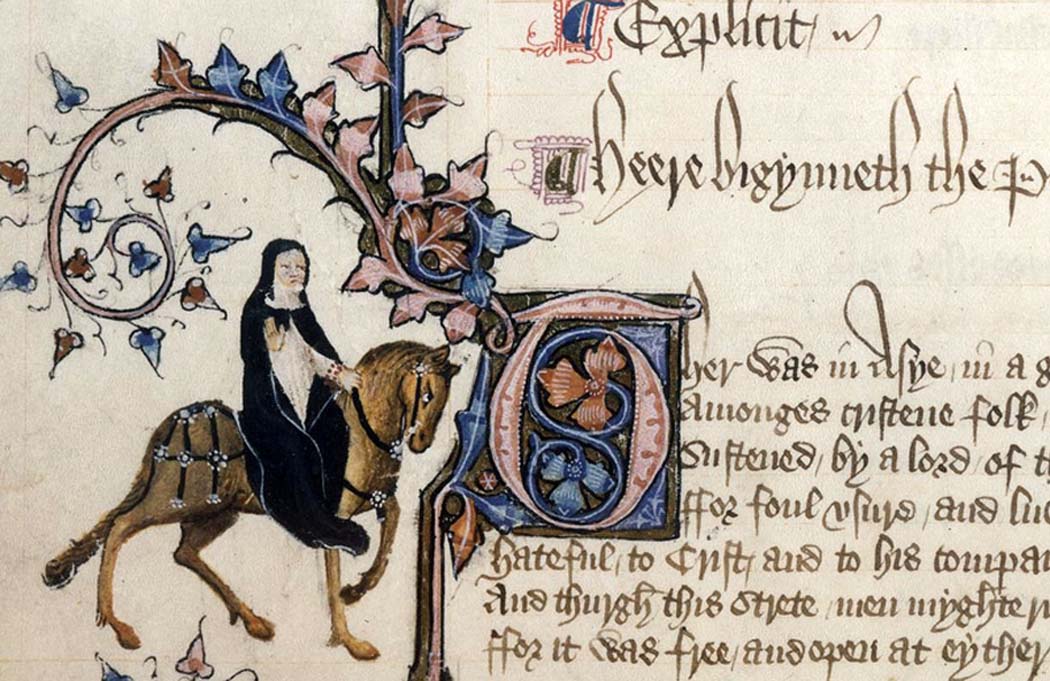
Geoffrey Chaucer’s Canterbury pilgrims have long offered readers an unusually varied assembly of late medieval English people: a knight, a miller, a merchant, a prioress, a wife from Bath and many others. They are literary creations, of course, but their occupations, manners, conflicts and expectations draw on a recognisable social world. In this new book, Nicholas Orme uses Chaucer’s works as a point of entry into that world, setting the poetry alongside what historians know about fourteenth-century England.
In this book, Nicholas Orme, one of our leading historians, brings literature and history together to answer these questiona, using the Canterbury Tales and the other great writings of Chaucer’s day as entry point. In ten chapters, he explains what people thought: about time and space, religion and the social system. He shows their wide degree of literacy and how they spent their leisure. He takes us through the politics of the day, the crusades, and the lifestyles of the nobility, clergy, townsfolk, and country dwellers, along with the landscapes they lived in.
This context matters. Chaucer lived through the aftermath of the Black Death, a period of shifting labour relations, expanding literacy, religious unease and political tension. His England was not simply a hierarchy of three orders but a society of towns, villages, courts, schools, households and roads. Orme’s account ranges across religion, leisure, politics, the crusades and the physical landscapes in which people moved.
The attraction of this approach is the movement between imaginative literature and historical reconstruction. Rather than treating the Canterbury Tales as transparent documentary evidence, it invites the question of what kinds of knowledge a medieval author could assume his audience shared – and what a modern reader needs to recover before the jokes, quarrels and ambitions make sense.
About the Author
Nicholas Orme is emeritus professor of history at Exeter University. He has written more than thirty books on the religious and social history of England, including Medieval Children, Tudor Children, The History of England’s Cathedrals, and Going to Church in Medieval England, which was shortlisted for the Wolfson History Prize.
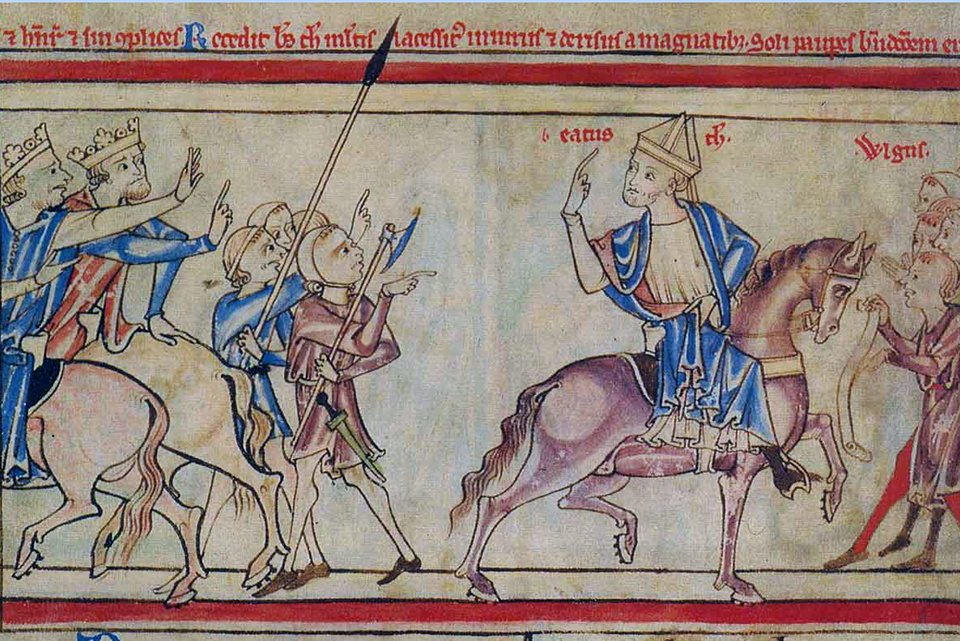
How did medieval rulership over multiple kingdoms and lordships work out? A new book explores the political, but also the practical, challenges of rulership in the fluid territorial reality of the 13th century, while floating a new concept: “transregnal”. What might this mean?
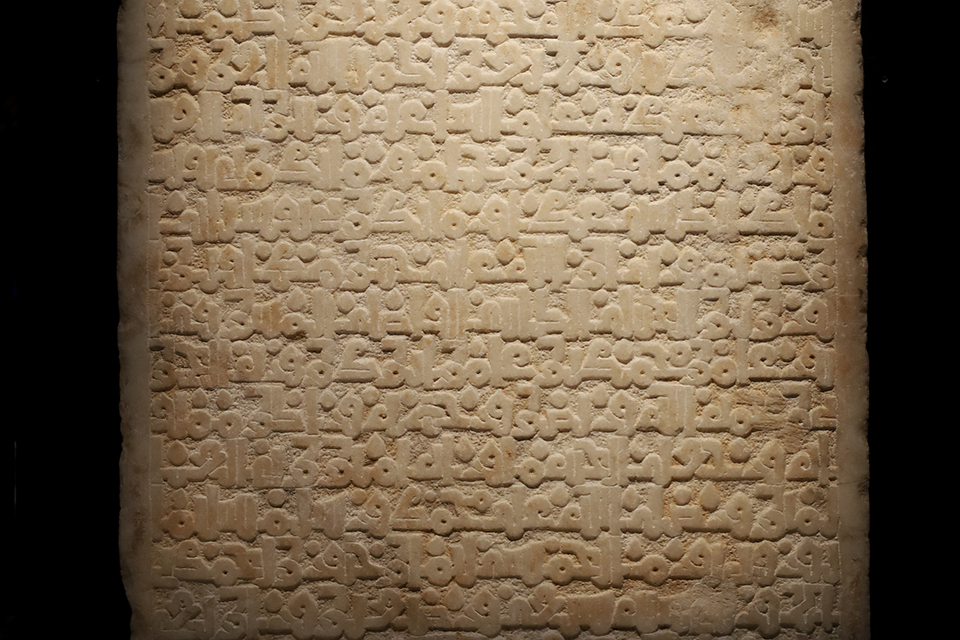
The Medieval Mediterranean was a contested site crisscrossed by fleets and armies operating in a Maritime world. New book explores the Identities, iolence, and networks in the Mediterranean using both Latin and Arabic primary sources while focusing on the Taifa of Denia in Spain.
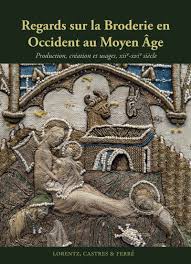
In 2020, Musée de Cluny organised an exhibition on “The Art of Embroidery in the Middle Ages” (L’art en broderie au Moyen Âge). In connection with the exhibition, a catalogue was published. Now, six years later, the proceeding for the scientific conference in January 2020 have been published.
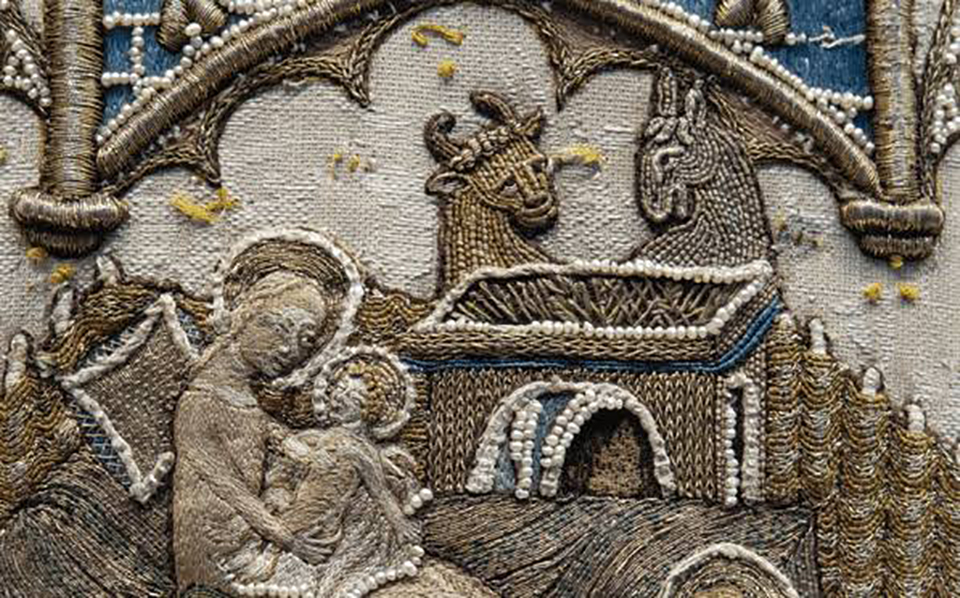
New book brings together the proceedings of two study days held at the Institut National d’Histoire de l’Art (INHA), Paris, in January 2020, alongside the Musée de Cluny exhibition “L’art en broderie au Moyen Âge”. The conference sought to foster dialogue among specialists from Germany, England, Spain, France, Switzerland, and the United States in order to assess current research perspectives on medieval embroidery—an art form that remains comparatively little studied in France despite its prominent place within the rich visual culture of the later Middle Ages.
The essays collected here offer fresh insights into the history of both liturgical and secular embroidery in Western Europe between the twelfth and sixteenth centuries. They are organised around three principal themes. The first examines the contexts of production, focusing on three distinct settings: the English royal court, Catalan workshops, and the workshops of Paris. The second explores the dialogue between embroidery and other artistic media during this period, particularly when embroidery functioned as ‘painting with the needle’ or when its sculptural relief rivalled that of sculpture and goldsmiths’ work. Finally, the contributions in the third section present new perspectives on the use of embroidered images and their role within medieval ritual.
More broadly, the volume invites readers to appreciate the richness of this textile heritage, now preserved in museums, church treasuries, and private collections. The book is illustrated with more than one hundred colour plates.
CONTENTS
Medieval Embroidery in France: The Current State of Research — Astrid Castres and Philippe Lorentz
Part I. Contexts of Production
Secular Embroidery for the English Court, 1300–1461 — Lisa Monnas
A Corpus of Embroidery in Catalonia during the Fourteenth and Fifteenth Centuries — Guadaira Macías and Cèsar Favà
Embroidery “of the Work of Paris” at the End of the Middle Ages — Astrid Castres
The Embroidered Mitre from the Sainte-Chapelle in the Musée de Cluny: A Fresh Perspective — Isabelle Bédat
Part II. Embroidery: Painting with the Needle
Embroidered Altar Frontals and Other Liturgical Hangings in Catalonia and Valencia during the Fourteenth and Fifteenth Centuries: Imports and Local Production — Rafael Cornudella
The Embroidered Altarpiece of Pedro de Montoya, Bishop of Osma, in the Art Institute of Chicago — Martha Wolff
“A Great Banner Beaten with Fine Gold”: Techniques, Practices, and Uses of Gilding on Textiles in the Late Middle Ages — Nadège Gauffre Fayolle
A Recently Acquired Orphrey in the Musée de Cluny: New Questions concerning the Opus Florentinum — Christine Descatoire
Part III. Images, Rituals, and Uses
Vision and Embroidery: The Crown of Hildegard of Bingen and its Medallions — Philippe Cordez and Eveline Wetter
Purity, Adornment, and Performance: Embroidery on Altar Linens and their Cases (1250–1550) — Julie Glodt
A Rediscovered Masterpiece of the Thirteenth Century: The Embroidered Chasuble of Guillaume de Joinville, Archbishop of Reims
(Palais du Tau, Treasury of Reims Cathedral) — Maxence Hermant
A thousand years ago, Lisbjerg, just north of Aarhus, was home to one of the king's powerful officials, Ketil the Norman. To understand his world, we must first imagine the landscape in which he lived, travelled, and exercised his authority.
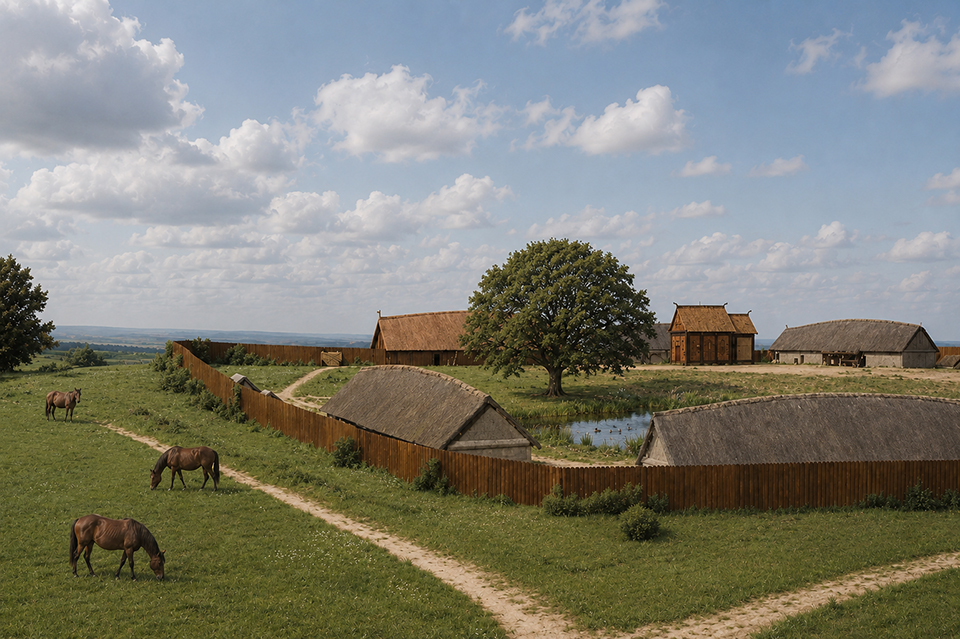
The medieval church in Lisbjerg dates to c. AD 1100 – 1150. However, a predecessor in the form of a wooden stave church was built as part of a fenced manor c. 1000 – 1100.
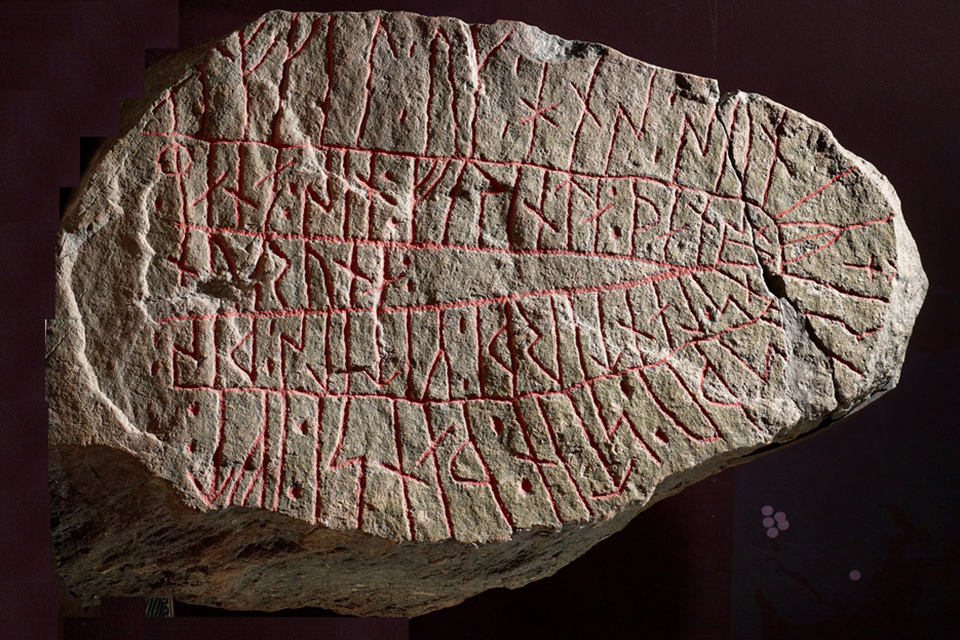
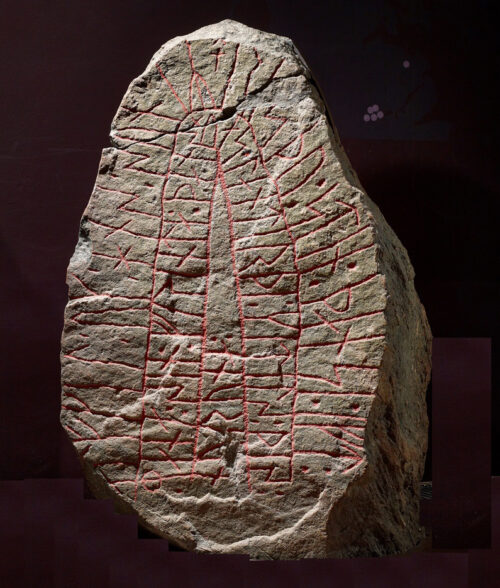
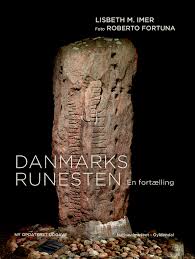
Sometime between 970 and 1020, Alfkil and his sons raised a Runic stone at Egå Bridge to commemorate their kinsman, “Manni”, who had served Ketil the Northman as his “land steward”.
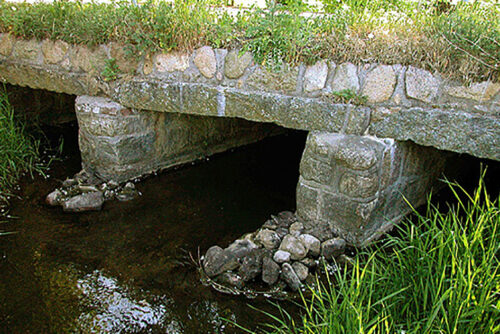
The Runic stone was discovered at the beginning of the 19th century in a dry-stone wall near the estuary of Egå, a small river north of the city of Aarhus in Eastern Jutland. Allegedly, local people said that the stone had originally stood near a bridge across the Egå. Judging by similar monuments, the runestone may have formed part of a donation to the local community, consisting of at least the monumental erection of both the bridge and the stone.
The transliteration of the Runic inscription reads:
Thus, in the official translation in the database, the Old Runic word norrøna is interpreted to mean that Ketil was a Norwegian, that is, a person from Norway. However, Ketil is not described as a Norwegian; he is merely identified by the epithet norrønn (Norse). The inscription therefore does not identify him by his place of origin, which would more likely have been expressed by a form such as Noregi, as in nuruiak (Jelling Stone 2) or nuriki (Ketil Stone), both of which are understood to refer to Norway. Rather, Ketil is identified as a norrønn person. Most likely, nuruna refers to someone who spoke Old Norse rather than dansk tunga, corresponding to the explanation of norrœna, f. (3), as the Norse language. The flipped stone shown as featured photo marks the importance of the “Nuruna”-part of the inscription – as seen in the middle part. Maybe Ketil was just called his nickname?
Apart from that, we can be certain that Ketil must have been an important man. Remember that the stone, and probably also the bridge, were erected to honour his man, the steward responsible for Ketil’s estate. The word landhirðiR is also known from the stone Ravnkilde 1. Here it is plausibly indicating an estate steward. Manni may, however, have fulfilled another role, namely that of priest. The title landhirðiR is not as widely used as bruti, bryde, which apart from three Runic stones is also known from early written sources in the 11th and 12th centuries. Perhaps it is significant that the stone was carefully decorated with an early Christian cross? In addition, an early bronze cross was discovered in a grave in the burial ground excavated at Egå. The stone must have been raised around the time when Christianity was becoming more prevalent in the landscape.
Ketil means “cauldron” or “kettle”, and it has been suggested that the name referred either to the vessel containing the sacred mead or beer, indicating a man who provided feasts. Alternatively, it has been interpreted as referring to someone wearing a kettle-shaped helmet, making it a nickname denoting a warrior. Perhaps the infamous Ketil Flatnose, who for a short time ruled the Isles, derived his name from wearing a helmet with a prominent nose guard, such as that seen on the Coppergate Helmet.
Ketil was a very common name throughout the Viking diaspora. The Icelandic Landnámabók, for instance, lists approximately forty-three different individuals named Ketil, either as a simple or compound name, indicating that it was widespread throughout the North Atlantic settlements. One Ketil, as mentioned above, became ruler of the Northern Isles (Ketil Flatnose), while another settled in Greenland, giving his name to Ketilsfjǫrðr.
In Denmark, at least fifteen place names derive from Ketil, including Ketilstorp, now known as Kelstrup. In England, about eighty people named Ketil were recorded as landowners in the Domesday Book. Approximately two-thirds of these estates were located along the eastern coast between Norwich and York, and about 85 per cent are known to pre-date the Norman Conquest. The name was also not uncommon in Normandy, where at least ten place names incorporate Ketil, for example Quettehou on the Cotentin Peninsula. In short, the name was ubiquitous.
Thus, Ketil of Egå may have come from Norway, Iceland, or even Greenland, but he might equally well have originated in the British Isles or Normandy. Accordingly, we refer to him here as Ketil the Northman. The fact remains, however, that he spoke nuruna or norrœna.
Ketil the Man from Lisbjerg
We have absolutely no way of identifying the lord of the manor at Lisbjerg as identical to Ketil the Northman.
It is intriguing, though, that Lisbjerg has been archaeologically documented as
with a strategic position near the sheltered bay of Århus
and likely with close connections to the Jelling dynasty
but also with clear connections to the North Atlantic parts of the Viking diaspora
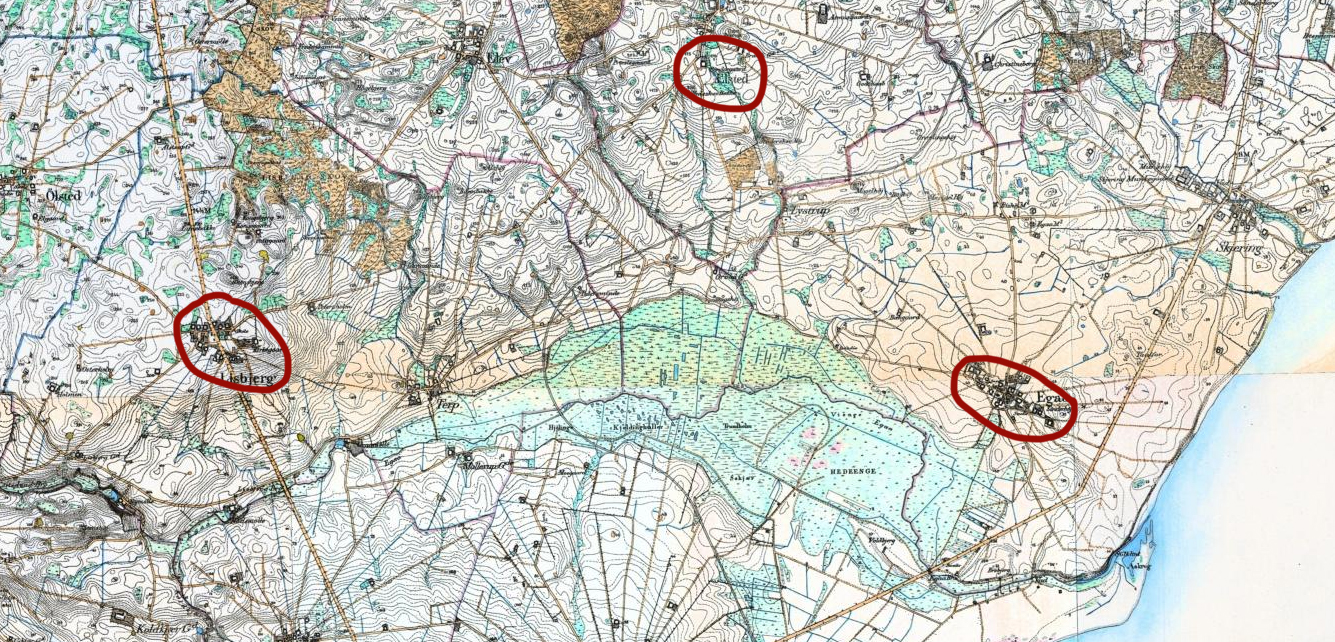
Map of the physical layout of the landscape around Lisbjerg and the river Egå ca. 1862 – 99. At this point the estuary of the former Fjord had been transformer into a silted marshy embankment of the river Egå.
(3) A Concise Dictionary of Old Icelandic. By Geir T. Zoëga. Oxford University Press 1910: and ONP: Dictionary of Old Norse Prose, University of Copenhagen: norrǿna
A new excavation at Søften, near Lisbjerg, has revealed an extensive production environment that may have supplied Viking Age Aarhus with textiles and other craft products.
The Viking Age was a vibrant and complex period of movement and change, not easily grasped inside a set of fixed notions and ideas. A new book presents 32 papers presented at the Nineteenth Viking Congress in 2022
Viking Connections is an edited collection representing the most recent scholarship in the interdisciplinary study of the Viking Age. The 32 papers arise from the Nineteenth Viking Congress which took place in Wales and North-West England in July 2022. They focus on new research from across the Viking World encompassing Archaeology, History, Literature, Language, Place-names, Numismatics, and the History of Art. Themes include Irish Sea connections as well wider connections across the Viking World. There is also a Congress diary.
The title Viking Connections expresses the importance of international networks and long-distance patterns of contact, which underlie both the Viking Age itself and our contemporary community of interdisciplinary scholarship. Contributors include senior academics, early career researchers, and museum and heritage professionals.
The picture that emerges from this volume is of the Viking Age as a vibrant and complex period of movement and change. Highlights include James Graham-Campbell’s survey of the metallic wealth of the Isle of Man, Mark Redknap’s comprehensive account of Viking Age finds in Wales, Orri Vésteinsson’s investigation of the effects that the introduction of large amounts of silver had on Viking Age society, Elizabeth Pierce’s study that tracks the tenth- to twelfth-century Scandinavian presence in eastern Scotland whose evidence suggests substantial trading activity, Søren Sindbæk’s demonstration of how radiocarbon calibration curves, when applied to the fine-meshed stratigraphy of Ribe, suggest a new chronological framework for the beginning of the Viking Age, and Christian Cooijmans’ exploration of the idea of viking camps as not just military barracks, but sites where all aspects of everyday life went on, and which formed the basis of the whole viking phenomenon.
TABLE OF CONTENTS
Paton’s foreword, Introduction and Congress Diary, Council, attendance and contributor lists, and Obituaries
Máire Ní Mhaonaigh Kin, Allies, Frenemies: the Fragmentary Annals of Ireland and cross-cultural exchange
Ben Guy Poetry and Taxes: Welsh responses to Viking attacks in the late tenth century
John Hines Exploitation of the unfree: the impact of the Viking Age on Welsh society and economy
Mark Redknap Vikings, Places, Silver and Contexts: a Welsh perspective
Ryan Foster† Scandinavians in Cumberland: elite takeover, mass migration, or something else?
Steve Dickinson The Viking Age shieling: craft, cues and contexts
Caroline Paterson The Contribution of Recent Excavations of Furnished Burials to our Understanding of the Scandinavian Settlement of Cumbria
Danica Ramsey-Brimberg Grave Circumstances: revisiting the influence of location on Viking Age burials in the Irish Sea area
Erin McGuire Migrant Identities, Mortuary Citations, and New Ancestors in Western Scandinavian Scotland
Dirk H. Steinforth Pagan Images for a Christian Message: tracing bi-cultural Viking-Age iconography in the Irish Sea region
Maeve Sikora A Hoard of Vessels from Derreen, Co. Clare: its Irish and Scandinavian context
Raghnall Ó Floinn† Late and Early Post Viking-Age Insular Ringed Pins (c. 900 – c. 1125): a reassessment
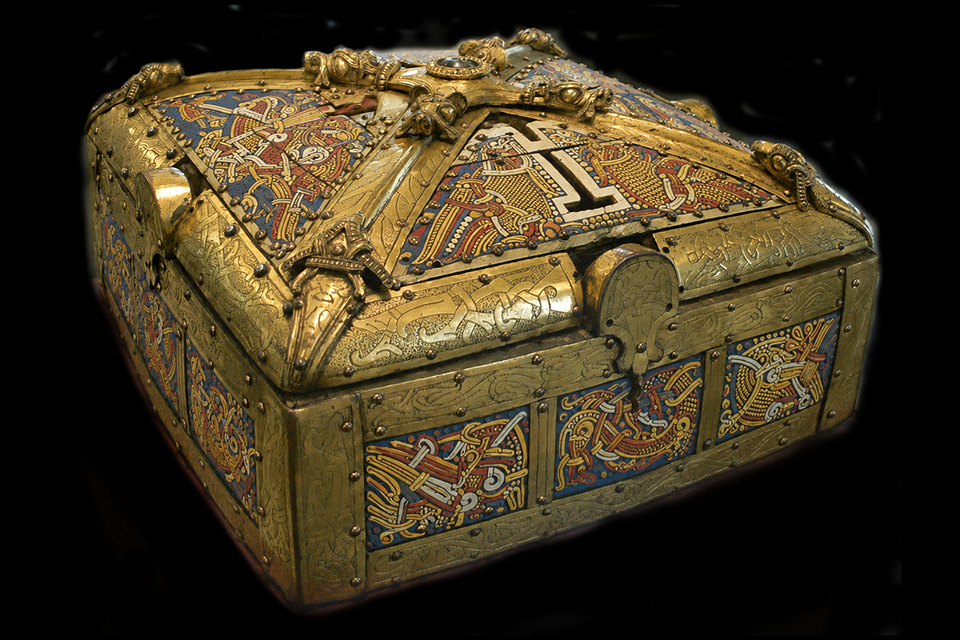
Griffin Murray The Shrine of St Patrick’s Bell and the Origins of the Hiberno-Urnes Style
Russell Ó Ríagáin The Viking Age in the Overkingdom of Ulaid
Caitlin Ellis Um Írlandshaf: presentations of the Irish Sea in Old Norse-Icelandic
Jane Kershaw and Stephen Merkel Viking Wealth in the Irish Sea Zone: new evidence from lead isotope analyses of Viking-Age rings and ingots
James Graham-Campbell Wealth in the Isle of Man in the Early 10th Century
Kristin Bornholdt Collins The 2021 Northern Mixed hoard (c. 1030/35), Isle of Man
Johanne Porter A Saint from the East and a Hoard in the North: a reassessment of the St Edmund coins from the Cuerdale hoard
Wendy Scott Copies and Crossing the Water: the implications of the unusual elements in the Lenborough Hoard for coin circulation in Anglo-Danish England.
Fedir Androschchuk Viking-Age Silver Hoards in Norrland: find places, content and origin
Jens Christian Moesgaard Who Controlled the Minting in Lund in the 11th Century?
Orri Vésteinsson Silver and Social Change in the Viking Age
Søren M. Sindbæk Ribe and the Beginning of the Viking Age
Thorsten Lemm All Roads Lead to Hedeby: communication routes, local markets and mercantile interaction in the hinterland of a trading town
Lene B. Frandsen Nybro: a road connection in south-west Jutland from the early Viking Age
Christian Cooijmans A Place of Contact and Contradiction: the socially constructed space(s) of viking encampment
Lesley Abrams Defining the Danelaw
Elizabeth Pierce Identifying a Scandinavian Presence in Eastern Scotland in the Viking Age
Mari Arentz Østmo and Marianne Moen Connecting Death: interpersonal and other affiliations in burial monuments with multiple individuals from Norway
Cassidy Croci Building Bridges: visualizing the Role of Women in Sturlubók
Judith Jesch Afterword
ABOUT THE EDITORS:
Clare Downham is Professor of Medieval History at the University of Liverpool. Her publications include Medieval Ireland (Cambridge University Press 2017) and Medieval Kings of Britain and Ireland: The Dynasty of Ivarr to A.D. 1014 (Liverpool University Press 2007).
Fiona Edmonds is Professor in Regional History, Lancaster University. Her publications include Gaelic Influence in the Northumbrian Kingdom: the Golden Age and the Viking Age (Boydell & Brewer 2019).
Nancy Edwards is Professor Emerita in Medieval Archaeology, Prifysgol Bangor, Bangor University. Her publications include Life in Early Medieval Wales (Oxford University Press 2023).
David Griffiths is Professor of Archaeology, University of Oxford. His publications include Vikings of the Irish Sea (History Press 2010, new edition 2025).
Cædmon was a cowherd, who turned poet and saintly monk in 7th century Northumbria. Although only one hymn in Old English is preserved, it is venerated for its beauty. Find the literature here
We know of Cædmon from Bede's Ecclesiastical History of England from c. 731, written at the monastery of Wearmouth-Jarrow in Northumbria. Arguably, Cædmon composed the first poem in Old English.
The village of Vindelev in Eastern Jutland was presumably a gift to a Vendish military commander, who operated east of Vejle in the middle of the 400s. An impressive gold hoard opens up the world, in which he lived.
Late Medieval Female Subject Consciousness: Italian and English Mystics brings together disparate feminist theoretical approaches to explore the formation of medieval female subject consciousness in writings by female mystics including Angela of Foligno, Catherine of Siena, and Margery Kempe, as well as secular writings of Christine de Pizan, and powerful female characters of Giovanni Boccaccio and Geoffrey Chaucer. The rise of what Amsel calls “medieval female subject consciousness” shows that increased self-awareness and sense of self relates to how the authorship of texts reconstructs traditional female roles, particularly in Italian and English. These writing women challenged prevailing norms as they forged literal and figurative spaces to self-actualize through writing, even if the act of writing was performed by male amanuenses. This book explores how Boccaccio and Chaucer serve as witnesses by creating female characters who reflect changes in women’s writing in late medieval society in Italy and England.
 New book brings together the proceedings of two study days held at the Institut National d’Histoire de l’Art (INHA), Paris, in January 2020, alongside the Musée de Cluny exhibition “L’art en broderie au Moyen Âge”. The conference sought to foster dialogue among specialists from Germany, England, Spain, France, Switzerland, and the United States in order to assess current research perspectives on medieval embroidery—an art form that remains comparatively little studied in France despite its prominent place within the rich visual culture of the later Middle Ages.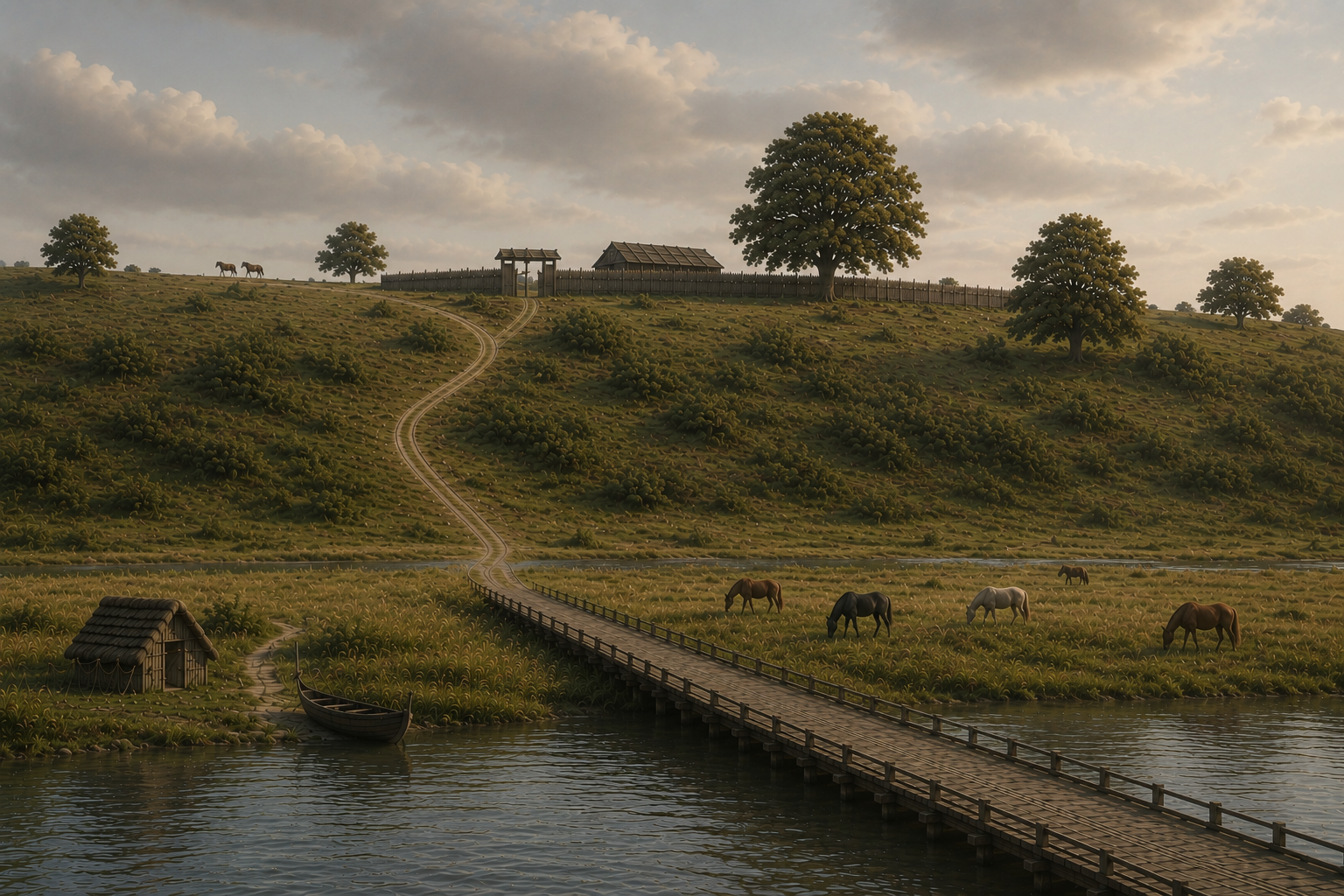
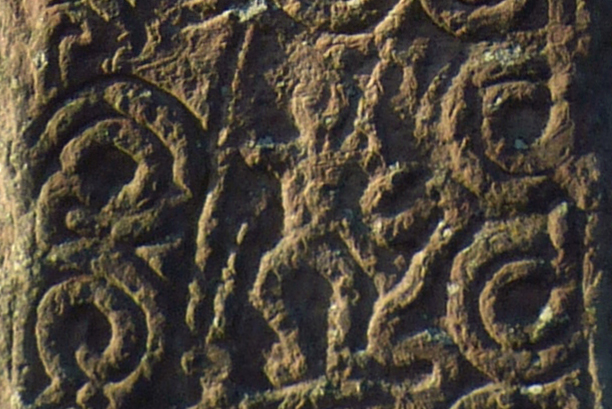
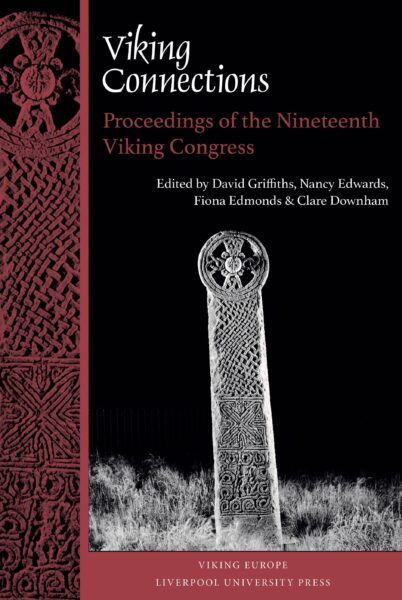 Viking Connections is an edited collection representing the most recent scholarship in the interdisciplinary study of the Viking Age. The 32 papers arise from the Nineteenth Viking Congress which took place in Wales and North-West England in July 2022. They focus on new research from across the Viking World encompassing Archaeology, History, Literature, Language, Place-names, Numismatics, and the History of Art. Themes include Irish Sea connections as well wider connections across the Viking World. There is also a Congress diary.