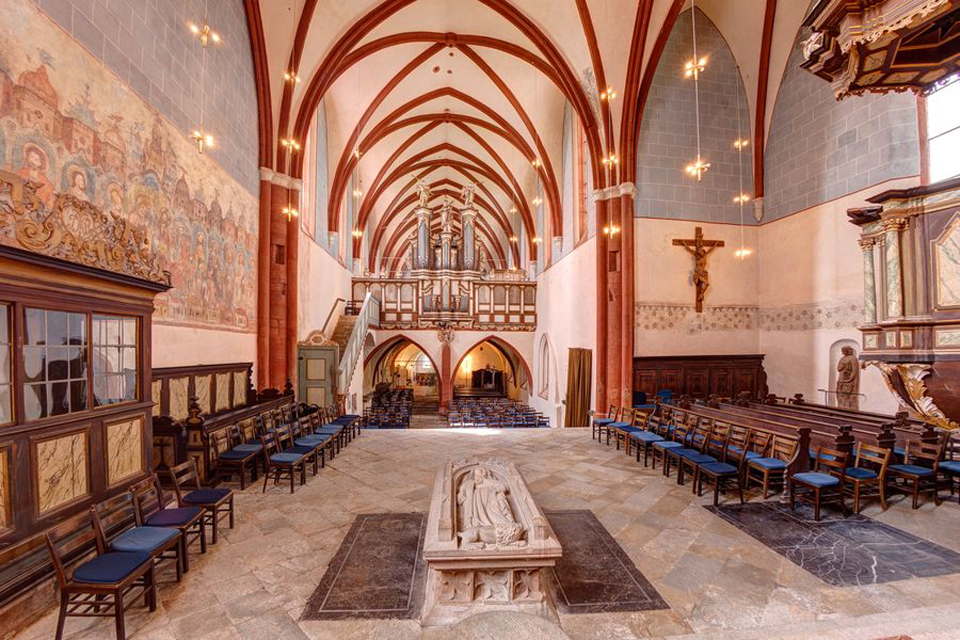
The Convent in Altenberg no longer possess the many treasures, which were amassed by the nuns in the High Middle Ages. But the place is in itself evocative
The Convent in Altenberg and der Lehn was founded in 1170 around a chapel dedicated to the Archangel Gabriel. The first twelve nuns came from the Abbey of Rommersdorf and came from the noble families at Nassau and Solms. In 1192 the Holy Roman emperor granted the abbey direct imperial immediacy – protection.
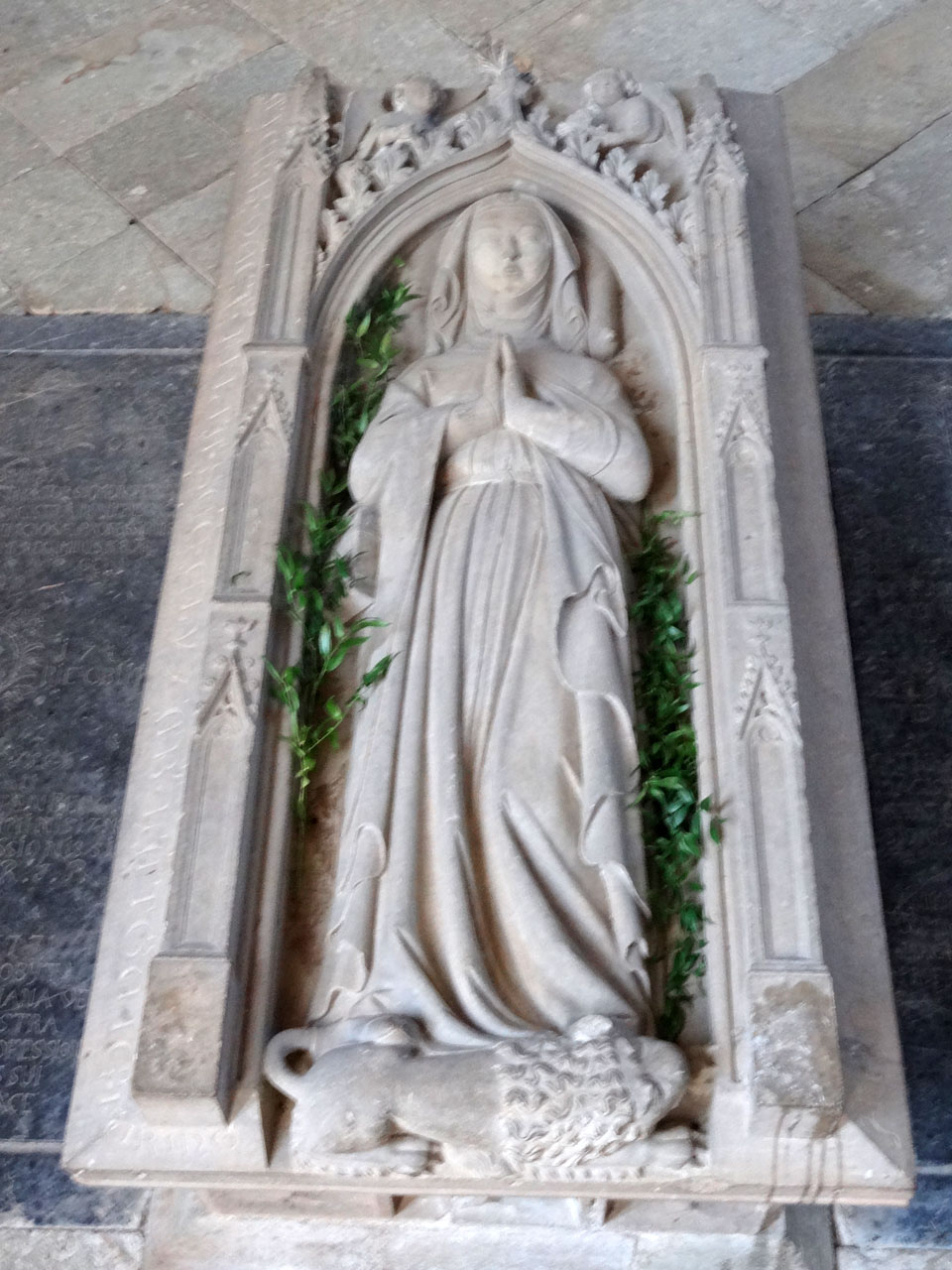
Later, in 1248 Gertrud, daughter of St. Elizabeth of Hungary, became magistra. In her lifetime the convent experienced a period of growth. The church was rebuilt 1260 – 70 and important properties were added to the domain. After her death, she was regarded as “blessed”, and relics may still be seen in the church at Altenberg, where her tomb is also to be found (quite lovely and worth a small detour). During her lifetime, the convent became one of the important centres for the devotion and commemoration of the Magistra’s mother.
During the reformation the Abbey kept the Catholic denomination. This was possible because of its traditional status as belonging directly to the imperial immediacy. Although it was completely burnt down by Swedish soldiers in the 30th year war, it continued as such until 1802. At this point the convent was dissolved and taken over by the Princes of Solms, for whom it had been burial ground since the Middle Ages.
After the Dissolution
After the dissolution the treasures kept in the Abbey since the 12th century became highly prized objects of desire for a multitude of collectors from St. Petersburg to Cleveland in Ohio. In 2016 a number of these priceless artefacts were lent to the Städel Museum in Frankfurt, in order to present an overview of the visual and spiritual qualities of the liturgical ensemble as it once looked like. A catalogue presents this unique curatorial endeavour to those not able to see the exhibition in itself.
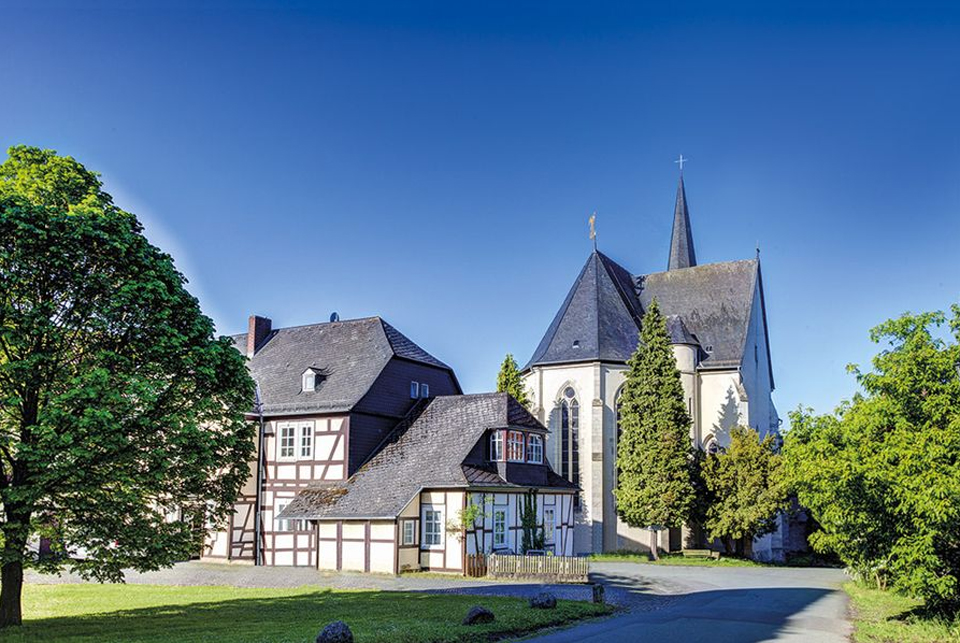
After 1802, the buildings were used as a summer residence for the princely family; later as an orphanage. After a fire in 1952 the site was renovated and taken over by a group of refugees from Königsberg, a group of women engaged in clerical welfare and social work (in German: Diakonie). They lived here until 2010, when the elderly ladies – now mostly in need of their own elderly care – moved out. Since then, the buildings have been used by a number of different institutions. Today, it functions as a conference setting for the Königsberger Diakonie. The Convent is a favoured location for weddings and other events.
Although heavily restored, the church from the 13th century, the cloister and the former convent are to a large extent preserved. Some rooms even feature frescoes from the 14th century. To this should be added the still standing 17th century outbuildings. In the church – which was used for burials of members of the Solms and the Nassaus – a number of memorials are worth taking a look at. One is the effigy of Count Henry IV of Solms-Burgsolms from 1212; another, the tomb of Gertrud, which was erected in the middle of the nave.
Dispersed Treasures
The treasures of the former convent consists of an important early winged altar-piece now in the Schädel Museum in Frankfurt. This is complemented with the statue, which used to stand in the centre of the cupboard hosting reliquaries. The statue is on permanent loan from Munich to Frankfurt.
Two of these reliquaries are still in existence: the pitcher, which used to belong to St. Elizabeth and a reliquary containing an arm of the saint.
To this should be added a number of very important textiles:
- The “Elisabethbehang”, c. 1250 – 1300. Currently in the Eremitage in St. Petersborg. This was worked with coloured silk and colured and bleached linen thread on bleached linen. It is presumed the cloth was used as a wall-hanging hung behind the altar before the late medieval retable was acquired. No. T-3728
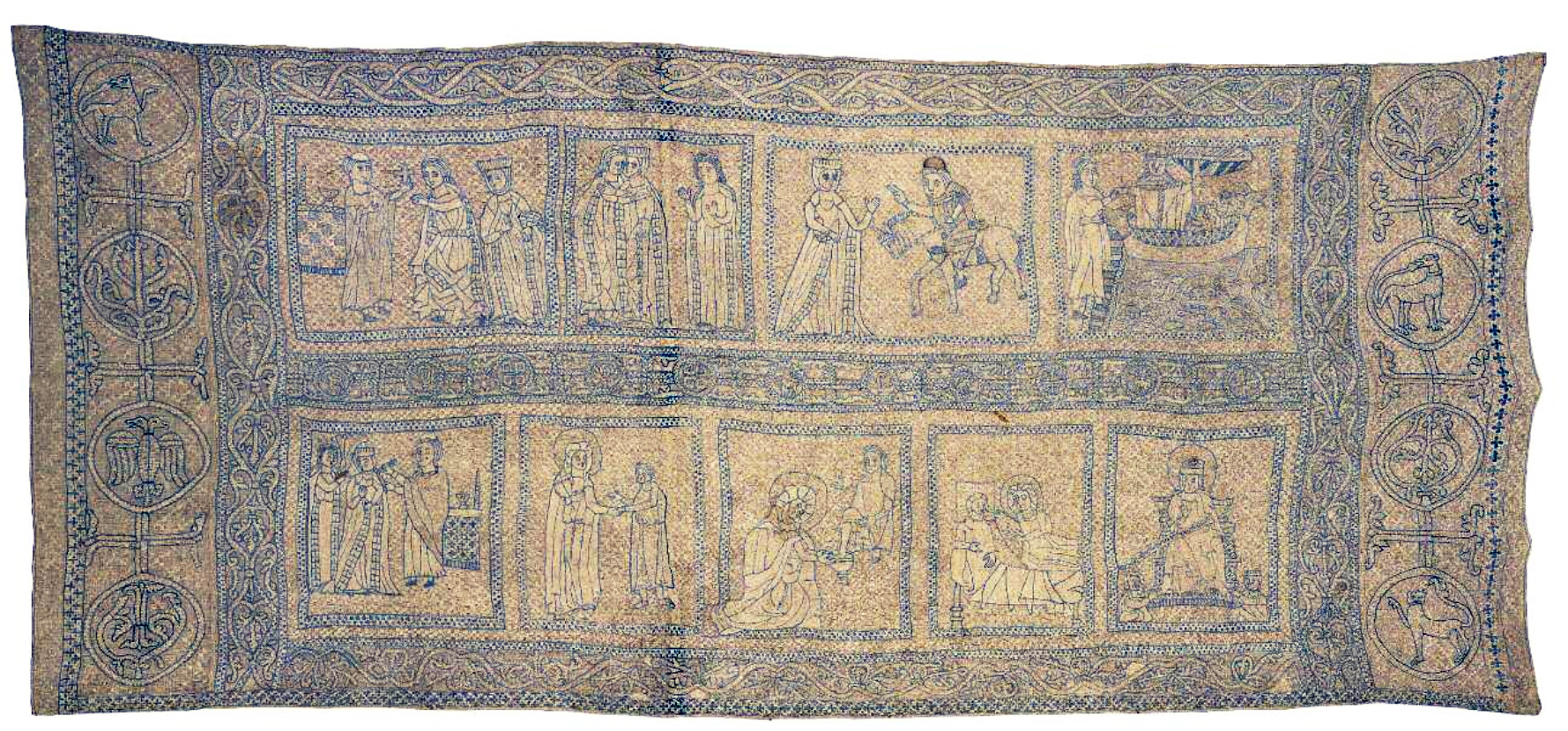
- The “Anniversartuch” ca. 1270. Currently preserved at Frankfurt, Museum für Angewandte Kunst. No. 5869. Linen embroidery on linen cloth with blue and unbleached linen thread. This was probably used as the cover for a catafalque in connection with memorials.
- Cover for the Altar ca. 1330. Now in the Metropolitan Museum of Art. No. 29.87.
- Cover for the Altar ca. 1330. Currently kept at Eisenach, Wartburg Stiftung.
- Cover for the Altar c. 1350 – 1400. Cleveland Museum of Art, no 48352
- Fragments of a cover for the Altar, Braunfells Schlossmuseum, c. 130 – 1400.
A full catalogue of the preserved art treasures has not been compiled. However, a comprehensive presentation of the preserved textiles can be found in the very comprehensive study published by Stephanie Seeberg
SOURCE:
Kulturdenkmaler in Hessen: Altenberg
Kloster Altenberg: Umzug zum Lebensabend – Frankfurter Allgemeine Zeitung
READ MORE:
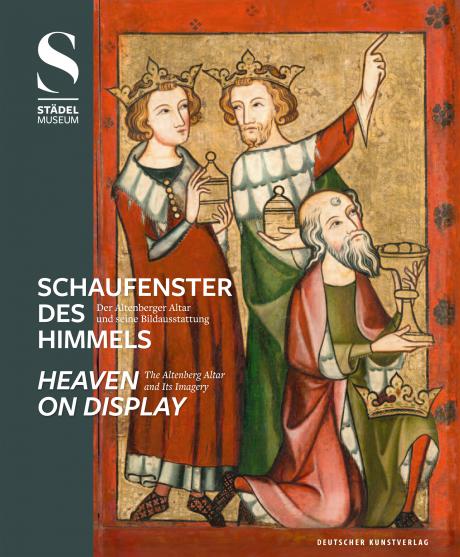 Schaufenster des Himmels – Heaven on Display
Ed by Jochen Sander with contributions of von Max Hollein, Jochen Sander, Julia Schultz, Stefanie Seeberg, Christoph Krekel, Christiane Weber and Fabian Wolf
Deutscher Kunstverlag 2016
Aus der Nähe betrachtet. Bilder am Hochaltar und ihre Funktionen im Mittelalter
Ed by Jochen Sander, Stefanie Seeberg and Fabian Wolf, with contributions by Angela Kappeler, Stephan Kemperdick, Peter Knüvener, Christian N. Opitz, Victor M. Schmidt, Johannes Tripps, Gerhard Weilandt, Matthias Weniger, Jörg Widmaier and Susanne Wittekind
Deutscher Kunstverlag 2016
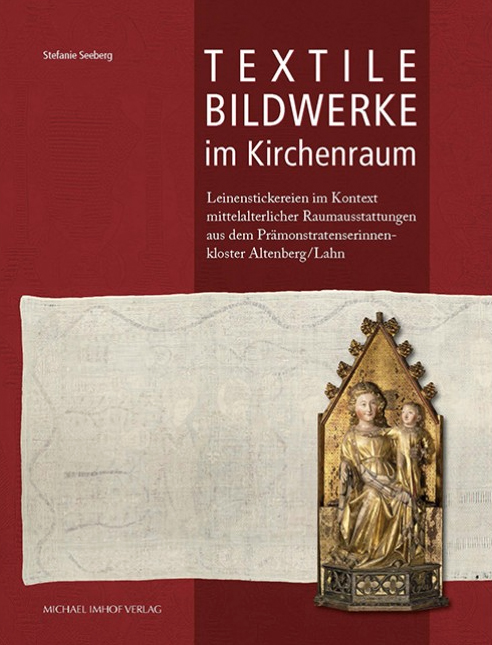 Textile Bildwerke im Kirchenraum. Textile Bildwerke im Kirchenraum. Leinenstickereien im Kontext mittelalterlicher Raumausttattungen aus dem Prämonstratenserinnen Kloster Oltenberg/Lahn.
By Stefanie Seeberg.
Michael Imhoff Verlag 2014
Women as Makers of Church Decoration: Illustrated Textiles at the Monasteries of Altenberg/Lahn, Ruppertsberg, and Heiningen (13th-14th. C.)
By Stephanie Seeberg
In: Reassessing the Roles of Women as ‘Makers’ of Medieval Art and Architecture. Ed. by Therese Martin, Brill 2012 Vol 1, pp. 355 – 398
FEATURED PHOTO:
Kloster Altenberg © Dieter Stiegmann/ www.photo-punktgenau.de