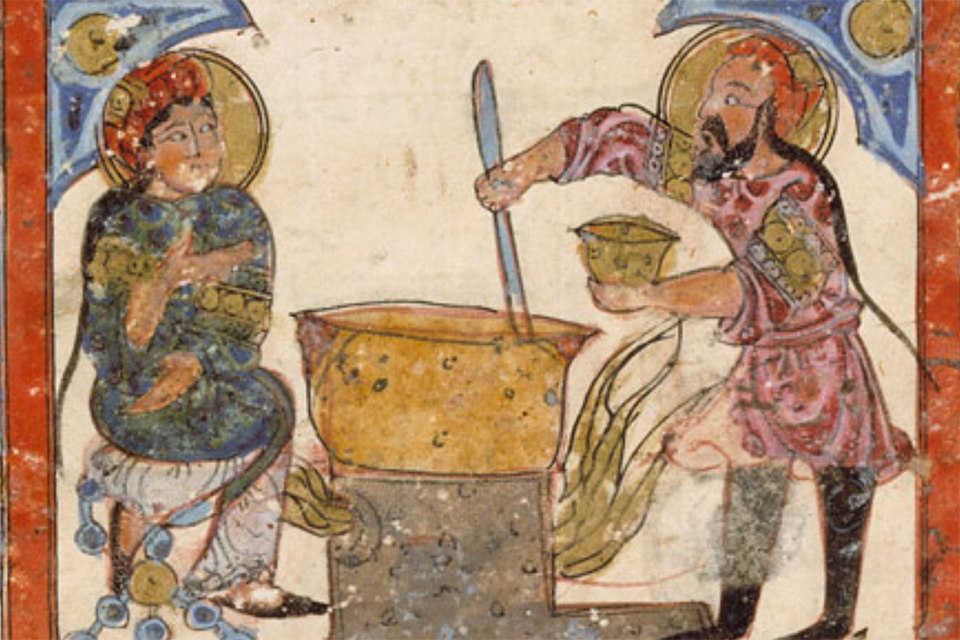
Exotic spices, fruits, vegetables and syrups were desired and coveted in the Late Middle Ages, and avidly imported. Cookbooks from the Levant and Al Andalus teaches us how to cook and recreate the feasts of 1001 nights
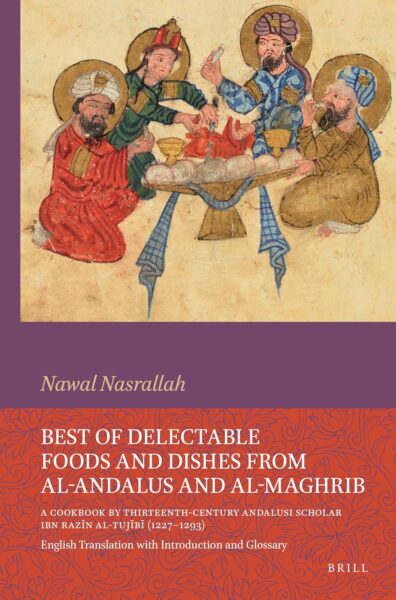 Best of Delectable Foods and Dishes from al-Andalus and al-Maghrib: A Cookbook by Thirteenth-Century Andalusi by Scholar Ibn Razīn al-Tujībī (1227–1293)
Ed. and Trsl: Nawal Nasrallah
Brill 2024
The thirteenth-century cookbook Fiḍālat al-khiwān fī ṭayyibāt al-ṭaʿām wa-l-alwān by the Andalusi scholar Ibn Razīn al-Tujībī showcases the sophisticated cuisine that developed in the Iberian Peninsula under Muslim rule through its 475 exquisite recipes. Now available for the first time in English, this edition contains al-Tujībī’s complete text, based on a newly discovered manuscript now available for the first time in any language. To introduce readers to the wonders of cooking and foodways in al-Andalus and the Maghreb, the translated text is supplemented with an extensive introduction and glossary, illustrated throughout with 218 color miniatures and artifacts, with 24 modernized recipes to give readers a taste of the cuisine. This is a key resource on medieval material culture and the Arab culinary heritage in Iberia, and a delight to all lovers of food and cookbooks.
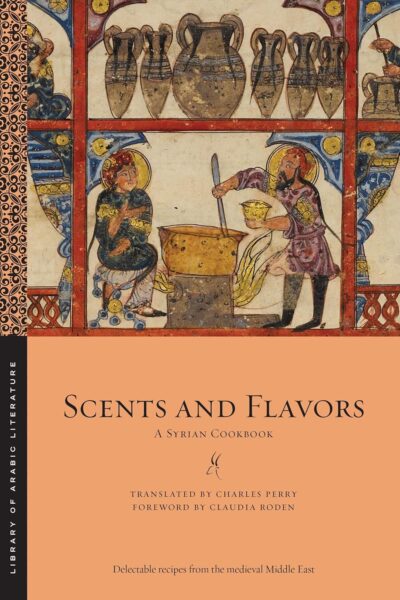
Scents and Flavors: A Syrian Cookbook
by Charles Perry
New York University Press 2020
Collecting 635 meticulous recipes, Scents and Flavors invites us to savor an inventive cuisine that elevates simple ingredients by combining the sundry aromas of herbs, spices, fruits, and flower essences. This popular thirteenth-century Syrian cookbook is an ode to what its anonymous author calls the “greater part of the pleasure of this life,” namely the consumption of food and drink, as well as the fragrances that garnish the meals and the diners who enjoy them. Organized like a meal, it opens with appetizers and juices and proceeds through main courses, side dishes, and desserts, including such confections as candies based on the higher densities of sugar syrup―an innovation unique to the medieval Arab world. Apricot beverages, stuffed eggplant, pistachio chicken, coriander stew, melon crepes, and almond pudding are seasoned with nutmeg, rose, cloves, saffron, and the occasional rare ingredient like ambergris to delight and surprise the banqueter. Bookended by chapters on preparatory perfumes, incenses, medicinal oils, antiperspirant powders, and after-meal hand soaps, this comprehensive culinary journey is a feast for all the senses. With the exception of four extant Babylonian and Roman specimens, cookbooks did not appear on the world literary scene until Arabic speakers began compiling their recipe collections in the tenth century, peaking in popularity in the thirteenth century. Scents and Flavors quickly became a bestseller during this golden age of cookbooks, and remains today a delectable read for epicures and cultural historians alike. Available in English for the first time, this is the last known medieval Arabic cookery book. A bilingual reader that offers a unique and fascinating insight into the rich Arab culinary tradition in the Middle Ages.
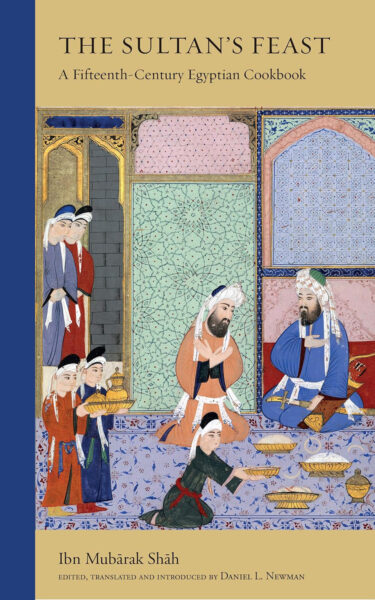 The Sultan’s Feast: A Fifteenth-Century Egyptian Cookbook (Bilingual Edition)
by Ibn Mubarak Shah. Edited, translated and introduced by Daniel L. Newman
Saqui Books 2020
Winner of Gourmand World Cookbook Awards 2021The Arabic culinary tradition burst onto the scene in the middle of the tenth century, when al-Warraq compiled a culinary treatise titled al-Kitab al-Tabikh, The Book of Dishes, containing over 600 recipes. However, it would take another three centuries for cookery books to be produced in the European continent. For centuries to come, gastronomic writing would remain the sole preserve of the Arab-Muslim world, with cooking manuals and recipe books being produced from Baghdad, Aleppo and Egypt in the East, to Muslim Spain, Morocco and Tunisia in the West.
A total of nine complete cookery books have survived from this time, containing nearly three thousand recipes. First published in the fifteenth century, The Sultan’s Feast by the Egyptian Ibn Mubarak Shah features more than 330 recipes, from bread-making and savoury stews, to sweets, pickling and aromatics, as well as tips on a range of topics.
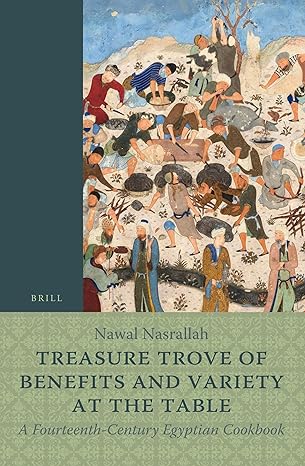 Treasure Trove of Benefits and Variety at the Table: A Fourteenth-Century Egyptian Cookbook
Ed. and Trls. Nawal Nasrallah
Brill 2017
The Kanz al-fawā id fī tanwī al-mawā , is a fourteenth-century cookbook, unique for its variety and comprehensive coverage of contemporary Egyptian cuisine. It includes, in addition to instructions for the cook, a treasure trove of 830 recipes of dishes, digestives, refreshing beverages, and more. It is the only surviving cookbook from a period when Cairo was a flourishing metropolis and a cultural haven for people of diverse ethnicities and nationalities. Now available for the first time in English, it has been meticulously translated and supplemented with a comprehensive introduction, glossary, and 117 color illustrations to initiate readers into the world of the Kanz al-fawā. The twenty-two modern adaptations of >Kanz recipes will inspire further experimentation. It is a valuable resource for scholars of medieval material culture, and for all lovers of good food and cookbooks.
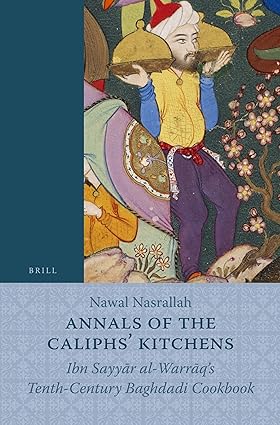 Annals of the Caliphs’ Kitchens: Ibn Sayyār al-Warrāq’s Tenth-Century Baghdadi Cookbook
by Nawal Nasrallah
Series: Islamic History and Civilization, 70
Brill 2010
Written nearly a thousand years ago, al-Warraq’s cookbook is the most comprehensive work of its kind. This traditional cookbook with more than 600 recipes from the luxurious cuisine of medieval Islam is also a rare guide to the contemporary culinary culture. Its numerous anecdotes and poems unfold the role of food in the politics of Islam’s golden era.
Introducing this elegant translation is a thorough survey of the period and its food culture. An extensive Glossary, in Arabic and English, of medieval ingredients and dishes, and an Appendix of historical figures provide the necessary reference tools for this work. Making this key resource available in English for the first time to scholars and the general reader fills a gap in the cultural history of medieval Islam. Over 30 colour illustrations.
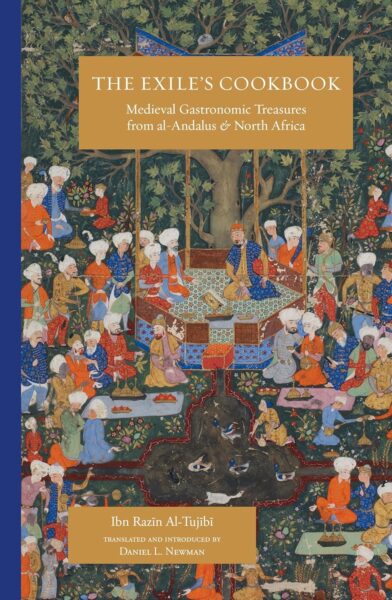 The Exile’s Cookbook: Medieval Gastronomic Treasures from al-Andalus and North Africa
by Ibn Razin Al-Tujibi and Trsl. by Daniel L. Newman (Translator)
Saqui 2024
Of the many books written by thirteenth-century Muslim-Andalusian scholar Ibn Razin al-Tujibi, only one survives – a cookbook … . Compiled from his new home in Tunisia, having fled Murcia following the Christian reconquest of Spain, it features recipes from Al-Tujibi’s Andalusi heritage, offering dishes embracing a diverse range of influences. The Exile’s Cookbook brings together 480 recipes, including roasts and stews, breads, condiments, preserves, sweetmeats, and even hand-washing soaps. It offers a fascinating insight into the cuisine of Muslim Spain and North Africa in the period – its regional characteristics and historical antecedents, but also its links to culinary traditions in other parts of the Muslim world. This elegant translation by Daniel L. Newman is based on all the manuscripts of the text that are known to have survived. It is accompanied by an introduction and extensive notes contextualising the recipes, ingredients, kitchen, tableware and cooking practices. The Exile’s Cookbook brings together 480 recipes from the cuisine of Muslim Spain and North Africa. This unique medieval cookbook reveals the fascinating development of the Arab culinary tradition and its profound influence on European cooking.
FEATURED PHOTO
Preparation of medicine from honey or syrup from an Iraqi manuscript of Dioscorides’ De Materia Medica, 1224. © The Metropolitan Museum of Art
READ MORE:
READ ALSO:
Eat Like a Sultan. Website dedicated to bringing Medieval Arab cooking to life