Fluid and queer sex is featured in a new medieval exhibition at the Metropolitan Cloisters in New York during winter 2025-26
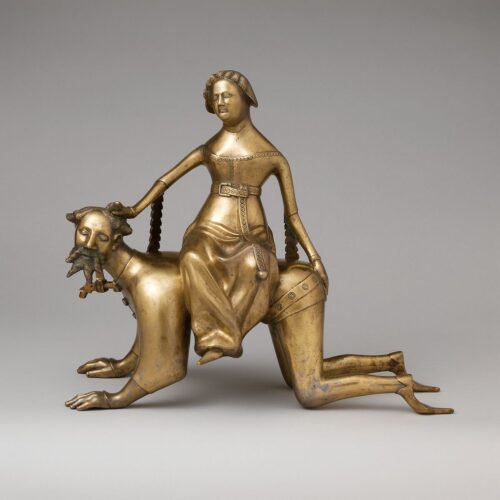
South Netherlandish. Image Courtesy of The Metropolitan, Robert Lehman Collection, 1975 Object No.
1975.1.1416
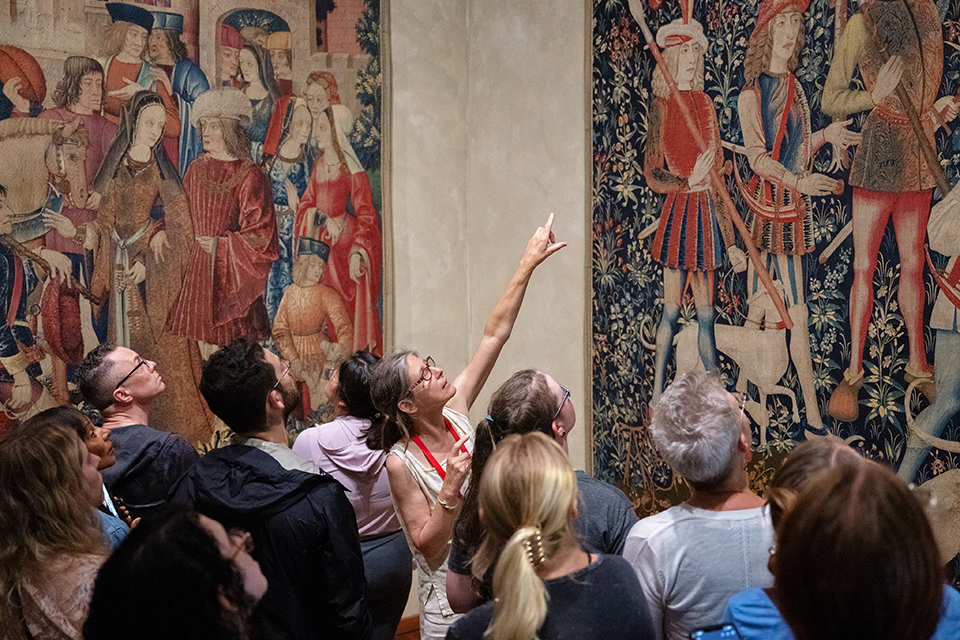
Set in the stunning atmosphere of The Met Cloisters, this exhibition explores the often-overlooked themes of desire, sexuality, and gender in the medieval past, a period of time when most artistic production served religious purposes.
Judging by the collections of erotica preserved in the museums, desire in the Middle Ages was as multifaceted as in ours. It could be courtly or carnal, sacred or subversive, and expressed as a kind of longing, suffering, or joy. Medieval artists could be both deeply serious and comical in their evocations of these feelings. Drawing on decades of scholarship, Spectrum of Desire opens up new ways of seeing the past through stirring works of art that inspire us to think more expansively about people who lived in the Middle Ages, their relationships, and the artworks they produced.
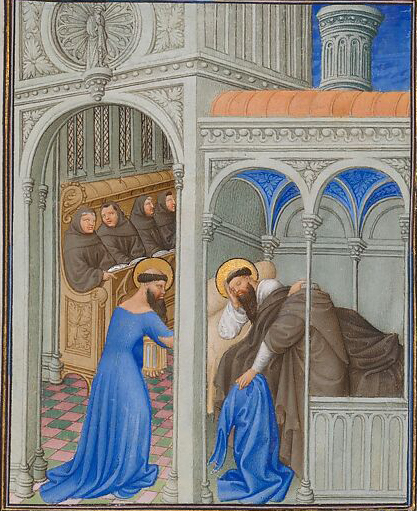
Featuring more than fifty works—from gold jewelry and ivory sculptures to stained glass, illuminated manuscripts, woven textiles, and purses—this exhibition showcases the richness of visual expression in western Europe from the 13th to the 15th century, drawing primarily from The Met collection, but also spectacular loans. One of the highlights is the Rotschild Canticles form Yale University’s Beineclke Library which is rarely on view. However, very many other spectacular objects and pieces of art may entice the guest to explore the queer medieval bodies in flux entering into both carnal, mystical and marital unions.
“This exploration of the visual language of desire in its many forms invites us to reflect on our own ideas of love, identity, and kinship today, writes the curators in their invitation to explore the carnal desires of people in the Middle Ages”, writes the curators.
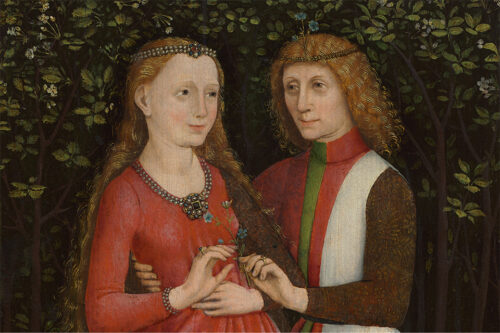
On one hand, the thirteenth through fifteenth centuries in western Europe saw increasingly restrictive definitions of sex and marriage, particularly under Church law. On the other hand, art from this period, however, tells a more complex story. Even as some works enforced these tighter regulations, others provided generative settings for exploring and broadening ideas around gender expression, erotic union, and loving kinship.
Often inspired by devotional and literary texts, medieval artists focused on the theme of desire, both physical and spiritual. They recorded a world in which aristocrats modeled the elaborate choreography of courtship, saints declared their wish to be Christ’s bride, and passionate friendships abounded in the homosocial spheres of the court and the monastery.
The feelings expressed in medieval art can be surprising. Its imagery often refuses the rigid distinctions we might make between male and female, friend and lover, profane and sacred. For many today, these refusals will resonate. They encourage the viewer to work against the limits of contemporary categories and presumptions—an approach sometimes described as queering the past. This perspective can uncover new meanings but also make way for moments of ambiguity.
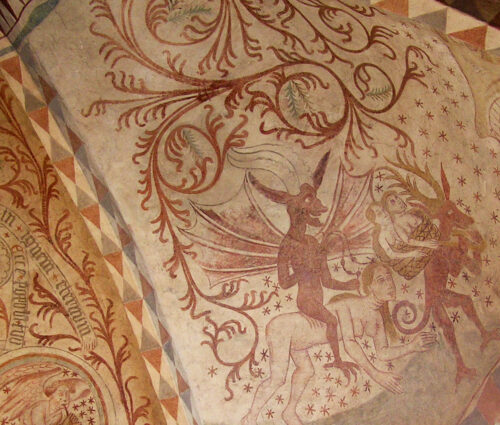
However, visitors should be aware of the very selective pieces of art featured in the exhibition. Although more mainstream relationships are presented in some of the late medieval art, the exhibition is skewed. This is not the real story of “Love, Sex, and Gender in the Middle Ages”. The reason is that many of the more risqué objects of art like those exhibited, were never for public consumption. We know from multiple royal and noble courts in Europe that such “hidden” collections existed, but were kept apart from public view as private sideshows of the official cabinets of curiosities.
As opposed to this, the public was morally guided by other means – sermons, penitential admonitions, and not least church paintings in the public space. Here sex was policed and controlled. According to this regime, sex on certain days and featuring missionary positions were acceptable, while use of contraception, doggy styles, oral sex, anal sex, use of animals or toys, masturbation and of course adultery were considered sins on par with sodomy.
One of the interesting pieces of evidence how this played out is witnessed to in the collection of more than 7000 preserved murals in the 1550 medieval churches in Denmark. Searches yield no real evidence of gay couples or gay sex, albeit devils having sex with for instance adulterous women does occur.
VISIT
17.10.2025 – 29.03.2026 The Met Cloisters in Gallery, New York. Free with Museum admission
CATALOGUE
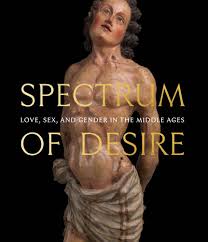 Spectrum of Desire: Love, Sex, and Gender in the Middle Ages
Ed. by Melanie Holcomb and Nancy Thebaut, with various authors
Yale University Press 2025
TABLE OF CONTENTS
Director’s Foreword, Acknowledgments, Lenders to the Exhibition and Contributors
A Queer Middle Ages. By Melanie Holcomb and Nancy Thebaut
Bodies in Flux. By Nancy Thebaut
Medieval Erotica. By Melanie Holcomb
Marital and Mystical Unions. By Melanie Holcomb and Nancy Thebaut
Touching Saint Sebastian. By Karl Whittington
Flirtation, Violence, and Domination on an Ivory Casket. By Emma Le Pouésard
Queer Connections with Christ’s Body. By Bryan C. Keene
Masculinities and Transgender Expression in The Belles Heures of Jean de France, duc de Berry. By Clovis Maillet
Love in Mortal Time. By Scott D. Miller
ABOUT THE EDITORS
Melanie Holcomb oversees the collection of western medieval art at The Met 5th Avenue, in addition to guiding the Department’s strategic vision across its two locations. Nancy Thebaut is Associate Professor in the Department of History of Art at St. Catherine’s College in the University of Oxford. Bryan C. Keene. Bryan C. Keene is Associate Professor, Department of Art and Art History and Department of Theatre Arts, Riverside City College, Riverside, California.