
Since 2012, archaeologists and scientists have been poking through 1300 bones, the remains of kings, queens and bishops laid to rest in the mortuary chests in Winchester Cathedral.
During the Civil War, Cromwell’s soldiers despoiled Winchester Cathedral and the royal and episcopal burials within it. The remains, believed to be of 23 individuals, including Emma of Normandy, were afterwards jumbled together in mortuary chests at Winchester Cathedral. Now, the bones are being reinterred in Winchester Cathedral’s mortuary chests.
For more than thirteen years, archaeologists and scholars have painstakingly examined the remains, attempting to sort and identify them using DNA. Along the way, aspects of the lifestyle and even the appearance of some of these famous individuals have been identified. During this period, not much of the results of the research has been leaked (to the frustration of the international community.) Ant yet, the scientific and scholarly reports are not expected to be published before early summer 2026. What is known is that the Mortuary Chests Project is one of the longest and most ambitious research initiatives undertaken at the Cathedral in modern times, involving the expertise of many specialist academics, conservators, staff, and volunteers.
Recently, however, the bones were returned to the original six mortuary chests in Winchester Cathedral after more than a decade of painstaking work. Two additional chests are being commissioned. The arrangement of individuals into chests has been based primarily on radiocarbon dating: individuals from similar periods will be interred together in the same chest. In total, 23 individuals have been identified.
The names given in Latin on the sides of the six existing chests are: Cynegils, Cynewulf, Ecgbert, Æthelwulf, Eadred, Edmund, Cnut, William Rufus, Bishop Wine, Bishop Alwine, and Queen Emma. However, it is likely that the remains of other early medieval individuals not listed were also contained within the chests.
The project’s findings on the likely individuals interred in the chests—expected later this year—will be highly significant for the fields of archaeology, history, and genetics.
Emma of Normandy (984–1054) and Cnut the Great (c. 990–1036)
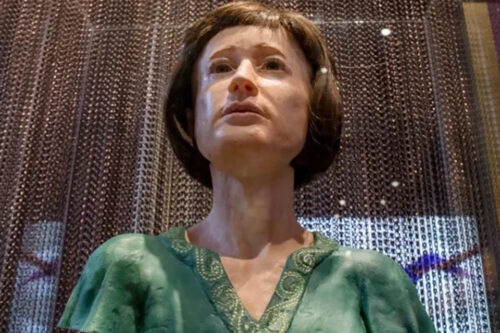
One of the identified individuals is Emma of Normandy, who has been tentatively “reconstructed” as part of the Cathedral exhibition Kings and Scribes.
Emma was daughter of the Duke of Normandy. First married to King Æthelred the Unready in 1002, and later to Cnut the Great in 1016, she was the mother of at least five children, two of whom later became kings of England: Harthacnut and Edward the Confessor. It is believed that she, Cnut, and their son Harthacnut were all buried in the Cathedral. In 2019, her remains were exhibited in the exhibition as was a reconstrucyion of her likeness.
Special interest attaches to the question of whether the remains of Cnut and Harthacnut have been identified through DNA analysis. One reason is that historians have speculated that the extinction of Cnut’s dynasty, following the premature deaths of his sons Harold Harefoot (with Ægilfu) and Harthacnut (with Emma), may have been caused by a genetic disease—Brugada syndrome. Together with Svein Forkbeard, they all died suddenly according to the sources. This theory was proposed in 2015 but has never been proven.
These sudden deaths created an opening first for Edward the Confessor and later for the Norman Conquest under William the Conqueror, another scion of the 10th century Norman dynasty, which may originally have been active in the wars waged around Haithabu in Schleswig, where the Jelling Dynasty may have been established. (The sources are murky).
Winchester Cathedral Curator Eleanor Swire says: “This project demonstrates the combined power of science, the study of human remains, and historical research to discover new information about the six mortuary chests and their occupants that would not have been available to us a generation ago.”
FEATURED PHOTO:
Mortuary caskets at Winchester being restored © Winchester Cathedral.
SOURCE:
Press release: Bones reinterred in Winchester Cathedral’s Mortuary chests after more than a decade of analysis and reorganisation.
READ MORE: