When Angus’s father died c. 1250, an Irish bard composed a praise poem petitioning the son to pay his father’s debt. The poem offers a vivid account of the cultural inventory of one of the Sea Kings.
 Aonghas Mór Mhac Dómhuill — Angus Mór of Islay, son of Domhnall — was a great-grandson of Somhairlidh (Somerled in English), founder of the Norse kingdom of the Hebrides. His father, Domhnall, died in 1247 at the Battle of Ballyshannon. After his death, his wealth appears to have been left undivided to his son, Angus Mór (“Angus the Great” or “Angus the Elder”). Angus’s own son, the younger Angus, later fought on Robert Bruce’s side at Bannockburn.
Upon the death of Angus Mór’s father, the poet addressed to him a petition in the form of a praise poem, outlining the thirteenth-century lifeworld of a King of the Isles.
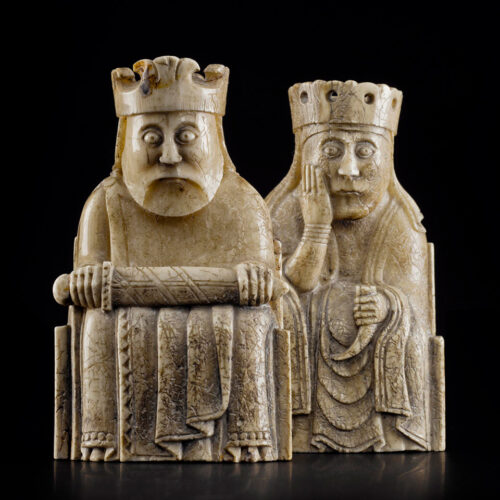
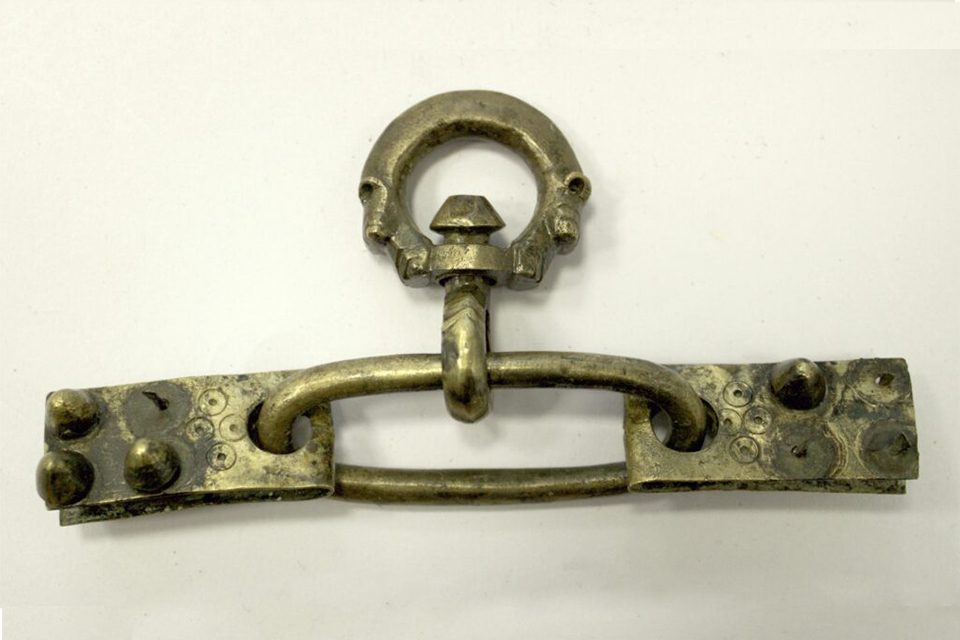
The poem details Angus’s inheritance: the Seat and, with it, the Lordship of the Isles. It lists his armour, jewellery, weapons, treasure, and other paraphernalia of wealth and power, such as the entertainment of his gaming pieces and his chained hounds (hunting). Added to this list
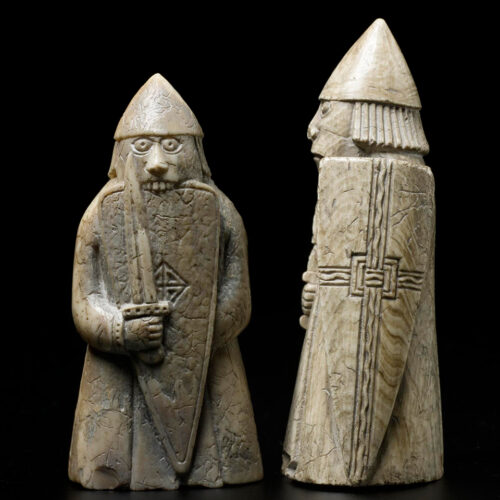
are his landed wealth, his (probably more or less unfree) peasants, his ships, horses, and his band of warriors and followers. Thus, the poet argues, Angus is wealthy enough to recompense him for the humiliation, which he suffered when Angus’s father deceived him with wine and false promises, forcing him to sail across the sea in an open boat—an experience that, the poet tells us, caused him great distress.
The poem renders a vivid illustration of life as it would have played out at Finlaggan, the royal seat on the Isle of Islay. But also of the experience of a landlubber crossing the Irish Sea in an open boat.
FEATURED PHOTO:
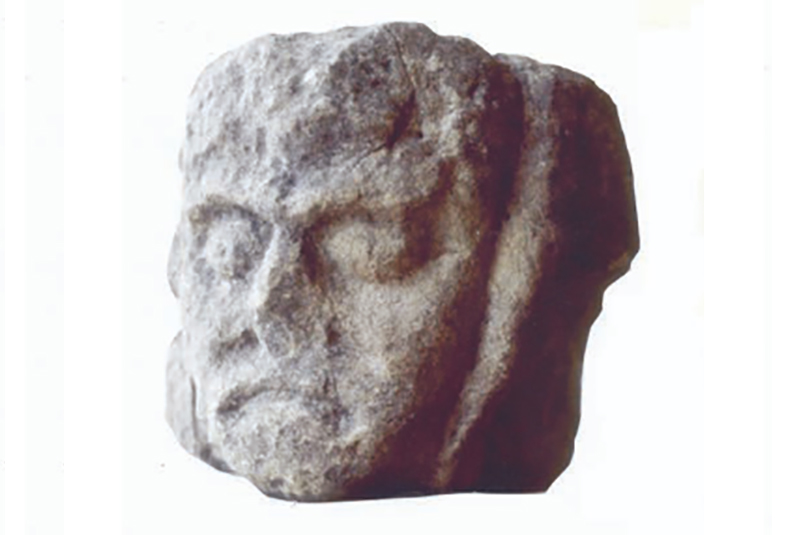
Carved head stop from what was likely a hood-mould from the grand entrancee to the hall at Finlaggan.
SOURCES:
In Gaelic:
Irish Bardic Poetry. By Osborn Bergin.
Dublin Institute for Advanced Studies 1970
Address to Aonghus of Islay
The Triumph Tree: Scotland’s earliest poetry 550-1350.
Ed. and translated by Thomas Clancy.
Edinburgh 1998.
Below, the poem is presented in Gaelic in the authoritative edition published by Bergin in 1970 and made available through CELT: Corpus of Electronic Texts (University College Cork). Also furnished is a word-to-word-translation furnished by Scholar GPT (ChatGPT) as well as in the third column and by kind permission, a scholarly translation by Thomas Clancy from: The Triumph Tree: Scotland’s earliest poetry 550-1350.
| Ceannaigh duain t'athar, a Aonghas, | Buy the poem of your father, O Aonghas, | Purchase your father's poem, Aenghus, |
| agad atá teach an ríogh: | you with whom is the house of the king; | the house of the king is yours, |
| as tú fréamha is bláth an bhile, | you are root and blossom of the tree, | you are the tree's root and blossom: |
| adéara cách dlighi a dhíol. | everyone says it is right to pay it. | all say it's right you buy it. |
| Agad do fhágaibh a láithreach, | With you he left his inheritance, | To you he left his position, |
| leat gach lúireach leat gach séad, | with you every coat of mail, with you every treasure, | yours each breastplate, each treasure, |
| a áit a luirg 's a chloidhmhe corra | his spears and his curved swords, | his hats, his staves, his slender swords, |
| dhuit 's a fhoirne donna déad. | to you, and his troops of brown teeth (i.e. fierce warriors). | yours, his brown ivory chessmen. |
| Leat slabhraidh cáola con t'athar, | With you are the slender chains with your father, | Yours your father's hounds' slender chains, |
| gach arg cumhdaigh ar do chuid, | every guarded silver that is yours, | each treasure chest's in your share; |
| a thoighi 's a cháin gan chomhroinn, | his household and his tribute without sharing, | all his houses and his tax, |
| táin is groighe Dhomhnuill duid. | the wealth and cattle of Domhnall are yours. | yours, Domhnall's horses and herds. |
| Agad do fhágaibh gá thiomna | With you he left his bequest, | In his legacy he has left you |
| gach teach ó Mhuile go Maoil; | every house from Mull to Moyle; | each house from Mull to the Mull. |
| leat a longa uadh, a Aonghais, | with you are their ships, O Aonghas, | Yours, Aenghus, are the ships he left, |
| a stuagh Droma craobhghlais Chaoin. | pillar of green-branched Druim Chaoin. | arch of green-branched Druim Cain. |
| Leat a oiriocht 's a eich lúatha, | With you is his retinue and his swift horses, | Yours his assembly and swift steeds, |
| leat a bhíataigh gan bhúain díot: | with you his cattle that do not perish from you; | yours his farmers, loyal to you, |
| as tú an mac as ceann dar gcathuibh, | you are the son who is head over our battles, | you are the son who leads our battles, |
| as lat ar gheall h'athair d'íoc. | it is by you your father’s pledge must be paid. | yours, what your father owes me. |
| Adaimh go ndlighi díol mh'éicsi, | I affirm that payment is due for my satire, | Admit you should buy my poetry, |
| a onchú Banna, a bharr nocht: | O fierce hound of the Bann, O bare summit; | sheer summit, Bann's fierce one. |
| gabh sgél eile mona admha, | take another story if you deny it— | If you don't, tell another story: |
| do-bhér th'eire d'agra ort. | your inheritance will bring a claim against you. | I'll load your claim upon you. |
| Tnúth leamsa édáil na n-ollamh | I long for the wealth of the learned | I'm jealous of the wealth poets |
| úait, a leómhain Locha Cé: | from you, O lion of Loch Cé; | get from you. Loch Ce's lion. |
| gá fios an tnúth cáir, a chara, | knowing how just that longing is, my friend, | Who knows if the envy's proper: |
| do mhúch gráin an mhara mé. | the hatred of the sea has drowned me. | I'm smothered by sea-terror! |
| • Coire dhá Ruadh, a rí Túama, | The Cauldron of the Two Reds, O king of Túam, | Coire Da Ruadh, Tuam's king, |
| atá eadroinn, eagail linn, | lies between us, with danger there; | lies between us, it's my fear. |
| Coire Bhreacán blagh dar gconair, | the Cauldron of Breacán, foul on our path, | Coire Bhrecain's part of my path, |
| do ghabh creatán omhain inn. | has seized a feeble creature of mine. | a groan of fear has grabbed me. |
| • Ní lugha as cás Coire Bhreacáin | No less is the hardship of Cauldron Breacán | No less is Coire Bhrecain's case, |
| do bheith romhainn, a rí Ceóil: | being before us, O king of music; | being between us, music-king; |
| a úabhar an tann as teasbhach | its arrogance when heat rises, | its pride when it is in anger |
| ag sdúaghadh crann seasmhach seóil. | stirring the firm mast of a steady sail. | warps the sturdy masts of sails. |
| Canaim ar omhan an anfaidh, | I sing of the fear of the storm, | I say, for fear of the tempest, |
| a fhir Chola charuid mná, | O man of Col, beloved of women; | lord of Coll, woman's friend, |
| tar an gcúan go hÁonghas Íle | over the bay to Aonghas of Islay— | over sea to Aenghus of Islay |
| trúagh nach áonfhras tíre atá. | pitiful that there is no land-calm. | sad there's not one dash of land. |
| An dara cos 'gá cur romhum, | The second leg set before me, | One of my feet I put before me, |
| a rí Leódhais, isin luing, | O king of Lewis, is in the ship; | king of Lewis, in the ship, |
| an dara troigh thíar ré taca, | the second foot westward to a stay-rope, | the other foot behind as prop, |
| ag tríall soir, a dhata dhuinn. p.172 | setting eastward, O foster-father to us. | brown-haired patron, when going east. |
| Dobadh olc meisi ar mhuir ngáibhthigh | An evil thing for me on a perilous sea | I'd be bad on the savage sea |
| do ghabháil ráimhe, a rosg gorm | to take to the oar, O blue-eyed one; | at taking an oar, blue-eyed one: |
| bím ar abhainn chiúin ar creathaibh, | I am on a quiet river on shaking boards | on a peaceful river, I quiver |
| mar ghabhuim sdiúir eathair orm. | when I take the helm of a boat on me. | taking the rudder of a boat. |
| Gá córughadh budh cóir orum | To arrange what would be right for me | The right way to arrange myself |
| ní fhedar ré ttocht tar tuinn: | I do not know how to cross the wave; | I don't know, crossing the waves; |
| ní fheadar an budh fhearr suidhe, | I do not know whether it is better to sit— | I don't know if sitting's better, |
| eagal leam luighi san luing. | I fear to lie down in the ship. | I'm afraid to lie in the ship. |
| As é mo ghreim ghabhuim chugum | This is my grip that I take to myself, | It's my grip, grabbing it to me, |
| chongmhas an loing, a fhlaith Fáil: | holding the ship, O lord of Fál; | which holds the ship, Ireland's king; |
| go nach brisi tolg na tuinne, | lest the swell of the wave break, | lest the thwack of the waves break it, |
| misi is bord na luingi um láimh. | myself and the side of the ship in hand. | I keep the ship's sides in my hand. |
| Fiarfaighthior 'nar fearann dúthaigh | One asks in our native land | In my home-country people ask, |
| dénamh na loingi, a fhlaith Gall: | about the making of the ship, O lord of the foreigners; | Norsemen's king, how a ship's made. |
| ní mór as léir as don fhairrgi | much of what is seen is from the sea | There's little to see of the sea |
| don thsléibh chas as airde ann. | to the twisted mountain that is highest there. | from the highest steep height there. |
| Dámadh tír go turgbháil gréini, | If it were land with the rising of the sun, | Though there were land to the sunrise, |
| gáibhthighi leam dar do láimh, | perilous to me at your hand | I'd find more dangerous, near you, |
| a bhfuil, a Áonghais, go hAlbain | is all, O Aonghas, to Scotland | what there was, Aenghus, to Scotland, |
| do mhuir bhráonghlais bhalgaigh bháin. | of the green-spray sea, bulging white. | of white, green-washed, swelling sea. |
| Targuidh h'athair, áobhdha an brégadh, | Your father drove, handsome the urging, | Your father proposed - the lie's pleasing� |
| mo bhreith um luighi 'na luing: | my capture to lying in his ship; | to bear me prone in his galley, |
| peall fúinn ó Albain go hÉirinn | around us from Scotland to Ireland | me on a bed from Ireland to Scotland |
| targuidh dúinn ó céibhfinn Cuinn. | he drove us from the quay of Conn. | proposed fair-haired Conn's offspring. |
| Mo ghoid as gan a fhios agum | My theft, without my knowledge, | My snatching without my knowing |
| do fhóbair rí na rosg ngorm | nearly did the king of blue eyes; | the blue-eyed king set about: |
| cealg ro cogradh 'gon mhór mhíolla | a treacherous whisper from the great multitude— | the great gentle one hatched a plot |
| codladh íar n-ól fhíona orm. p.173 | sleep after drinking wine on me. | while I was sleeping off my wine. |
| Miosguis leam na láoidheng seólta, | I hate the sailing rigging, | I hate the leap of the sailing galleys, |
| slat do luingi nochar lúb: | the ship’s rod that has not bent; | your ship's yard-arm was not turned; |
| a mheic Domhnaill a Céis Cairrgi, | O son of Domhnall of the Rock of Cais, | Mac Domhnaill from Ceis Cairrgi, |
| do ghéis tonndruim fairrgi fúd. | your geis is on the wave-back of the sea beneath you. | beneath you the sea's wave-ridge roared. |
| Bualadh cladaidh, creacha minca, | Striking of shores, frequent forays, | Attacking a strand, frequent raids, |
| mían libhsi ar an luchtsa thall: | desire with you on the people over there; | these your wish for yonder folk; |
| meinic ón linnsi lán fala | often from pools full of blood | often from now a tide of blood |
| lámh re hInnsi glana Gall. | a hand toward the fair Isles of the Foreigners. | lapping splendid Innse Gall. |
| Tánaguis a ttimchiol Éirionn; | You came around Ireland; | You've circled Ireland, scarce the shore |
| uathadh tráigh nach ttugais bhú: | no strand did you leave unharried; | where you've not taken cattle; |
| seoltar lat longbhárca leabhra, | ships are sailed by you, book-shaped, | nimble galleys are sailed by you |
| dobhránta, a shlat Teamhra, thú. | fearless, O rod of Tara, you. | you're otter-like, branch of Tara. |
| Do Loch Fheabhail, d'Iorras Domhnann, | To Lough Foyle, to Iorras Domhnann, | To Loch Foyle, on to Erris, |
| dírioch úaibh a hInnsibh Gall: | you rose from the Isles of the Foreigners; | you go straight from Innse Gall; |
| caladh Iorruis, is fúar fíre, | the harbour of Iorras is truly cold— | Erris harbour, truth's fountain, |
| do fhionnais slúagh Íle ann. | you found the people of Islay there. | there you discovered Islay's host. |
| Sluagh Íle leat láimh lé hÁroinn, | The people of Islay with you, hand to Arran, | Islay's host, with you by Aran |
| d'fios a lámhaigh go Loch Con: | to test their blows at Loch Con; | to prove their feats, far as Loch Con; |
| bearar 'gon tslúagh fhinnsin Íle | cattle are driven by that fair Islay host | that fair host of Islay's taken |
| búar a hInnsibh míne Modh. | from the gentle Isles of Modh. | cattle from placid Innse Modh. |
| Corcum-rúadh ráinig bhur gcobhlach | Your fleet reached the red-pitched Corcumruadh, | Your fleet has reached Corco Mruadh, |
| Corca Baisginn ar a brú: | Corca Baisginn on its brink; | Corco Baisginn by its side; |
| Ó Bhun Gaillmhi go Cúil gCnámha | from the mouth of Galway to Cúil gCnámha, | from Galway-foot to Cuil Cnamha, |
| maighre súir gach trágha thú. | you are the sweet thief of every strand. | you, a salmon who probes each strand |
| [Oighre] Manannain mac Domhnaill | [Heir of] Manannán, son of Domhnall, | Mac Domhnaill, heir of Manannan, |
| fá Dhun Balair do bhí a throid: | under Dún Balair was your fight; | His battle's been in Dun Baloir, |
| [ó] ttánuic, a shlat gheal Ghabhra, | [from] where you came, O bright rod of Gabhra, | Till he came, bright stalk of Gabhair, |
| an mac do bhean Banbha a broid. p.174 | the son who tore the cloak of Banba. | the lad who brought Ireland from bondage. |
| As úaibh táinig Colum Cille | From you came Colum Cille, | It's from you Colum Cille came |
| afar gcabhair thairis fo thrí: | our help from across, three times; | across three times to our aid |
| fir Éirionn do dhíol an dúainsi, | men of Ireland pay this poem— | Ireland's men have paid for this poem |
| léighionn do shíol úaibhsi í. | the reading of it is from your seed. | from you the scholarship has spread |
| Bhar seanathair síol gColla | Your grandfather of the seed of Colla, | Your forebear, Sil Cholla |
| Coirbre Lifiochair, laoch Mis: | Cairbre Lifechair, hero of Mis; | Cairbre Lifechair, Warrior of Mis |
| do bhás uí Chuinn catha Gabhra | he killed the grandson of Conn at the battle of Gabhra, | when Conn's offspring died - Gabhair's veteran - |
| druim ratha Banbha do bhris. | he broke the ridge-fort of Banba. | the ridge of Ireland's fortune broke. |
| Turcuill, Íomhair, agus Amhláoimh | Turgeis, Ímar, and Amlaíb, | Torcuill, Imhar and Amhlaibh |
| iomad, a láoich Locha Ríach, | many, O hero of Loch Ríach; | surround you, Loch Riach's man, |
| tonn bhrátha an talmhan ar troimnimh, | the wave of doom of the land heavily on them, | the earth's wave of ruin in fury, |
| damhradh Atha coillghil Clíath. | the oak-bright wood of Áth Cliath thundered. | bright-hazelled Dublin's host. |
| Clanna Somhuirle, síol nGofraidh, | Clans of Somerled, seed of Gofraid, | Clann Somhairlidh, Sil Gofraidh, |
| ór ghin tú, nár thaisigh bhú, | gold from which you were born, not weak; | whence you're born, they hoarded no herds; |
| a lubhghort cuir, a chráobh abhla, | O planted orchard, O apple-tree branch, | well-plotted orchard, apple branch, |
| sáor gach fuil ó a ttarla thú. | noble is every blood from which you spring. | noble all blood from which you come. |
| Síol gCeallaigh iomad a hÉirinn, | Seed of Ceallach, many in Ireland, | Sil Cellaigh about you in Ireland, |
| Oirghiallaigh a hInnsibh Líag, | Oirghialla in the Isles of Liag; | the Airghialla in Innse Liag, |
| na cráobha caibhniosa ad-chluine, | the fair-branched trees that are heard of you, | vie family tree's branches, you've heard: |
| do thaidhliossa uile íad. | you have visited them all. | I have visited them all. |
| Ní fhuil a nÉrinn ná a nAlbain | There is not in Ireland nor in Scotland | In Ireland or Scotland there is not |
| Aonghas mar thusa, a tháobh seang: | an Aonghas like you, O slender-sided one; | an Aenghus like you, slim flank. |
| Aonghais fháid bhráonghlais an Bhrogha, | Aonghas of the long green-spray Broch, | The Aenghuses of the Brugh's green-washed turf |
| láid, a Aonghais, comha ad cheann. | strong, O Aonghas—equality is at your head. | send to you, Aenghus, gifts. |
READ ALSO: